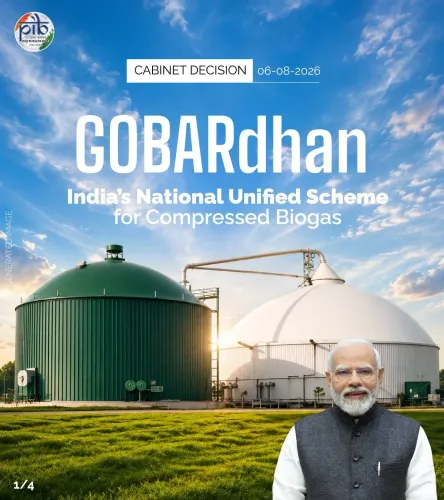
GOBARdhan CBG price hike: Govt says CNG, PNG impact negligible after pooling
Synopsis
The government's defence of the CBG price hike rests on two largely overlooked mechanisms: a ₹10-per-kg affordability subsidy that trims the effective increase from 43% to 28%, and a gas pool that is now 2.5 to 3 times larger — meaning the cost is spread far more thinly than critics assumed. Whether that arithmetic holds at the retail level for CNG and PNG consumers is the real question.
Key Takeaways
The Ministry of Petroleum and Natural Gas on 29 August rejected claims that the GOBARdhan CBG price revision would significantly raise costs for CNG and household PNG consumers.
The revised CBG procurement price is ₹2,110 per MMBtu , up 43 per cent from the prevailing ₹1,478 per MMBtu — but this is paid to producers, not consumers.
Government affordability support of ₹10 per kg (approximately ₹215 per MMBtu ) reduces the effective consumer-facing increase to around 28 per cent .
The net CBG cost will be pooled across a domestic gas base 2.5 to 3 times larger than under the earlier framework, further diluting the per-unit burden.
CBG is not sold directly to City Gas Distribution (CGD) entities at procurement price; it is blended into the broader domestic gas pool.
The Ministry of Petroleum and Natural Gas on Saturday, 29 August rejected concerns that the revised Compressed Biogas (CBG) procurement price under the GOBARdhan Scheme would significantly burden CNG and household PNG consumers, calling such assessments based on inconsistent assumptions. The ministry said the actual pass-through to end consumers would be far smaller than the headline price increase suggests.
The Revised Procurement Price
Under the updated GOBARdhan framework, the CBG procurement price has been fixed at ₹2,110 per MMBtu, up from the prevailing rate of approximately ₹1,478 per MMBtu — an increase of around 43 per cent. The ministry was clear, however, that this is the price paid to CBG producers and does not directly translate into what CNG or PNG consumers pay at the retail level.
Government Affordability Support
To cushion the impact, the government will provide an affordability support of ₹10 per kg of CBG, equivalent to approximately ₹215 per MMBtu for CBG containing 95 per cent methane. This subsidy will be funded by the government, directly reducing the amount that needs to be recovered from the gas consumer base.
After accounting for this support, the effective CBG cost to be recovered through consumers works out to approximately ₹1,895 per MMBtu, compared with the prevailing effective price of ₹1,478 per MMBtu. This represents an effective increase of roughly 28 per cent — significantly lower than the headline 43 per cent rise in procurement price.
How Pooling Dilutes the Impact
A critical structural detail explains why even the 28 per cent effective increase may not translate proportionately into retail price hikes. Under the earlier framework, CBG costs were spread only across the limited quantity of Administered Price Mechanism (APM) gas allocated to the CNG transport and domestic PNG segments.
Under the new framework, the net cost of CBG will be distributed across a domestic gas pool that is approximately 2.5 to 3 times larger than the earlier base. This broader pooling substantially dilutes the per-unit burden on individual consumers — a point the ministry said critics had failed to account for in their assessments.
How CBG Enters the Supply Chain
The ministry also clarified that CBG is not sold directly to City Gas Distribution (CGD) entities at its procurement price. Instead, it is pooled with other domestically produced natural gas, and the blended cost is then distributed across the applicable domestic gas pool. This mechanism means the pricing dynamics are considerably more complex than a straightforward pass-through of the procurement price hike.
Broader Context
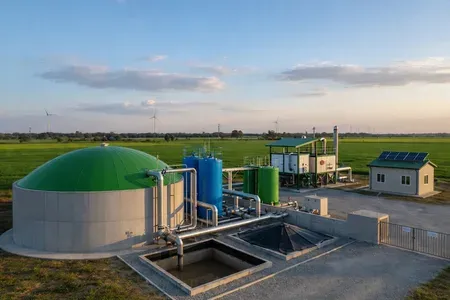
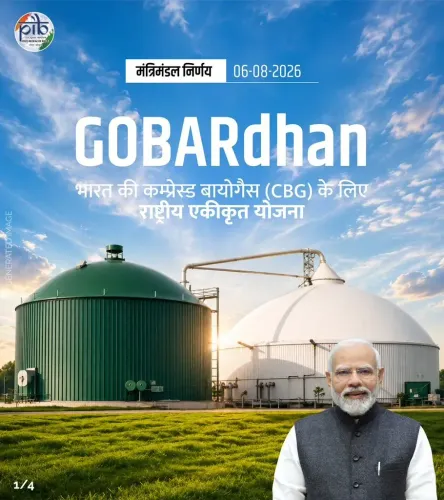
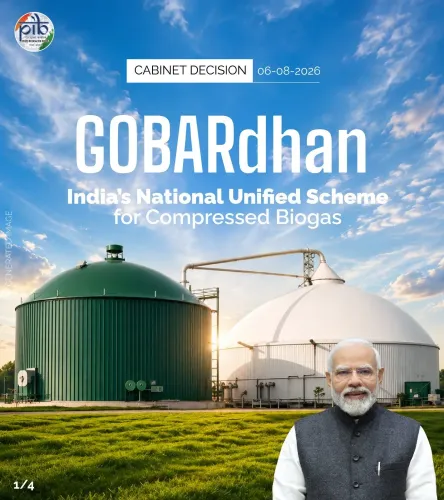
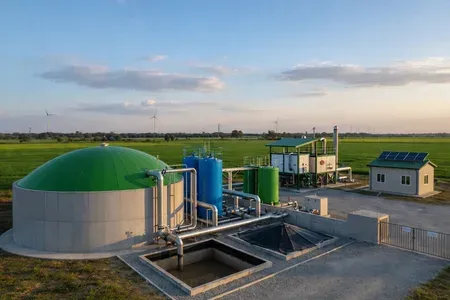
The GOBARdhan Scheme — short for Galvanising Organic Bio-Agro Resources Dhan — is a central government initiative aimed at promoting biogas and CBG production from organic waste, cattle dung, and agricultural residue. Expanding CBG procurement is part of India's broader push to diversify its domestic gas supply and reduce dependence on imported LNG. Notably, the revision comes at a time when the government is simultaneously trying to scale up CBG production capacity while keeping retail energy prices politically manageable. The revised pricing framework attempts to balance both objectives through the combination of higher producer incentives and targeted affordability support.
The ministry's response signals that further clarifications on the pooling mechanism and consumer impact may be forthcoming as implementation details are rolled out.
Point of View
Yet the government has not specified its duration or funding source, leaving open the question of what happens to retail prices if the subsidy is wound down. More broadly, India's CBG scale-up ambitions require producer prices that make the business viable — the tension between that imperative and retail affordability is not resolved by pooling arithmetic alone; it is merely deferred.
NationPress
29 Aug 2026
Frequently Asked Questions
What is the GOBARdhan CBG price revision and why is it controversial?
The government has raised the Compressed Biogas (CBG) procurement price under the GOBARdhan Scheme to ₹2,110 per MMBtu, a 43 per cent increase over the earlier rate of ₹1,478 per MMBtu. Critics raised concerns that this hike would significantly raise costs for CNG and PNG consumers, a claim the Petroleum Ministry has rejected.
How much will CNG and PNG consumers actually be affected?
According to the ministry, the effective increase for consumers is around 28 per cent — not 43 per cent — after accounting for a government affordability support of ₹10 per kg of CBG. The cost is also spread across a domestic gas pool 2.5 to 3 times larger than before, further diluting the per-unit impact.
What is the government's affordability support for CBG consumers?
The government will provide ₹10 per kg of CBG, equivalent to approximately ₹215 per MMBtu for CBG with 95 per cent methane content. This subsidy is government-funded and directly reduces the amount that needs to be recovered from gas consumers.
How does CBG pooling work and why does it matter?
CBG is not sold directly to City Gas Distribution entities at its procurement price. It is blended with other domestically produced natural gas, and the combined cost is distributed across the entire domestic gas pool. Under the new framework, this pool is 2.5 to 3 times larger than the earlier APM gas base, meaning the additional cost is spread more thinly across more consumers.
What is the GOBARdhan Scheme?
GOBARdhan — Galvanising Organic Bio-Agro Resources Dhan — is a central government scheme that promotes the production of biogas and Compressed Biogas from organic waste, cattle dung, and agricultural residue. It is part of India's strategy to expand domestic gas supply and reduce dependence on imported LNG.