India–Nordic Summit 2026: India co-authors global AI and digital rules

Synopsis
The third India–Nordic Summit in Oslo marks a quiet but consequential shift: India is no longer at the receiving end of global tech governance — it is writing the rules. Backed by a decade of DPI built for a billion people and an AI Impact Declaration that challenges Washington and Brussels' security-first framing, New Delhi is positioning itself as the architect of a development-first AI order.
Key Takeaways
The third India–Nordic Summit 2026 was held in Oslo , with technology governance as its central agenda.
A report by India Narrative says India is now a co-author of global digital and AI norms, not a passive rule-taker.
India's digital public infrastructure (DPI) — including Aadhaar , UPI , and open APIs — serves over a billion people and is being exported to Asia and Africa.
The AI Impact Declaration prioritises human capital, inclusion, and democratising AI, contrasting with security-focused debates in Washington and Brussels .
Norway is expected to push India to strengthen its Digital Personal Data Protection law and AI safeguards, while gaining access to India's STEM talent and regulatory evolution.
Nordic companies see India as a supply-chain diversification option away from China , adding a commercial dimension to the partnership.
The third India–Nordic Summit 2026, held in Oslo, has signalled a structural shift in global technology governance — with India emerging as a co-author of digital and artificial intelligence norms rather than a passive recipient of rules set elsewhere, according to a report by India Narrative. The summit marks one of the most consequential diplomatic technology meetings of the year for New Delhi.
From Rule-Taker to Rule-Maker
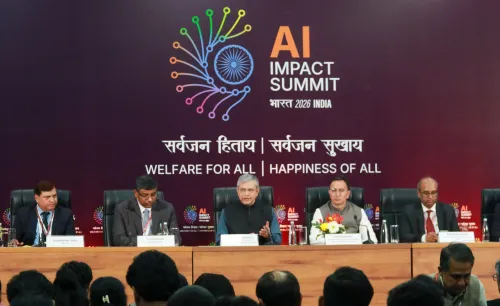
The India Narrative report argues that the Oslo meeting, combined with the AI Impact Summit in New Delhi, demonstrates that India is no longer simply implementing governance guardrails designed by others. Instead, New Delhi is actively designing its own AI governance architecture and inviting both the Global North and the Global South to engage with it. The AI Impact Declaration — whose focus spans human capital, inclusion, trusted AI, and democratising AI resources — represents a developmental framing that stands in sharp contrast to the security-heavy debates dominating policy circles in Washington and Brussels.
Nordic Strategic Framing
Nordic leaders at the summit framed the bilateral relationship as a green technology and innovation strategic partnership. The bet, according to the report, is that anchoring supply chains, research collaborations, and digital infrastructure in India will deliver both commercial returns and geopolitical resilience. Norway is described as a potent cluster of high-tech, green-tech, and governance expertise, while India is viewed as a continental-scale laboratory for inclusive digital innovation. The summit's central agenda — cooperation on inclusive, human-centric AI — reflects a convergence between Nordic social-democratic tech values and the India-led declaration.
India's Digital Public Infrastructure Stack
A key pillar of India's pitch at Oslo is its decade-long build-out of digital public infrastructure (DPI). The report notes that systems ranging from Aadhaar for identity to UPI for instant payments, along with open APIs that allow private innovators to build services atop state-built rails, now underpin welfare delivery, financial inclusion, and everyday transactions for over a billion people. These systems are increasingly being exported — from open-source identity platforms such as MOSIP to vaccine certification systems deployed across Asia and Africa.
What Norway Brings — and What It Expects
The report notes that Norway's strong data protection culture and civil liberties traditions could push India to align its Digital Personal Data Protection law and AI experimentation with more robust safeguards. For Nordic companies facing cost pressures and political scrutiny over supply-chain resilience, anchoring production and R&D in India offers a way to diversify away from China. It also gives Norway access to a vast pool of STEM talent and a rapidly evolving regulatory environment on data and AI.
What Comes Next
The Oslo summit sets the stage for deeper bilateral engagement on technology standards, green-tech supply chains, and AI governance frameworks. Whether India can translate its co-authorship ambitions into binding international norms — and whether the AI Impact Declaration gains traction beyond summit communiqués — will be the real test of this diplomatic pivot in the months ahead.
Point of View
But the architecture is still largely aspirational. The AI Impact Declaration's developmental framing is a smart counter-narrative to Brussels and Washington, yet declarations do not automatically become binding international standards. The deeper test is whether India's DPI stack — genuinely impressive at scale — can become the normative reference point for the Global South, or whether it remains a bilateral talking point. Norway's data-protection traditions could prove a useful external pressure on India's still-evolving privacy law, but only if the partnership moves beyond summit communiqués into enforceable cooperation frameworks.
NationPress
6 Oct 2026
Frequently Asked Questions
What was the main outcome of the India–Nordic Summit 2026 in Oslo?
The summit, according to a report by India Narrative, positioned India as a co-author of global digital and AI governance norms. Nordic leaders framed the relationship as a green technology and innovation strategic partnership, with cooperation on inclusive, human-centric AI as the central agenda.
What is the AI Impact Declaration and why does it matter?
The AI Impact Declaration is an India-led framework focused on human capital, inclusion, trusted AI, and democratising AI resources. It represents a developmental approach to AI governance that contrasts sharply with the security-heavy debates in Washington and Brussels, and was a key reference point at the Oslo summit.
What is India's digital public infrastructure (DPI) and how is it relevant?
India's DPI is a decade-old stack of state-built digital systems — including Aadhaar for identity, UPI for payments, and open APIs — that serves over a billion people. These systems are now being exported globally, from identity platforms like MOSIP to vaccine certification systems across Asia and Africa, underpinning India's pitch as a model for inclusive digital innovation.
What does Norway gain from the India–Nordic partnership?
Norway gains access to India's large STEM talent pool, a rapidly evolving data and AI regulatory environment, and an opportunity to diversify supply chains away from China. Nordic companies facing cost pressures and scrutiny over supply-chain resilience see India as a commercially and geopolitically attractive anchor.
How might Norway influence India's data protection and AI laws?
According to the India Narrative report, Norway's strong data protection culture and civil liberties traditions could push India to align its Digital Personal Data Protection law and AI experimentation with more robust safeguards — a potential area of constructive friction within the partnership.