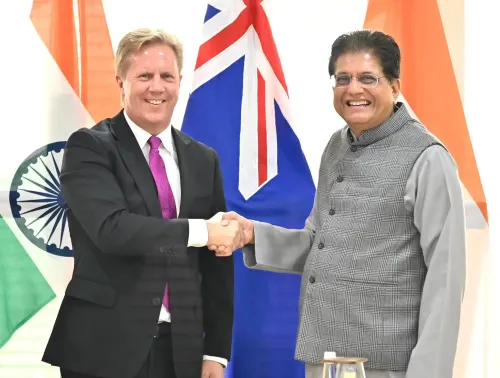
India-New Zealand FTA comes into force on 20 October: Commerce Secretary

Synopsis
India's FTA with New Zealand goes live on 20 October, promising up to $20 billion in Kiwi investment and a path to double bilateral trade from just $1.1 billion today. Pharma exporters, IT professionals, and students are among the immediate beneficiaries — while dairy, sugar, and edible oils stay protected for Indian farmers.
Key Takeaways
India's FTA with New Zealand comes into force on 20 October 2026 , announced by Commerce Secretary Rajesh Agrawal .
The pact is expected to facilitate up to $20 billion in New Zealand investments into India across agriculture, manufacturing, infrastructure, and startups.
Bilateral merchandise trade currently stands at around $1.1 billion ; the government targets a doubling in the coming years.
Indian pharma and medical device exporters gain faster New Zealand market access through acceptance of globally recognised regulator approvals.
Services sectors covered include IT, professional services, construction, tourism, and audio-visual services ; Indian professionals get dedicated visa quotas.
Sensitive products — dairy, sugar, edible oils, and most animal meat — are excluded from tariff concessions to protect Indian farmers.
India's Free Trade Agreement (FTA) with New Zealand will come into effect on 20 October 2026, opening a new chapter in bilateral economic engagement, Commerce Secretary Rajesh Agrawal announced on Monday in New Delhi. The agreement is expected to accelerate regulatory cooperation, deepen supply chain integration, and unlock significant investment flows between the two nations.
What the Agreement Covers
Addressing the significance of the pact, Agrawal emphasised that FTAs extend well beyond tariff reductions. 'FTAs are about creating deep economic partnership,' he stated, adding that such agreements also facilitate faster regulatory approvals and improve the ease of doing business between partner countries.
For India's services sector, the FTA opens wider access to the New Zealand market across information technology, professional services, construction, tourism, and audio-visual services. Indian professionals stand to benefit from dedicated visa quotas, while students gain expanded access through post-study work rights.
Investment and Trade Targets
According to the Commerce and Industry Ministry, the agreement is expected to facilitate up to $20 billion in investments from New Zealand into India across sectors including agriculture, manufacturing, infrastructure, and startups. With current bilateral merchandise trade estimated at around $1.1 billion, the government is targeting a doubling of two-way trade in the coming years.
This comes amid India's broader push to diversify its trade architecture — the country is simultaneously pursuing multiple FTAs as part of a strategy to build resilient global supply chains and expand market access for Indian businesses.
Pharma and Medical Devices Gain Faster Access
Indian pharmaceutical and medical device exporters are set to benefit from accelerated market entry, as New Zealand has agreed to accept inspection approvals from globally recognised regulators. This arrangement is expected to reduce compliance timelines significantly and speed up product approvals for Indian exporters.
Safeguards for Indian Farmers
Notably, the government has ringfenced the interests of Indian farmers by excluding sensitive agricultural products — including dairy, sugar, edible oils, and most animal meat products — from tariff concessions under the agreement. This carve-out had been a key point of domestic concern during negotiations, given New Zealand's competitive advantage in these categories.
With the FTA set to take effect on 20 October 2026, officials and industry bodies will be watching closely to see how quickly investment pipelines are activated and whether the trade doubling target translates into concrete outcomes in the months ahead.
Point of View
Not tariff schedules. What deserves scrutiny is the asymmetry: India has protected its farm sector, but New Zealand's competitive dairy and meat industries were precisely the sectors it most wanted access to. How both sides manage that tension over time will determine whether this pact deepens or stalls at a headline-friendly level.
NationPress
19 Oct 2026
Frequently Asked Questions
When does the India-New Zealand FTA come into force?
The India-New Zealand Free Trade Agreement comes into force on 20 October 2026, as confirmed by Commerce Secretary Rajesh Agrawal on Monday in New Delhi.
How much investment is the India-New Zealand FTA expected to generate?
According to the Commerce and Industry Ministry, the FTA is expected to facilitate up to $20 billion in investments from New Zealand into India across agriculture, manufacturing, infrastructure, and startups.
How will Indian pharma companies benefit from the FTA?
Indian pharmaceutical and medical device exporters will gain faster market access in New Zealand, as the country has agreed to accept inspection approvals from globally recognised regulators, significantly reducing compliance timelines.
Which Indian products are excluded from tariff concessions under the FTA?
The government has excluded sensitive agricultural products — including dairy, sugar, edible oils, and most animal meat products — from tariff concessions to safeguard the interests of Indian farmers.
What opportunities does the FTA create for Indian professionals and students?
The FTA provides Indian professionals with dedicated visa quotas for the New Zealand market and expands pathways for students through post-study work rights, alongside broader access across IT, professional services, and tourism sectors.