IndiaAI Mission: 38,231 GPUs Onboarded and 190 Projects Approved
Synopsis
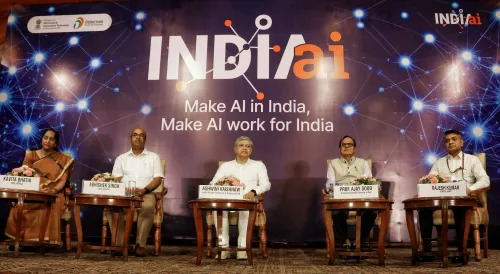
The IndiaAI Mission has made significant strides with the onboarding of 38,231 GPUs and the approval of 190 projects to enhance India's AI ecosystem, as stated by Union Minister Jitin Prasada. This initiative aims to democratize access to high-performance computing and strengthen local chip manufacturing.
Key Takeaways
38,231 GPUs onboarded for AI projects.
190 projects approved supporting startups and academia.
Significant investment in semiconductor manufacturing .
Support for indigenous AI capabilities .
Focus on responsible AI and sector-specific applications.
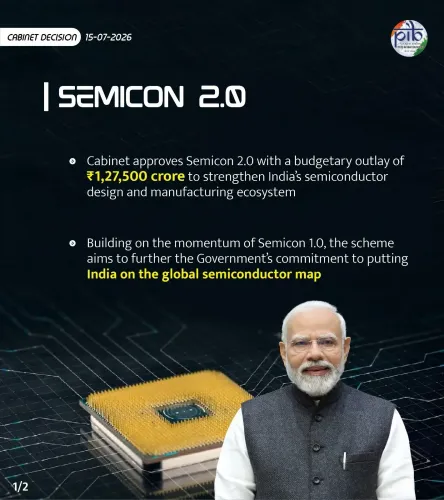
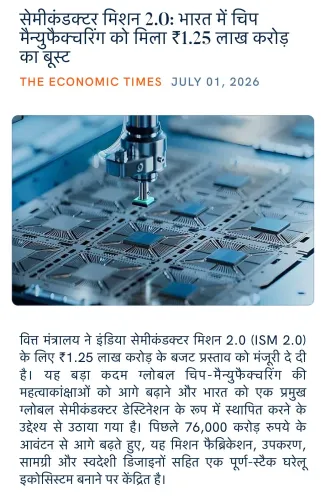
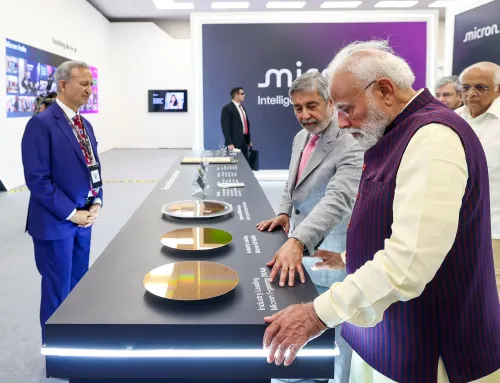
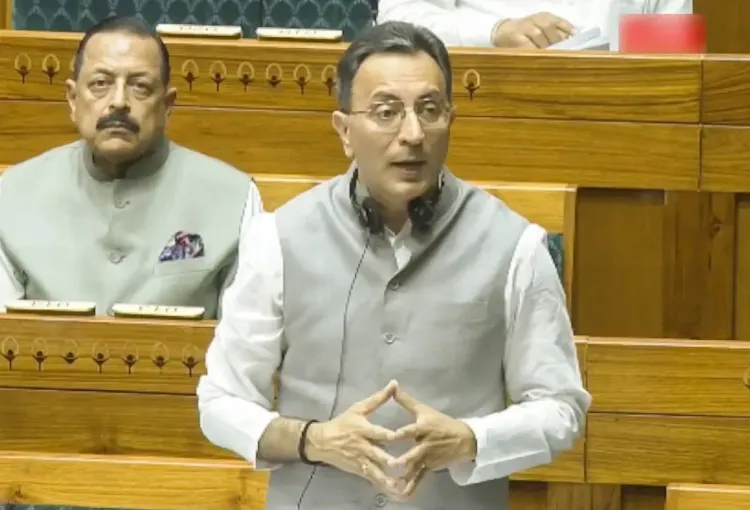
New Delhi, March 25 (NationPress) The Union Minister of State for Electronics and IT, Jitin Prasada, announced on Wednesday that the government’s IndiaAI Mission has successfully integrated over 38,231 GPUs and sanctioned 190 projects to enhance the nation's artificial intelligence landscape. Additionally, the Semicon India Programme has endorsed 10 semiconductor manufacturing units to bolster local chip production.
During the Lok Sabha session, Prasada revealed that these 38,231 GPUs are accessible via a shared computing facility, offered to startups and academic institutions at a subsidized rate of approximately Rs 65 per GPU per hour.
Of the 190 projects approved, 78 are associated with government bodies, 46 with startups and MSMEs, 30 with nascent startups, 27 in collaboration with academia and researchers, 5 involving students, and 4 with early-stage researchers, indicating extensive participation.
The government is also fostering the growth of homegrown AI technologies, including processors and accelerators, through the National Supercomputing Mission, utilizing the open-source RISC-V architecture.
Simultaneously, the Semicon India Programme has authorized 10 semiconductor units, with one already in commercial operations and three others in the pilot phase.
Tata Electronics is establishing a semiconductor fabrication facility in Gujarat, investing Rs 91,526 crore, aiming for a production capacity of 50,000 wafer starts monthly, utilizing technology nodes from 110 nm to 28 nm, as stated by the minister.
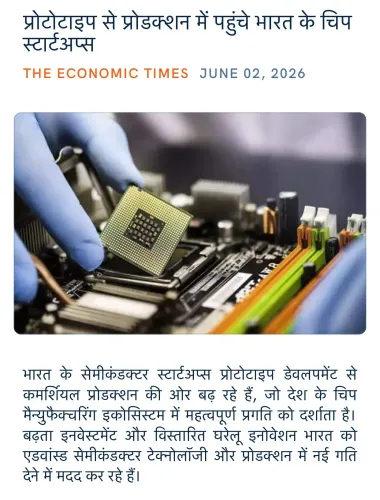
To enhance chip design capabilities, the Design Linked Incentive (DLI) scheme has approved 24 semiconductor design projects, with 14 companies receiving venture capital investments.
Additionally, 103 fabless chip design firms have been granted access to design resources, and 7 chips have been manufactured from 16 designs taped out, including advanced nodes like 12 nm.
The government has successfully developed over 140 reusable semiconductor IP cores and filed 10 patents, thereby reinforcing India’s design framework.
In the AI sector, the mission is backing 12 organizations and consortia to create indigenous foundational models, with several models already launched for public access.
This initiative also encourages the global outreach of Indian startups, with 10 AI startups selected through an international program in partnership with France.
Furthermore, 30 AI applications targeting sectors such as agriculture, healthcare, climate change, and disaster management have been pinpointed, along with 13 projects concentrating on responsible AI.
According to the minister, the Indian government is nurturing 500 PhD scholars, 5,000 postgraduates, and 8,000 undergraduates, and has set up 27 AI labs in Tier-2 and Tier-3 cities, with 543 ITIs and polytechnics approved for similar initiatives.
The IndiaAI Mission was initiated with a budget of Rs 10,372 crore, aimed at democratizing access to high-performance computing while supporting startups, academic institutions, and research organizations.
Frequently Asked Questions
What is the IndiaAI Mission?
The IndiaAI Mission is a government initiative aimed at enhancing India's artificial intelligence ecosystem by providing resources and support to startups, academia, and research institutions.
How many GPUs have been onboarded under the IndiaAI Mission?
A total of 38,231 GPUs have been onboarded through a common compute facility.
What is the cost of using the GPUs?
The GPUs are provided to startups and academia at a subsidized rate of around Rs 65 per GPU per hour.
How many projects have been approved under the IndiaAI Mission?
190 projects have been approved, involving various stakeholders including government entities, startups, and academia.
What is the significance of the Semicon India Programme?
The Semicon India Programme aims to enhance domestic semiconductor manufacturing by approving units and supporting local chip production.