Kavach Train Collision Avoidance System Approved for Tiruchy-Tirunelveli Route; Infrastructure Upgrades Planned in Madurai Division
Synopsis
Tamil Nadu's rail safety is set for a transformation with the approval of the Kavach Train Collision Avoidance System on the Tiruchy-Tirunelveli corridor. This project, backed by a substantial budget, is part of broader infrastructure upgrades aimed at enhancing safety and operational efficiency within the Madurai Division.
Key Takeaways
Kavach system enhances safety on the Tiruchy-Tirunelveli route.
Project budget is Rs 110.78 crore .
Modernization of signaling systems is planned.
Upgrade of two railway stations in the Madurai-Dindigul section.
Improved connectivity for daily commuters is essential.
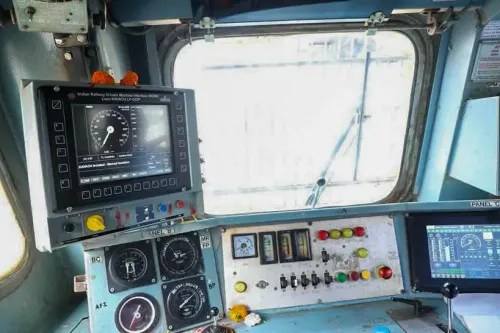
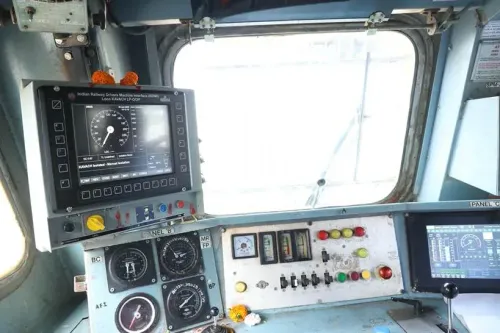
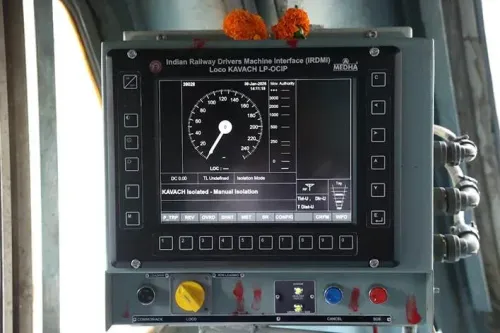
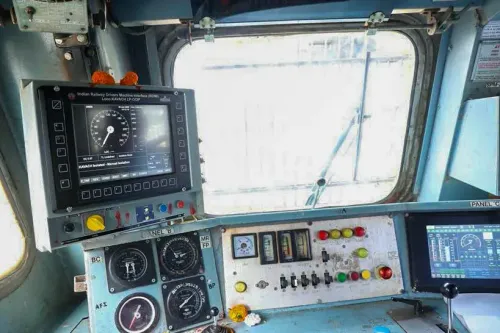
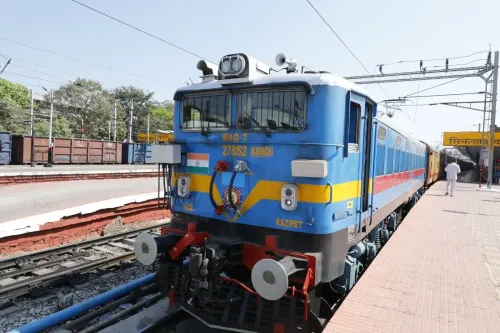
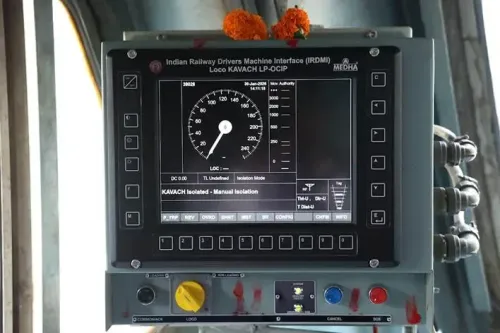
Madurai, March 19 (NationPress) Rail safety in Tamil Nadu is on the verge of a significant enhancement as the Southern Railway embarks on the deployment of the Kavach Train Collision Avoidance System along the Tiruchy-Tirunelveli route. This initiative, designed to avert accidents using cutting-edge automatic protection technology, has garnered approval with a projected budget of Rs 110.78 crore. The details emerged from a Right to Information (RTI) application submitted by railway advocate Dayanand Krishnan, which reveals insights into both safety measures and the infrastructure status within the Madurai Division.
The information provided by R. Siva, the Senior Divisional Operations Manager and Public Information Officer, highlights crucial upgrades slated for the division.
According to the RTI response, the Kavach system will encompass the entire 316.7 route kilometers between Tiruchy and Tirunelveli, establishing a vital safety barrier on one of the region’s key rail routes.
In conjunction with this, the division has proposed the modernization of signaling systems to facilitate smoother and safer train operations. Additionally, two railway stations in the Madurai-Dindigul section are set to receive upgrades featuring electronic interlocking systems at a cost of Rs 23.96 crore. This transition aims to replace outdated systems, significantly minimizing the potential for manual errors in train management.
The Madurai Division currently oversees 97 railway stations. Of these, 59 stations are equipped with Road Relay Interlocking (RRI) systems, while 38 stations feature more advanced Electronic Interlocking systems. However, there are still 107 non-interlocked level crossing gates, indicating room for further safety enhancements.
Data on track utilization for 2024-25 reveals that the double-line trunk routes between Dindigul-Madurai and Madurai-Virudhunagar are experiencing high traffic density.
Among the single-line sections, the Manamadurai-Rameswaram route recorded the highest usage at 77.5 percent, while other branch lines continue to function below 50 percent capacity.
Krishnan emphasized that while the rollout of the Kavach system is a positive development, further enhancements such as automatic block signaling are essential to fully optimize route capacity and improve operational efficiency.
He highlighted that without these advancements, the advantages of the current infrastructure may not be completely realized.
Krishnan also pointed out that the Madurai Division serves several significant pilgrimage sites and is facing increasing passenger demand, urging for the expansion of short-distance suburban services like MEMU and Vande Metro trains.
Enhancing connectivity to locations such as Thoothukudi, Rameswaram, and Pollachi would alleviate congestion on long-distance trains and provide improved travel options for daily commuters.
Point of View
The implementation of the Kavach system along the Tiruchy-Tirunelveli corridor marks a significant stride towards ensuring rail safety in Tamil Nadu. The planned upgrades indicate a commitment to modernizing infrastructure, which is crucial for meeting the growing demands of passengers and enhancing operational efficiency.
NationPress
21 Sept 2026
Frequently Asked Questions
What is the Kavach Train Collision Avoidance System?
The Kavach system is an advanced automatic protection technology designed to prevent train collisions and enhance rail safety.
How much budget has been allocated for the Kavach project?
The Kavach project has received approval with a budget of Rs 110.78 crore.
What upgrades are planned in the Madurai Division?
Upgrades include the modernization of signaling systems and the implementation of electronic interlocking systems at two railway stations.
How long is the route covered by the Kavach system?
The Kavach system will cover a distance of 316.7 kilometers between Tiruchy and Tirunelveli.
What are the implications of the Kavach system for train operations?
The Kavach system aims to improve safety and operational efficiency, thereby reducing the risk of accidents and enhancing the overall train service.