Ethanol in aviation fuel? Minister Ram Mohan Naidu says claim is false

Synopsis
Civil Aviation Minister Ram Mohan Naidu has flatly rejected Arvind Kejriwal's claim that the government plans to blend ethanol with jet fuel, calling it 'completely false and irresponsible.' The rebuttal also draws a sharp distinction between ethanol and internationally certified Sustainable Aviation Fuel — a difference that goes to the heart of India's aviation safety credibility.
Key Takeaways
Civil Aviation Minister Ram Mohan Naidu on 6 August rejected claims of ethanol blending in Aviation Turbine Fuel (ATF) as 'completely false.' The allegation originated from former Delhi Chief Minister Arvind Kejriwal , who raised flight safety concerns.
Naidu clarified that Sustainable Aviation Fuel (SAF) — distinct from ethanol — is ICAO -certified and used globally to cut aviation carbon emissions.
The government confirmed India's airport passenger handling capacity has surpassed 580 million passengers annually.
Expansion is being led by the Airports Authority of India (AAI) and private operators, guided by traffic growth and demand data.
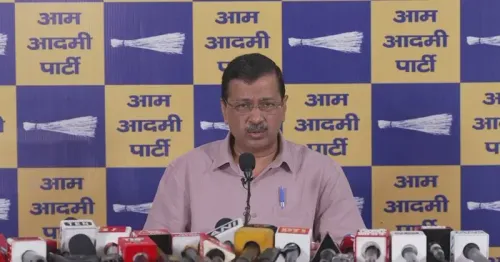
Civil Aviation Minister Ram Mohan Naidu on Thursday, 6 August firmly rejected allegations that the government was planning to blend ethanol with Aviation Turbine Fuel (ATF), calling the claims entirely false and cautioning that such misinformation endangers public confidence in air travel safety. The denial came in response to assertions made by former Delhi Chief Minister Arvind Kejriwal, who had alleged that the Centre was considering mixing ethanol into ATF — a claim the ministry has categorically refuted.
What the Minister Said
Naidu addressed the controversy directly through a post on social media platform X, stating that the allegations were 'completely false and irresponsible.' In his post, he said: 'There is no such proposal. Spreading misinformation on aviation safety only creates needless anxiety among air travellers. Passenger safety remains the Government's highest priority.'
The minister emphasised that the government has no proposal under consideration to blend ethanol with ATF, and urged the public not to be misled by politically motivated claims.
Ethanol vs Sustainable Aviation Fuel: Key Distinction
Naidu also used the occasion to draw a clear line between ethanol and Sustainable Aviation Fuel (SAF) — two fuels that critics argue are being conflated in public discourse. According to the minister, SAF is an internationally certified aviation fuel recognised by the International Civil Aviation Organisation (ICAO) and is already in use across several countries as part of global efforts to reduce carbon emissions from the aviation sector.
Unlike ethanol, SAF undergoes rigorous testing and must meet global safety and performance benchmarks before it is cleared for use in commercial aircraft operations. The distinction is significant: ethanol has not been approved for use in jet engines under any international standard, while SAF is specifically engineered for aviation use.
Airport Infrastructure Boost
Separately, the government this week informed Parliament that India's airport infrastructure has crossed a significant milestone, with the country's total annual passenger handling capacity now surpassing 580 million passengers. The expansion has been driven by continuous modernisation initiatives by the Airports Authority of India (AAI) and private airport operators.
According to official statements, these infrastructure projects are being rolled out based on traffic growth projections, operational requirements, airline demand, financial viability, and techno-economic assessments.
Political Context
Kejriwal's allegation comes at a time when aviation safety is a topic of heightened public sensitivity, following several high-profile incidents involving Indian carriers in recent months. Critics argue that raising safety concerns without verified basis can trigger unwarranted alarm among the flying public. The government's swift rebuttal signals its intent to contain any narrative that could affect passenger confidence ahead of a busy travel season.
With India's civil aviation sector on an aggressive expansion trajectory — targeting over 200 operational airports in the coming years — the ministry is clearly keen to keep the focus on growth rather than controversy.
Point of View
Making the claim easy to rebut but potentially damaging if left unanswered. The government's rapid response via X was tactically sound, but the episode highlights a growing pattern of aviation safety being drawn into political point-scoring. What is missing from the public conversation is a clearer government communication strategy on SAF adoption — a genuinely important policy area that risks being overshadowed by noise. India's push toward SAF deserves scrutiny on its own terms: timelines, blending targets, and domestic production capacity remain underreported.
NationPress
6 Aug 2026
Frequently Asked Questions
Did the Indian government plan to blend ethanol with aviation fuel?
No. Civil Aviation Minister Ram Mohan Naidu categorically denied any such proposal on 6 August, calling the claim 'completely false and irresponsible.' There is no proposal under consideration to blend ethanol with Aviation Turbine Fuel (ATF).
What is the difference between ethanol and Sustainable Aviation Fuel (SAF)?
Ethanol is not approved for use in jet engines under any international aviation standard. Sustainable Aviation Fuel (SAF) is a distinct, ICAO-certified fuel specifically engineered for aviation use and adopted across multiple countries to reduce carbon emissions. The two should not be confused.
Who made the claim about ethanol being mixed with aviation fuel?
Former Delhi Chief Minister Arvind Kejriwal alleged that the government was planning to mix ethanol with ATF, raising concerns about flight safety. The Civil Aviation Ministry has rejected this allegation outright.
What is India's current airport passenger handling capacity?
India's total annual airport passenger handling capacity has surpassed 580 million passengers, according to information provided to Parliament this week. The increase is attributed to expansion and modernisation by the Airports Authority of India (AAI) and private operators.
Is Sustainable Aviation Fuel safe for use in aircraft?
Yes. According to Minister Naidu, SAF undergoes rigorous testing and meets global safety and performance standards set by ICAO before being approved for commercial aircraft operations. It is already in use in several countries as part of efforts to reduce aviation-related carbon emissions.