Quad targets $20 billion to secure critical minerals supply chains
Synopsis
The Quad has put a $20 billion price tag on supply chain security — and for the first time, it comes with a concrete financing architecture. From export credit agencies to e-waste recycling, the Critical Minerals Initiative Framework marks the grouping's clearest pivot yet from security rhetoric to economic action, with India holding the chair.
Key Takeaways
The India-led Quad announced plans to mobilise up to $20 billion in combined government and private investment for critical minerals supply chains.
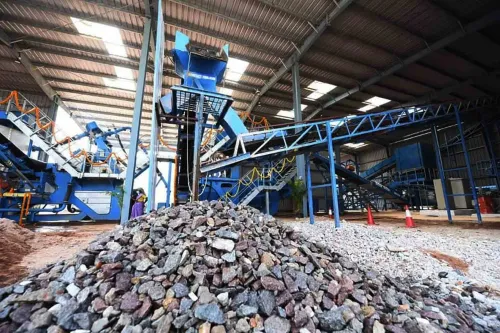
The Quad Critical Minerals Initiative Framework covers mining , processing , and recycling , including recovery from e-waste .
Financing tools include export credit agencies , development finance institutions , guarantees, loans, equity participation, and offtake arrangements.
Projects must have a 'Quad nexus' — located in, operated by, or supplying member countries — to qualify for support.
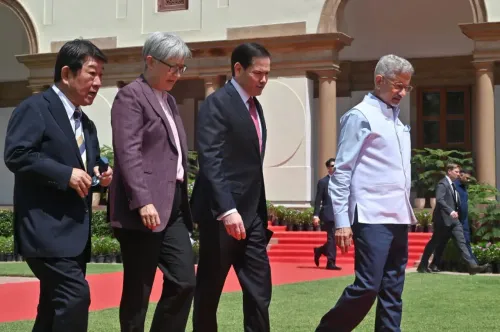
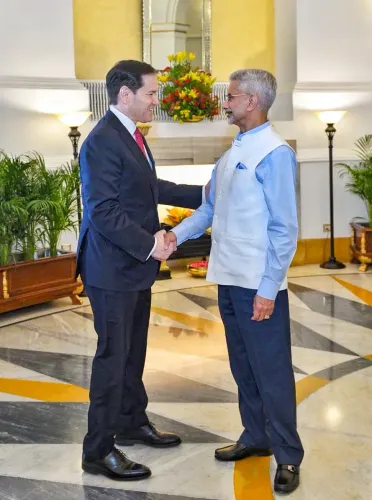
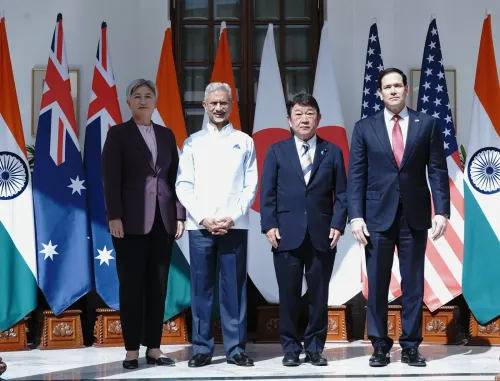
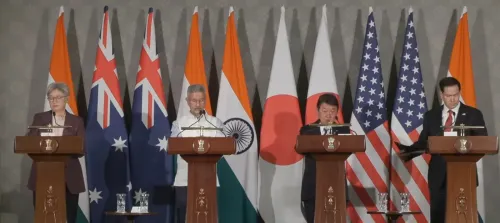
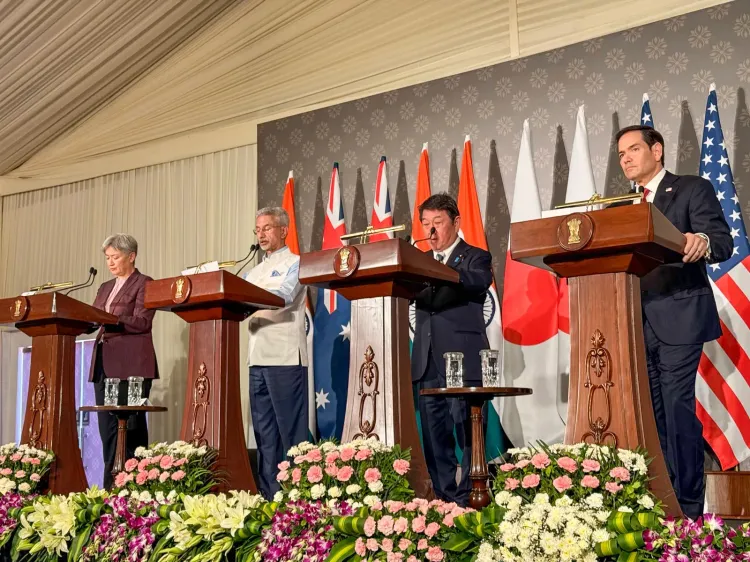
The meeting was attended by S.
Jaishankar , Marco Rubio , Penny Wong , and Toshimitsu Motegi .
The initiative also targets non-market practices and unfair trade distortions in the critical minerals sector.
The India-led Quad — comprising India, Australia, Japan, and the United States — has announced plans to mobilise up to $20 billion in combined government and private sector investment to build secure, diversified critical minerals supply chains, according to a framework released on Tuesday, 27 May 2025. The move is aimed at reducing dependence on concentrated global sources that critics argue pose strategic and economic vulnerabilities.
What the Framework Covers
Under the Quad Critical Minerals Initiative Framework, the four nations have committed to supporting the full minerals value chain — spanning mining, processing, and recycling. The partners will coordinate economic policy tools and investment frameworks to accelerate supply chain diversification across member countries and aligned markets.
A key structural feature of the framework is the identification of projects with a 'Quad nexus' — those located within member countries, operated by firms headquartered in Quad nations, or supplying Quad markets. This targeted approach is designed to address specific supply chain gaps rather than deploy capital broadly.
Financing Mechanisms Proposed
To fund strategic projects, the framework proposes deploying export credit agencies, development finance institutions, and private capital mobilisation tools including guarantees, loans, equity participation, insurance, and offtake arrangements. The Quad partners also plan to explore additional mechanisms to unlock private investment and improve the regulatory environment, including sharing best practices on permitting, licensing, and approvals.
Technology, Recycling and Capacity Building
The framework places significant emphasis on recycling and recovery of critical minerals — particularly from e-waste and scrap materials — to build secondary supply chains within Quad and partner countries. Additionally, the four nations will cooperate on geological mapping, resource assessment, and technology development, while examining measures to counter non-market practices and unfair trade distortions in the sector.
Who Attended the Meeting
The framework was agreed at a ministerial meeting attended by External Affairs Minister S. Jaishankar, US Secretary of State Marco Rubio, Australian Foreign Minister Penny Wong, and Japanese Foreign Minister Toshimitsu Motegi. The gathering underscores the Quad's evolution from a security-focused grouping into an economic and supply-chain coordination platform.
Why This Matters
Critical minerals — including lithium, cobalt, rare earths, and nickel — are essential inputs for electric vehicles, semiconductors, defence systems, and renewable energy infrastructure. Global supply chains for these materials are currently concentrated in a handful of countries, a dependency that advanced economies have flagged as a strategic risk. This initiative is notably one of the most concrete financial commitments the Quad has made since its revival in 2017, and signals a deliberate push to institutionalise economic cooperation alongside security dialogue.
With sectoral coordination now formalised, the next phase will test whether the $20 billion target translates into bankable projects — or remains an aspirational figure.
Point of View
But the framework's real test lies in execution. Quad economic initiatives have historically struggled to move from ministerial communiqués to disbursed capital — the Blue Dot Network and Supply Chain Resilience Initiative both generated headlines without proportionate follow-through. What distinguishes this framework is its explicit financing architecture: export credit agencies, equity participation, and offtake arrangements are instruments that can actually move projects. Whether member governments coordinate these tools in practice, or leave them as parallel national programmes dressed up as collective action, will determine whether this is a turning point or another well-intentioned declaration.
NationPress
9 Oct 2026
Frequently Asked Questions
What is the Quad Critical Minerals Initiative Framework?
It is a joint framework announced by India, Australia, Japan, and the United States to mobilise up to $20 billion in government and private investment for securing critical minerals supply chains. The initiative covers mining, processing, and recycling, and aims to reduce dependence on concentrated global sources.
Why are critical minerals strategically important?
Critical minerals such as lithium, cobalt, rare earths, and nickel are essential for electric vehicles, semiconductors, defence systems, and renewable energy infrastructure. Current global supply chains for these materials are heavily concentrated, which advanced economies consider a strategic and economic vulnerability.
How will the $20 billion investment be deployed?
The framework proposes using export credit agencies, development finance institutions, and private capital tools including guarantees, loans, equity participation, insurance, and offtake arrangements. Projects must have a 'Quad nexus' — located in, operated by, or supplying Quad member countries — to qualify.
What role does recycling play in the framework?
Recycling and recovery of critical minerals — particularly from e-waste and scrap materials — is a key pillar of the initiative. The aim is to build secondary supply chains within Quad and partner countries, reducing reliance on primary extraction alone.
Who represented the four Quad nations at the ministerial meeting?
India was represented by External Affairs Minister S. Jaishankar, the US by Secretary of State Marco Rubio, Australia by Foreign Minister Penny Wong, and Japan by Foreign Minister Toshimitsu Motegi.