Rajnath Singh: India must lead in cutting-edge tech, not just use it
Synopsis
Defence Minister Rajnath Singh used a high-profile Hyderabad aerospace conference to push beyond the usual Aatmanirbharta rhetoric — arguing that India must become a global developer and innovator in cutting-edge technologies, not just a buyer. His spotlight on Non-Destructive Testing as a strategic pillar, alongside AI and digital twins, signals where India's next defence self-reliance push is headed.
Key Takeaways
Defence Minister Rajnath Singh addressed the 36th NDT Annual Conference and 15th International Aerospace NDT Symposium in Hyderabad on 15 November 2026 .
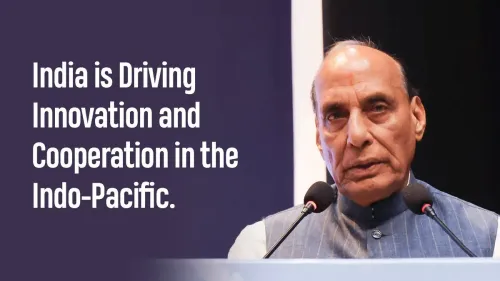
Singh called for India to become a developer, innovator, and global leader in critical technologies — not merely a user.
He stressed that Aatmanirbharta in defence is a 'strategic necessity' , not just an economic goal.
Singh urged strengthening indigenous Non-Destructive Testing (NDT) capabilities, involving PSUs , private firms, start-ups , and MSMEs .
He called for integrating AI , Machine Learning , Robotics , and Digital Twins into defence inspection processes.
Commissioning of INS Vikrant , India's first indigenous aircraft carrier, was cited as a key milestone.
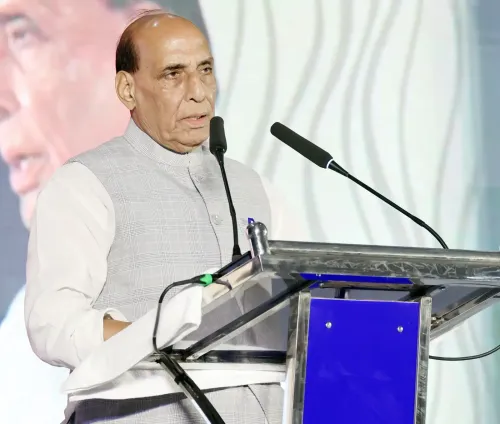
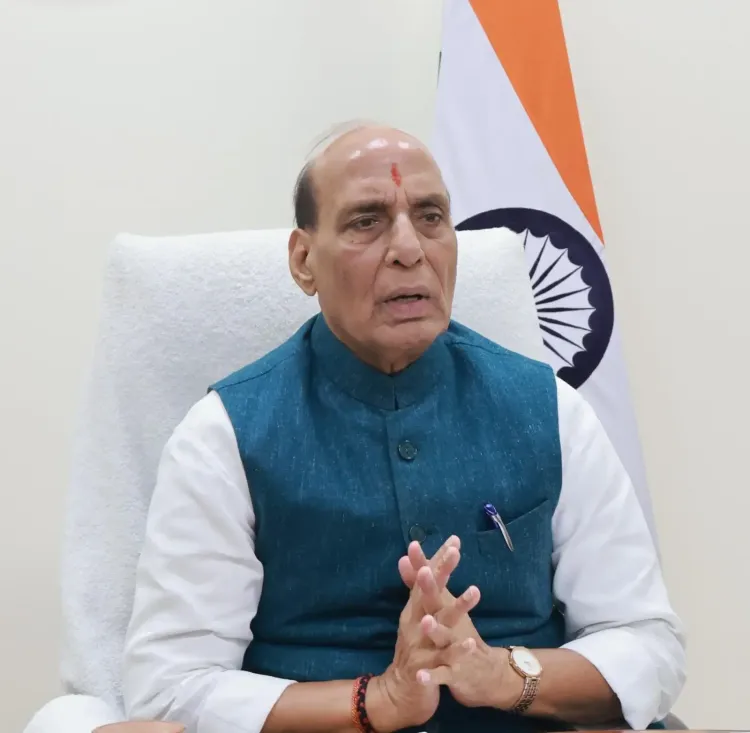
Defence Minister Rajnath Singh on Sunday, 15 November 2026, called on India to transcend its role as a consumer of advanced technologies and emerge as a developer, innovator, and global leader in critical domains. Speaking at two premier defence and aerospace technology forums in Hyderabad, Singh underscored that Aatmanirbharta (self-reliance) in defence is not an economic aspiration alone — it is, he said, a 'strategic necessity'.
The Case for Indigenous NDT Capabilities
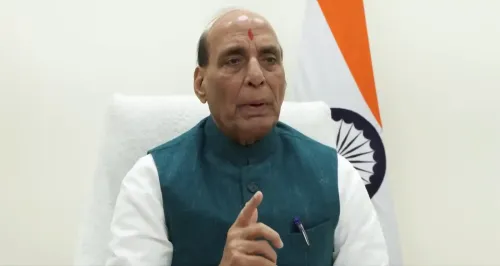
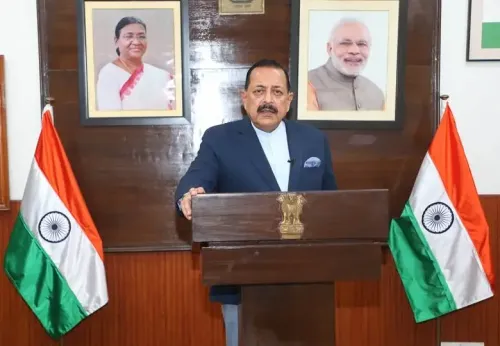
Addressing the 36th Annual Conference on Non-Destructive Evaluation and Enabling Technologies and the 15th International Symposium on Non-Destructive Testing in Aerospace virtually, Singh placed particular emphasis on strengthening India's Non-Destructive Testing (NDT) ecosystem. NDT technologies allow engineers to examine the structural integrity of materials, components, and assemblies without causing any damage to them — a process Singh compared to the way ultrasound and X-rays examine the human body without surgical intervention.
'We must strengthen our indigenous capabilities in advanced inspection technologies, specialised sensors, evaluation equipment and associated software,' Singh said. 'Developing domestic capabilities in these areas is essential for reducing technological dependencies and securing critical defence supply chains.'
Quality as a National Security Imperative
Singh drew a direct line between manufacturing rigour and battlefield readiness. He warned that hidden defects in critical components can affect operational availability, raise maintenance costs, shorten equipment service life, and — in the worst case — 'jeopardise mission success'. His call was for a cultural shift: moving beyond identifying defects after the fact to embedding quality at every stage of the production process.
'In defence applications, including missiles, aircraft, naval platforms and spacecraft, quality is not merely a manufacturing requirement but an essential element of operational reliability and national security,' he said.
He made clear there can be no compromise on the integrity of testing results in strategic applications, adding that inspection results must be 'accurate, reliable and traceable', grounded in robust procedures, appropriate standards, and assessment by qualified professionals.
Role of PSUs, Start-ups and MSMEs
Singh called on the full spectrum of India's defence industrial base — Public Sector Undertakings (PSUs), private manufacturers, start-ups, and MSMEs — to actively participate in building domestic NDT competence. He framed this as a collective national endeavour rather than a government-only initiative.
Pointing to milestones already achieved, the Defence Minister cited advances in missile development, naval platforms, aerospace engineering, radar systems, and space applications as evidence of India's expanding scientific and industrial capabilities. He singled out the commissioning of INS Vikrant — India's first indigenous aircraft carrier — as a landmark moment in the Aatmanirbhar Bharat journey.
AI, Robotics and the Future of Inspection
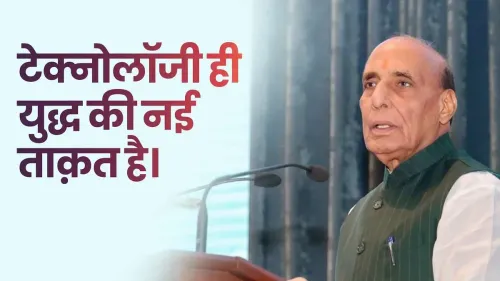
Singh acknowledged the technological transformation reshaping the NDT sector globally. He said Artificial Intelligence (AI), Machine Learning (ML), Robotics, Advanced Sensors, Digital Twins, and Predictive Analytics are dramatically expanding the possibilities of inspection and structural health monitoring. These tools, he noted, can improve the speed and consistency of inspections, enable analysis of complex data, and detect patterns that conventional methods might miss.
Crucially, Singh urged India not to stop at adopting these technologies but to develop indigenous solutions tailored to its own strategic and industrial requirements. 'Investment in research, advanced equipment, software and skilled manpower would strengthen domestic capabilities and enable Indian technologies to find markets internationally,' he said.
What Comes Next
Singh's remarks signal a continued policy push to deepen India's self-reliance across the defence value chain, with NDT positioned as a foundational — if often overlooked — pillar of that effort. As Indian defence platforms grow in sophistication, the pressure on quality assurance infrastructure will only intensify. The Defence Minister urged NDT professionals to continuously upgrade their skills and keep pace with emerging technologies and evolving security requirements, framing innovation as an ongoing obligation, not a one-time achievement.
Point of View
Yet it underpins the reliability of every platform India builds. By framing NDT as a strategic necessity, the Defence Ministry is quietly acknowledging that indigenous hardware ambitions can only be sustained if quality-assurance infrastructure keeps pace. The call to move from defect detection to defect prevention is more than a process improvement directive; it is a signal that India's defence industrial base is maturing enough to demand manufacturing culture change. The harder question — whether PSUs and MSMEs have the workforce and capital to actually build world-class NDT competence — remains unanswered.
NationPress
15 Nov 2026
Frequently Asked Questions
What did Rajnath Singh say about India's role in advanced technologies?
Defence Minister Rajnath Singh said India must become a developer, innovator, and global leader in cutting-edge technologies — not merely a user of them. Speaking at a Hyderabad NDT conference on 15 November 2026, he stressed that Aatmanirbharta in defence is a 'strategic necessity' with direct implications for national security.
What is Non-Destructive Testing (NDT) and why is it important for defence?
Non-Destructive Testing (NDT) allows inspection of the integrity of materials, components, and structures without causing any damage to them — analogous to how ultrasound examines the human body without surgery. In defence, NDT is critical for detecting hidden defects in missiles, aircraft, naval platforms, and spacecraft before they affect operational reliability or mission success.
Which sectors did Rajnath Singh highlight as examples of India's indigenous defence progress?
Singh cited advances in missile development, naval platforms, aerospace engineering, radar systems, and space applications. He specifically mentioned the commissioning of INS Vikrant — India's first indigenous aircraft carrier — as a landmark milestone in the Aatmanirbhar Bharat journey.
How does the government plan to build indigenous NDT capabilities?
Singh called on Public Sector Undertakings, private manufacturers, start-ups, and MSMEs to collectively build domestic NDT competence. He also urged investment in research, advanced equipment, software, and skilled manpower, and called for the integration of AI, Machine Learning, Robotics, Digital Twins, and Predictive Analytics into inspection processes.
Where and when did Rajnath Singh deliver this address?
Singh addressed the 36th Annual Conference on Non-Destructive Evaluation and Enabling Technologies and the 15th International Symposium on Non-Destructive Testing in Aerospace, held in Hyderabad on 15 November 2026. He participated virtually from New Delhi.