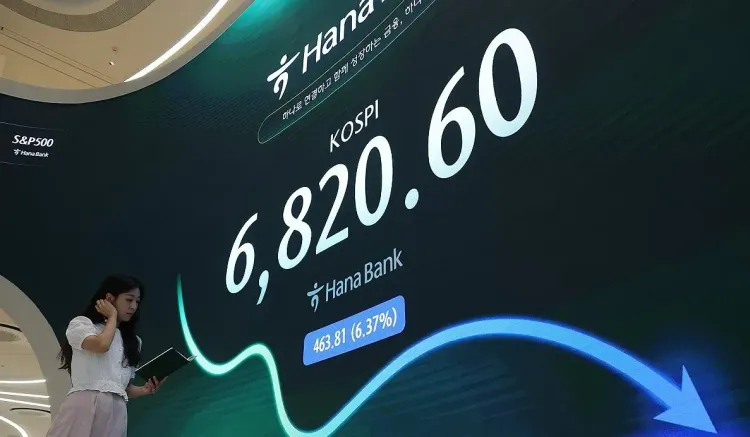
KOSPI tumbles 4.58% as AI spending doubts hammer South Korean tech stocks
Synopsis
Seoul's KOSPI shed nearly 4.6% in a single session, erasing two days of AI-optimism gains as Wall Street's overnight chip sell-off hit Samsung Electronics and SK hynix hard. With foreigners dumping over 3.33 trillion won and a circuit-breaker sidecar triggered mid-morning, the session underscores just how fragile sentiment around AI infrastructure spending remains — even after big tech earnings.
Key Takeaways
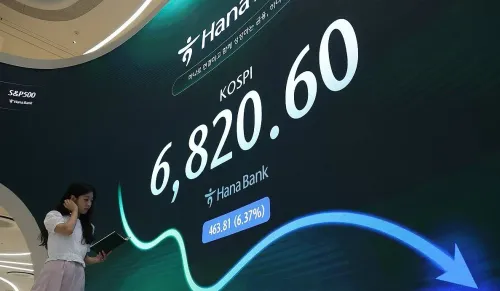
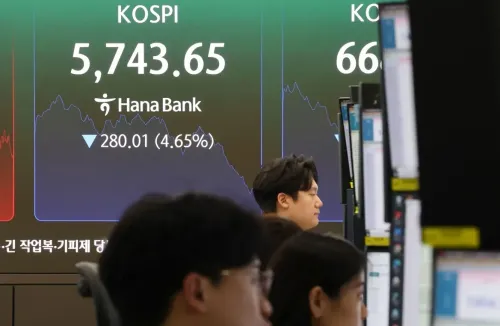
The KOSPI fell 4.58 per cent ( 301.88 points ) to 6,296.38 on 6 August , reversing two consecutive days of gains.
SK hynix plunged 10.37 per cent and Samsung Electronics tumbled 6.3 per cent , leading semiconductor losses.
A sell-side sidecar was activated at 10:18 am , halting programme trading for five minutes as losses accelerated.
Foreign investors sold a net 3.33 trillion won worth of stocks; retail buyers absorbed most of the selling.
Hanwha Aerospace and Samsung Biologics bucked the trend, rising 4.67 per cent and 1.54 per cent respectively.
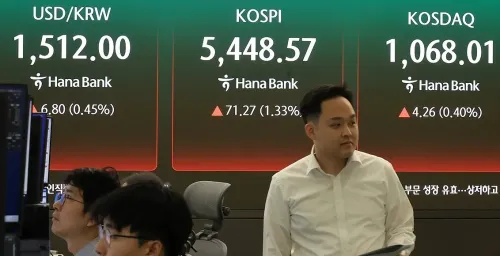
The Korean won strengthened slightly to 1,423.8 won per US dollar as of 3:30 pm local time .
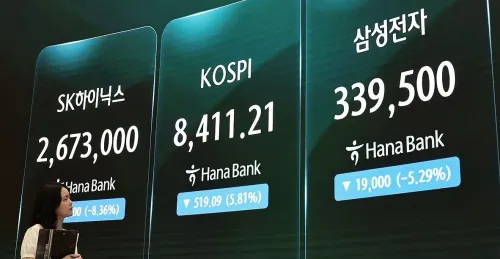
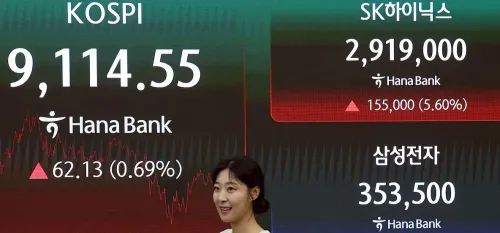
South Korea's benchmark Korea Composite Stock Price Index (KOSPI) plunged 4.58 per cent, or 301.88 points, to close at 6,296.38 on Thursday, 6 August, as persistent doubts over the profitability of large-scale artificial intelligence (AI) infrastructure spending triggered a broad sell-off in technology shares. The index touched an intraday low of 6,238.32 before recovering slightly. The Korean won edged higher against the US dollar, quoted at 1,423.8 won as of 3:30 pm local time.
Circuit Breaker Triggered as Losses Deepen
After opening 1.81 per cent lower, the KOSPI extended its slide rapidly, prompting the bourse operator to activate a sell-side sidecar for five minutes at 10:18 am, temporarily halting programme trading for KOSPI-listed shares. Trade volume was relatively light at 281.8 million shares worth 25.9 trillion won (approximately $18.2 billion). Foreigners were the dominant sellers, offloading a net 3.33 trillion won worth of stocks, while institutions sold a net 121.8 billion won. Retail investors stepped in as buyers, purchasing a net 3.34 trillion won.
Semiconductor Stocks Bear the Brunt
Semiconductor shares suffered the steepest losses. Samsung Electronics tumbled 6.3 per cent to 203,500 won, while memory chipmaker SK hynix plunged 10.37 per cent to 1.5 million won. SK Square, the parent company of SK hynix, nosedived 13.32 per cent to 970,000 won, and Samsung Electro-Mechanics slumped 9.37 per cent to 1.23 million won. Shipbuilders also weakened, with HD Hyundai Heavy Industries declining 0.39 per cent to 507,000 won and Hanwha Ocean falling 1.31 per cent to 90,700 won. Retail and financial names were not spared: Hyundai Department Store sank 3.36 per cent to 106,400 won and Samsung Securities dropped 2.25 per cent to 95,400 won.
Wall Street Sell-Off Sets the Tone
Overnight on Wall Street, investors sold off Nasdaq-listed heavyweights including Alphabet and Advanced Micro Devices (AMD), pushing the tech-heavy Nasdaq down 0.83 per cent on scepticism about the return on massive AI infrastructure investment. The contagion spread swiftly to Seoul given South Korea's deep exposure to the global semiconductor supply chain. Notably, the KOSPI had gained 1.62 per cent and 3.76 per cent on Tuesday and Wednesday respectively, driven by a brief easing of AI profitability concerns — gains that Thursday's session largely reversed.
Analyst Take: Peak Fear or Persistent Headwind?
Han Ji-young, an analyst at Kiwoom Securities, attributed the reversal to losses in US chip stocks and profit-taking. 'Despite improvement in geopolitical and macroeconomic conditions, the KOSPI lost momentum due to losses in U.S. chip stocks and profit-taking,' Han said, adding that 'investors still want to see strong evidence of massive AI spending and growth.' However, Han struck a cautiously optimistic note: 'Investors' concerns over AI spending seemed to have already peaked following recent earnings reports by big tech companies.' Not all sectors closed in the red. Hanwha Aerospace rose 4.67 per cent to 1.05 million won, buoyed by eased Middle East tensions that also lifted the Dow Jones Industrial Average by 0.49 per cent to a new record high. Samsung Biologics gained 1.54 per cent to 1.51 million won.
What to Watch Next
With winners outnumbering losers 489 to 380 despite the index-level carnage, the breadth picture was less dire than headline numbers suggest. Markets will now focus on upcoming earnings disclosures from major US and Asian chipmakers, as well as any signals from the US Federal Reserve on the pace of rate adjustments. Any concrete evidence of AI-driven revenue growth from big tech could help stabilise sentiment in Seoul's semiconductor-heavy index.
Point of View
With Samsung Electronics and SK hynix together commanding an outsized share of index weight. When Wall Street sneezes on chip valuations, Seoul catches a cold far worse than the original. The two-day rally that preceded this sell-off was built on thin conviction — a brief pause in AI anxiety rather than any new earnings evidence — making the reversal predictable in hindsight. The more important signal is in the breadth data: winners still outnumbered losers 489 to 380, suggesting institutional positioning, not a fundamental re-rating, drove the headline number. Markets are waiting for proof that AI spending translates into revenue; until that arrives, KOSPI's semiconductor giants will remain hostage to every US data print.
NationPress
6 Aug 2026
Frequently Asked Questions
Why did the KOSPI fall more than 4 per cent on 6 August?
The KOSPI dropped 4.58 per cent to 6,296.38 on 6 August due to renewed doubts over the profitability of AI infrastructure spending, which triggered a sell-off in semiconductor stocks after Wall Street's Nasdaq fell overnight. The decline reversed gains of 1.62 per cent and 3.76 per cent recorded on Tuesday and Wednesday.
Which stocks were the biggest losers in the Seoul market sell-off?
SK Square led declines with a 13.32 per cent fall, followed by SK hynix (down 10.37 per cent), Samsung Electro-Mechanics (down 9.37 per cent), and Samsung Electronics (down 6.3 per cent). Semiconductor stocks were the hardest-hit sector overall.
What is a sell-side sidecar and why was it triggered?
A sell-side sidecar is a temporary five-minute halt on programme selling, activated when rapid automated sell orders threaten to destabilise the market. It was triggered at 10:18 am on 6 August as the KOSPI's losses accelerated sharply after a weak opening.
Are AI spending concerns expected to persist in South Korean markets?
Analysts are divided. Kiwoom Securities analyst Han Ji-young suggested that investor concerns over AI spending 'seemed to have already peaked following recent earnings reports by big tech companies,' but stressed that markets still need 'strong evidence of massive AI spending and growth' before confidence fully returns.
Which sectors or stocks gained despite the broader market decline?
Defence conglomerate Hanwha Aerospace rose 4.67 per cent to 1.05 million won, and pharmaceutical firm Samsung Biologics gained 1.54 per cent to 1.51 million won. Eased Middle East tensions were cited as a tailwind for defence-related names.