Is India’s First Government AI Clinic a Game Changer for Public Health?
Synopsis
India has launched its first government AI clinic, revolutionizing the public health system by integrating advanced technology for early disease detection and improved diagnostics. This groundbreaking initiative aims to enhance healthcare accessibility, especially in underserved areas, while opening new avenues for healthcare startups.
Key Takeaways
AI enhances early disease detection .
Improves diagnostic accuracy and speed.
Potential for healthcare startups to thrive.
Increases access to healthcare in remote areas .
Opportunity to replicate this model in other states .
Dubai/New Delhi, Jan 5 (NationPress) India has recently inaugurated its first government-operated artificial intelligence (AI) clinic at the Government Institute of Medical Sciences (GIMS) in Greater Noida, signaling a significant advancement in the incorporation of cutting-edge technology into the nation's public health framework, as reported by media sources.
This initiative is designed to enhance early disease detection, diagnostics, and treatment, which are essential for improving patient outcomes and survival rates, according to Gulf News.
The clinic is expected to utilize AI for genetic screening, facilitating quicker identification of conditions like cancer, heart disease, kidney issues, and liver ailments. Additionally, AI technologies at this center will aid in interpreting X-rays, ultrasounds, CT scans, MRI results, and laboratory tests, thereby helping medical professionals increase the precision and efficiency of diagnosis.
“The clinic will leverage artificial intelligence and genetic screening to evaluate blood tests, imaging scans, and other clinical information,” stated Brigadier (Dr) Rakesh Kumar Gupta, Director of GIMS.
He further mentioned that this initiative could create new opportunities for healthcare startups.
Typically, an AI clinic operates through sophisticated algorithms and automation, assisting healthcare professionals in diagnosis, treatment planning, and patient management.
AI health centers may function as independent units or as integrated hospital departments, where AI systems analyze patient data in real-time to bolster clinical decisions, as indicated in the report.
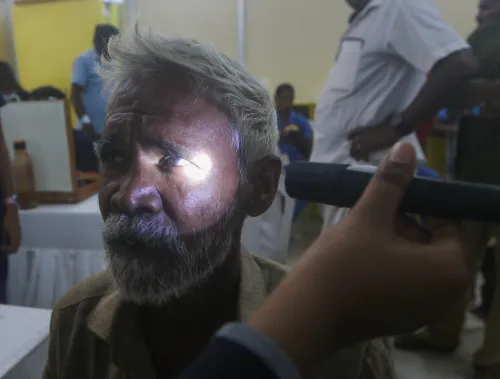
One of the significant benefits is that it enhances access to quality healthcare, especially in remote and underserved regions, where specialist availability is often minimal.
While AI tools are currently employed in select private hospitals and diagnostic labs, this marks the first dedicated government AI clinic. The report also suggested that this AI model could be expanded across government hospitals in various states.
AI technologies are recognized for their critical role in delivering healthcare, particularly in laboratories, radiology, and cancer screening.
In pathology, physicians can utilize AI for tissue analysis and disease detection that might elude the human eye. This not only decreases processing times but also boosts diagnostic accuracy.
AI has demonstrated considerable potential in detecting early signs of cancers, such as breast and lung cancer, by minimizing false positives and negatives. Early detection significantly improves survival rates and treatment outcomes.
This advanced technology has also proven its capability in processing extensive genomic datasets to discover disease-related biomarkers and predict patient responses to treatments. It can facilitate precision therapy by customizing drug dosages and lifestyle modifications, based on an analysis of medical history, lifestyle choices, and genetic data.
Point of View
The establishment of India's first government AI clinic is a pivotal moment in the healthcare landscape. It not only signifies the adoption of advanced technology in public health but also reflects a commitment to improving healthcare access across the country. As the nation embraces these innovations, it is essential to focus on how they can be implemented effectively to benefit all citizens.
NationPress
20 Sept 2026
Frequently Asked Questions
What is the purpose of the AI clinic?
The AI clinic aims to enhance early disease detection, diagnostics, and treatment, ultimately improving patient outcomes and survival rates.
Where is India's first government AI clinic located?
It is located at the Government Institute of Medical Sciences (GIMS) in Greater Noida.
What technologies will be used at the clinic?
The clinic will utilize AI for genetic screening, interpreting medical images, and analyzing clinical data.
How can AI improve healthcare access?
AI can enhance healthcare access, particularly in remote areas, by providing faster diagnostics and supporting healthcare professionals.
Will this model be replicated in other states?
Yes, the AI model may be expanded to other government hospitals across different states.