Bahrain FM arrives in New Delhi for 18th BRICS Summit 2026
Synopsis
Bahrain's top diplomat landed in New Delhi for the 18th BRICS Summit, signalling deeper India-GCC ties. On day one, PM Modi secured the unanimous New Delhi Declaration 2026 and pushed for Global South representation in technology governance — positioning India as the bloc's agenda-setter in a fractured multilateral landscape.
Key Takeaways
Bahrain FM Abdullatif bin Rashid Al Zayani , current GCC chair , arrived in New Delhi on 12 September 2026 for the 18th BRICS Summit .
The New Delhi Declaration 2026 was unanimously adopted at the summit held at Bharat Mandapam .
PM Modi launched two postage stamps commemorating 20 years of BRICS .
Modi called for reform in global institutions, stressing 'representation, responsiveness and rule making.' Leaders from 11 member nations and 10 partner countries are participating in the two-day summit.
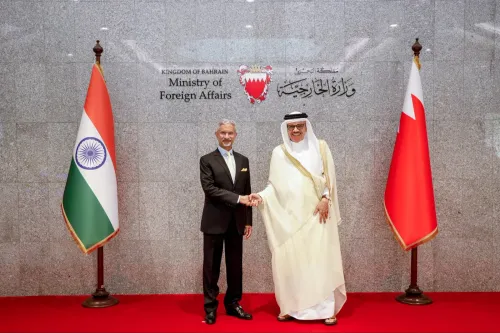
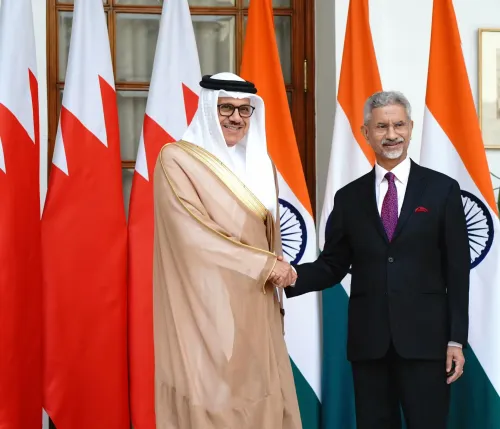
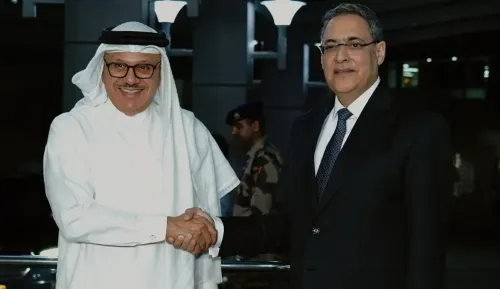
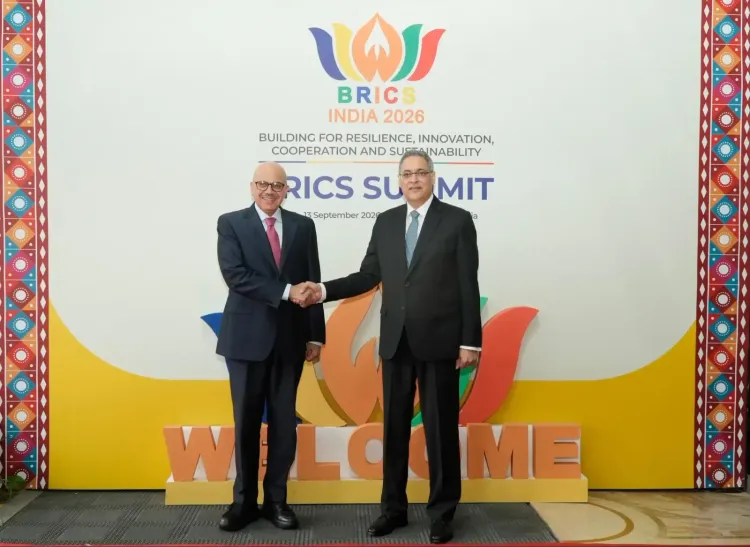
Bahrain Foreign Minister Abdullatif bin Rashid Al Zayani arrived in New Delhi on Saturday, 12 September 2026, to attend the 18th BRICS Summit at the Bharat Mandapam. Aseem Mahajan, Additional Secretary (Gulf) at the Ministry of External Affairs (MEA), received the visiting minister at the airport. Al Zayani, who also serves as the current chair of the Gulf Cooperation Council (GCC), is expected to hold discussions aimed at deepening India-GCC cooperation on the summit's sidelines.
MEA highlights India-GCC ties
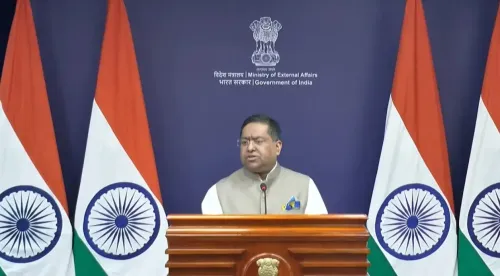
The MEA, in a post on X, extended a 'warm welcome' to the Bahraini foreign minister and noted that the visit would 'give boost to India-GCC cooperation.' The arrival underscores the growing strategic engagement between India and Gulf nations, particularly as Bahrain holds the rotating GCC chairmanship this year.
India's BRICS Chairship and the summit theme
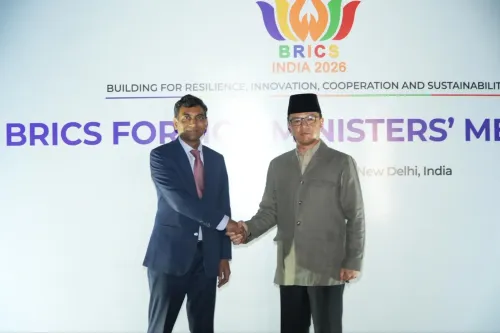
India is hosting the two-day 18th BRICS Summit at the Bharat Mandapam in New Delhi from Saturday. The chairship is guided by the theme 'Building for Resilience, Innovation, Cooperation and Sustainability,' reflecting Prime Minister Narendra Modi's vision of a people-centric approach rooted in the spirit of 'Humanity First.' The summit has brought together leaders and senior representatives from all 11 BRICS member states — Brazil, China, Egypt, Ethiopia, India, Indonesia, Iran, Russia, Saudi Arabia, South Africa, and the United Arab Emirates — along with 10 partner countries and outreach invitees.
New Delhi Declaration 2026 adopted
In a significant outcome on the summit's opening day, PM Modi announced the unanimous adoption of the New Delhi Declaration 2026 and launched two commemorative postage stamps marking 20 years of BRICS. In his closing remarks at the session on 'Inclusive Global Governance and Strengthening Multilateralism,' Modi stated, 'The New Delhi Declaration adopted today gives clear direction to our shared resolve. Now it is our responsibility to convert these resolutions into concrete results.'
The Prime Minister described the deliberations as 'meaningful and constructive,' stressing that the changing global order demands institutional reform. 'It is clear from today's discussion that the changing world cannot be managed by old institutions. Improvement is required in all three – representation, responsiveness and rule making,' he said, adding that the Global South must have 'equal participation in the making of future technology and their rules.'
World leaders join tree plantation initiative
Several heads of state and government joined PM Modi for a tree plantation initiative in the capital. Among them were Russian President Vladimir Putin, Chinese President Xi Jinping, Indonesian President Prabowo Subianto, South African President Cyril Ramaphosa, Egyptian President Abdel Fattah el-Sisi, Abu Dhabi Crown Prince Sheikh Khaled bin Mohamed bin Zayed Al Nahyan, Iranian President Masoud Pezeshkian, Ethiopian Prime Minister Abiy Ahmed Ali, and Brazil Foreign Minister Mauro Vieira.
What lies ahead
The summit's second day is expected to feature further sessions on multilateral cooperation, sustainable development, and technology governance. The New Delhi Declaration is likely to serve as the blueprint for BRICS priorities through 2027, and bilateral meetings on the sidelines — including India-Bahrain and India-GCC engagements — could yield concrete announcements. With India steering the bloc during a period of geopolitical flux, the summit's outcomes will be closely watched across both the Global South and established multilateral institutions.
Point of View
The real diplomatic architecture being built is India's bridge to the Gulf bloc through BRICS. With Bahrain chairing the GCC, this summit offers New Delhi a rare two-for-one: multilateral credibility within BRICS and bilateral leverage with the Gulf, at a time when energy security, remittance corridors, and defence ties are all in play.
NationPress
12 Sept 2026
Frequently Asked Questions
Why is the Bahrain Foreign Minister attending the BRICS Summit 2026?
Bahrain FM Abdullatif bin Rashid Al Zayani is attending as the current chair of the Gulf Cooperation Council (GCC) and as an outreach invitee. His visit is aimed at boosting India-GCC cooperation on the sidelines of the 18th BRICS Summit in New Delhi.
What is the New Delhi Declaration 2026?
The New Delhi Declaration 2026 is the outcome document unanimously adopted at the 18th BRICS Summit on 12 September 2026. PM Modi described it as giving 'clear direction' to the bloc's shared resolve on inclusive governance and multilateralism.
Which countries are BRICS members in 2026?
BRICS comprises 11 members: Brazil, China, Egypt, Ethiopia, India, Indonesia, Iran, Russia, Saudi Arabia, South Africa, and the United Arab Emirates. Ten partner countries, including Malaysia, Nigeria, and Thailand, are also associated with the grouping.
What is the theme of India's BRICS Chairship?
India's BRICS Chairship theme is 'Building for Resilience, Innovation, Cooperation and Sustainability,' reflecting PM Modi's people-centric approach rooted in the principle of 'Humanity First.'
Where is the 18th BRICS Summit being held?
The two-day summit is being held at the Bharat Mandapam convention centre in New Delhi, starting 12 September 2026.