Bangladesh extremist threat grows as UNSC flags AQIS activity, police on alert
Synopsis
The UN Security Council has flagged Bangladesh as a potential AQIS base — even as Dhaka's Home Minister insists militancy is extinct. A pressure-cooker bomb recovered in Savar, nationals reportedly joining the TTP, and a campaign to rehabilitate a convicted terror conspirator paint a far more alarming picture than official statements acknowledge.
Key Takeaways
The UNSC's 38th Monitoring Team report warned that AQIS is attempting to use Bangladesh as a base to establish terrorist cells.
Home Minister Salahuddin Ahmed has publicly claimed militancy "no longer exists," contradicting police reports of a nationwide surge in militant activity.
In June 2026 , authorities issued a terror alert over a possible attack on police headquarters; on 12 August 2026 , a homemade bomb was recovered in Dhaka's Savar area .
AQIS leader Ustadh Usama Mahmood outlined a four-part strategy targeting Bangladesh's religious community, prioritising long-term movement-building over electoral participation.
Influential retired military officers are reportedly working to overturn the convictions of Syed Ziaul Haque , a convicted conspirator in the 2015 killing of American citizen Avijit Roy , for whom the US State Department offers a $5 million reward.
Analysts warn that critics of religious orthodoxy and minority rights advocates face renewed risk of intimidation in post-2024 Bangladesh.
Bangladesh is confronting a deepening security crisis two years after the ouster of former Prime Minister Sheikh Hasina in August 2024, with the United Nations Security Council (UNSC) warning that Al-Qaida in the Indian Subcontinent (AQIS) has been attempting to use the country as a base to establish terrorist cells. The warning, contained in the 38th report of the UN Analytical Support and Sanctions Monitoring Team, was submitted to the Security Council committee dealing with Islamic State, Al-Qaida and associated groups.
The disclosure has laid bare a sharp contradiction at the heart of Dhaka's security posture: while Home Minister Salahuddin Ahmed has publicly maintained that militancy "no longer exists in the country," Bangladeshi police have in recent months flagged a surge in militant activities nationwide, according to reports.
What the UN Report Found
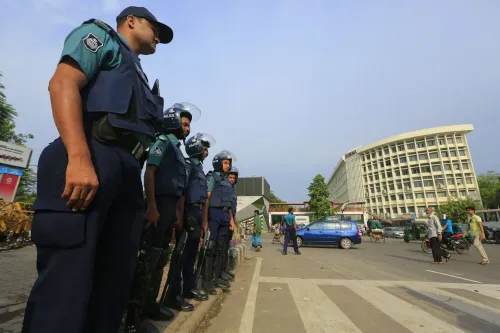
Although the UN document referenced Bangladesh in a single sentence, it triggered significant media coverage within the country, with several publications drawing attention to the rise of Muslim radicalism. Police responded by instructing field-level officers to "remain on high alert," according to a report in The Diplomat.
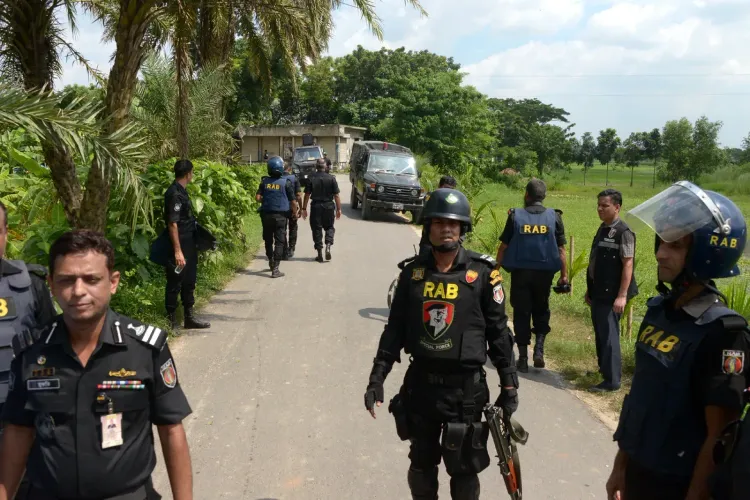
The same report cited a series of escalating incidents: in June 2026, authorities issued a terror alert warning of a possible attack on police headquarters. It also revealed that Bangladeshi nationals allegedly joined the Tehreek-e-Taliban Pakistan (TTP), and that on 12 August 2026, police recovered a homemade pressure-cooker bomb from Dhaka's Savar area.
AQIS Strategy in Post-2024 Bangladesh
According to the report, AQIS's post-2024 strategy was most clearly articulated by its leader Ustadh Usama Mahmood in a statement issued through As-Sahab Media, addressed to Bangladesh's "religious community" following Hasina's removal from power. The statement outlined a four-part approach: embrace da'wah (mass preaching) as the primary vehicle; build 'capability for resistance and revolution'; use that capability to pressure the state into reform from outside; and avoid entering government altogether.
As The Diplomat noted, "The document frames electoral or bureaucratic participation as a trap that has historically neutered Islamist movements from Cairo to Islamabad, and argues instead for a long, patient movement-building strategy, deepening roots in the population rather than contesting power directly."
History of Violence and Renewed Risk
Between 2013 and 2016, AQIS-linked operatives in Bangladesh built a grim record of targeting atheist bloggers, secular publishers, and academics. Writers Avijit Roy and Faisal Arefin Deepan were among those killed for writings the terror group deemed offensive to Islam. The Diplomat's report cautioned that amid AQIS's renewed confidence in post-2024 Bangladesh, "critics of religious orthodoxy, and minority rights advocates could once again face intimidation — even if the country does not see a return to mass-casualty attacks."
The Syed Ziaul Haque Controversy
Compounding concerns, a separate report revealed that influential retired military officers in Bangladesh are reportedly working to suspend the convictions of Syed Ziaul Haque — a dismissed army officer and convicted conspirator in the 2015 killing of American citizen Avijit Roy — drop his pending criminal cases, and pave the way for his return to military service. The US State Department continues to offer a $5 million reward for information leading to his arrest or conviction.
Salah Uddin Shoaib Choudhury, Editor of Bangladeshi newspaper Blitz, writing in The Jerusalem Post, warned that if the campaign succeeds, it "would raise uncomfortable questions about Bangladesh's commitment to counterterrorism cooperation with Washington and about the future of one of America's most prominent terrorism cases in South Asia."
What Comes Next
Bangladesh's ability to reconcile its official denials with ground-level police alerts — and its handling of the Ziaul Haque case — will be closely watched by international partners, particularly the United States. The UNSC report has effectively placed Dhaka under a security spotlight it cannot easily dismiss.
Point of View
And a government that cannot reconcile its public posture with internal intelligence is poorly positioned to dismantle those networks. The campaign to rehabilitate Syed Ziaul Haque is the most telling signal: if a convicted conspirator in the killing of a US citizen can be quietly restored to military service, it raises serious questions about whether Dhaka's counterterrorism commitments are structural or merely transactional. India and the United States have both invested heavily in Bangladesh's stability — and both have reason to watch this trajectory with alarm.
NationPress
22 Aug 2026
Frequently Asked Questions
What did the UN Security Council say about Bangladesh and AQIS?
The UNSC's 38th Analytical Support and Sanctions Monitoring Team report warned that Al-Qaida in the Indian Subcontinent (AQIS) has been attempting to use Bangladesh as a base to establish terrorist cells. The finding was submitted to the Security Council committee dealing with Islamic State, Al-Qaida and associated groups.
Why is there a contradiction in Bangladesh's official stance on militancy?
Home Minister Salahuddin Ahmed has publicly stated that militancy 'no longer exists' in Bangladesh, but Bangladeshi police have simultaneously reported a surge in militant activities nationwide and instructed field officers to remain on high alert. A pressure-cooker bomb was also recovered in Dhaka's Savar area on 12 August 2026.
Who is Syed Ziaul Haque and why does his case matter?
Syed Ziaul Haque is a dismissed Bangladeshi army officer convicted as a conspirator in the 2015 killing of American citizen Avijit Roy. The US State Department offers a $5 million reward for information leading to his arrest or conviction. Reports indicate influential retired military officers in Bangladesh are working to overturn his convictions and restore him to military service, raising concerns about Dhaka's counterterrorism credibility.
What is AQIS's current strategy in Bangladesh?
According to reports citing AQIS leader Ustadh Usama Mahmood's statement through As-Sahab Media, the group's post-2024 strategy prioritises mass preaching (da'wah), building grassroots capability, pressuring the state from outside, and deliberately avoiding electoral or government participation — framing the latter as a historical trap for Islamist movements.
What are the risks for minorities and secular voices in Bangladesh?
Analysts warn that critics of religious orthodoxy and minority rights advocates could face renewed intimidation amid AQIS's growing confidence in post-2024 Bangladesh. Between 2013 and 2016, AQIS-linked operatives killed writers including Avijit Roy and Faisal Arefin Deepan; reports suggest a similar targeting pattern could re-emerge even without mass-casualty attacks.