Bangladesh RMG exports to US drop 7.55% as trade pact boost awaits
Synopsis
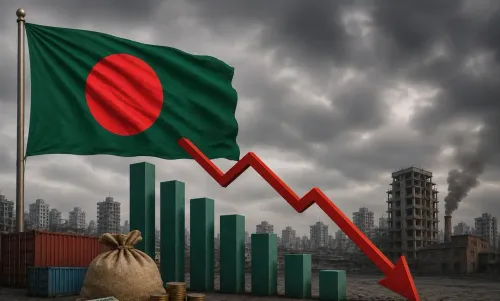
Bangladesh's garment exports to the US have fallen 7.55% even as Dhaka buys billions in US goods under a February 2026 trade deal — a deal whose export benefits have yet to materialise. With production costs up 30–40% and India, Vietnam, and China capturing diverted orders, Bangladesh's RMG sector faces a structural squeeze that no bilateral commitment alone can fix.
Key Takeaways
Bangladesh's RMG exports to the US fell 7.55% year-on-year in the February–July 2026 period.
Total exports stood at $4.65 billion in January–July 2026, down from $4.96 billion in the same period of 2025, per OTEXA data.
A February 2026 trade agreement has prompted Dhaka to commit billions to US goods — including Boeing aircraft, LNG, and grains — but export gains remain pending implementation.
Production costs in Bangladesh's garment sector have surged 30–40% over recent years due to higher energy, wage, interest rate, and currency pressures.
Regional rivals India , Vietnam , and China are gaining market share as Bangladesh struggles to compete on price.
An additional US tariff of 10% and Middle East conflict are adding further headwinds for Bangladeshi exporters.
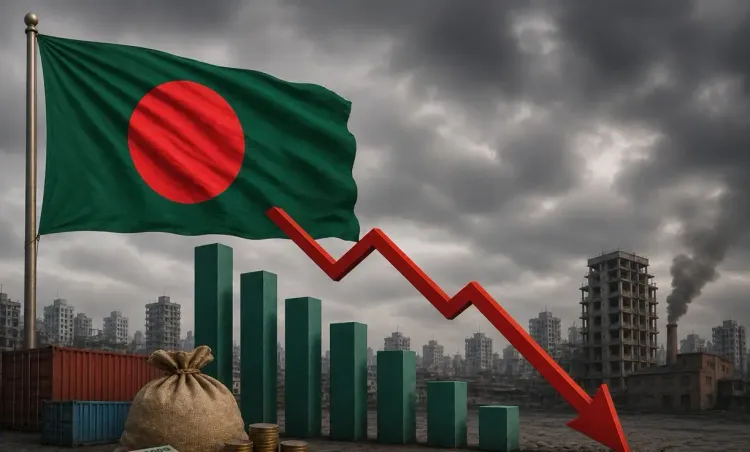
Bangladesh's ready-made garment (RMG) exports to the United States declined 7.55% year-on-year in the February–July 2026 period, even as Dhaka ramps up purchases of American goods under a bilateral trade agreement signed in February 2026, according to a new report. The data, drawn from the Office of Textiles and Apparel (OTEXA), underscores a widening gap between Bangladesh's import commitments and its export performance in its most critical overseas market.
The Numbers Behind the Decline
Bangladesh recorded $4.65 billion in garment exports to the US during the January–July 2026 period, down from $4.96 billion in the same period of 2025, according to OTEXA data. The drop stands in contrast to regional peers: Cambodia and Indonesia both posted growth in their US apparel shipments over the same window, suggesting the pressure on Bangladesh is at least partly structural rather than purely demand-driven.
Trade Pact Promise Yet to Translate
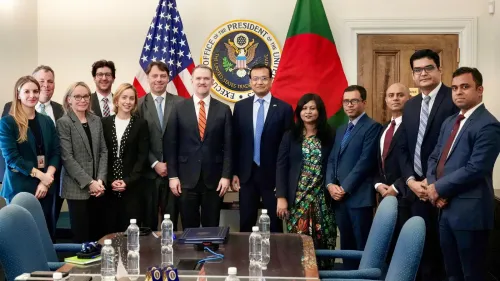
Following the February 2026 trade agreement, Dhaka has signed purchasing commitments worth billions of dollars for Boeing aircraft, liquefied natural gas, and grains. Yet, according to reports, its exports in the other direction have yet to see a substantial boost as the country 'waits for the trade pact to be implemented.' The asymmetry — buy now, benefit later — leaves Bangladesh's RMG sector in a difficult holding pattern, with no guaranteed export uplift in sight.
Cost Pressures Eroding Competitiveness
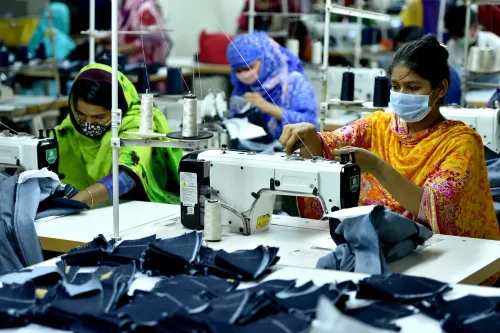
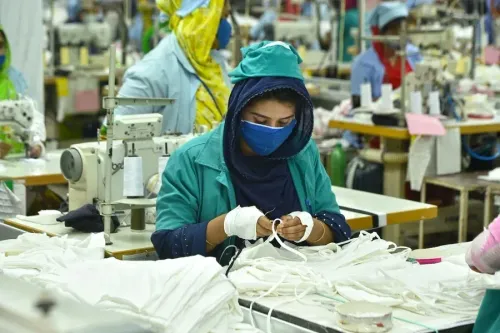
Industry estimates indicate that production costs in Bangladesh's garment sector have surged 30–40% over the past several years, driven by higher gas and electricity prices, rising wages, elevated interest rates, and exchange-rate depreciation. Exporters reportedly find it difficult to absorb these costs because of limited room to pass increases on to overseas buyers — a constraint that raises the risk of lost orders and shrinking market share.
Even a marginal price differential is enough to redirect an order to a competitor, industry leaders have noted. Compounding the challenge, escalating conflict in the Middle East and an additional 10% tariff imposed by the US administration are adding fresh layers of pressure on Bangladeshi exporters.
India, Vietnam, China Gaining Ground
Bangladesh's exporters are reportedly losing orders to regional rivals including India, Vietnam, and China as cost structures diverge. According to experts, Bangladesh has failed to capture the market share diverted from China during earlier trade tensions, with regional competitors better positioned to absorb the shift. Supply chain constraints and domestic energy shortages have further hampered Bangladesh's ability to scale up output and meet delivery timelines, according to the latest US apparel import data.
What to Watch
The trajectory of Bangladesh's RMG sector will hinge on two key variables: the pace of implementation of the February 2026 trade agreement with the US, and the country's ability to contain domestic production costs. Industry bodies and trade observers are watching whether Dhaka can leverage its bilateral purchasing commitments as diplomatic capital to secure preferential market access — without which the cost gap with competitors may prove difficult to bridge.
Point of View
But it cannot substitute for competitive production costs — and with costs up 30–40%, Dhaka is asking buyers to absorb a premium that India, Vietnam, and China simply do not charge. The February 2026 trade pact may eventually unlock preferential access, but the window is narrowing: once orders migrate to competitors, they rarely return. The deeper risk is that Bangladesh mistakes diplomatic activity for structural reform and loses another cycle of China-plus-one diversification to more agile regional rivals.
NationPress
1 Oct 2026
Frequently Asked Questions
How much have Bangladesh's RMG exports to the US declined in 2026?
Bangladesh's ready-made garment exports to the US fell 7.55% year-on-year in the February–July 2026 period. In absolute terms, exports totalled $4.65 billion in January–July 2026, compared with $4.96 billion in the same period of 2025, according to OTEXA data.
What is the February 2026 US–Bangladesh trade agreement?
The agreement, signed in February 2026, is a bilateral trade pact under which Bangladesh has committed to purchasing billions of dollars' worth of US goods, including Boeing aircraft, liquefied natural gas, and grains. However, the export benefits for Bangladesh's garment sector are yet to materialise as the implementation of the pact remains pending.
Why are Bangladesh's garment production costs rising?
Industry estimates indicate production costs in Bangladesh's RMG sector have surged 30–40% over the past several years, driven by higher gas and electricity prices, rising wages, elevated interest rates, and currency depreciation. Exporters have limited ability to pass these costs on to overseas buyers, increasing the risk of lost orders.
Which countries are gaining garment market share at Bangladesh's expense?
India, Vietnam, and China are reportedly gaining ground as Bangladesh's cost competitiveness erodes. Cambodia and Indonesia also recorded growth in US apparel imports over the same period, according to the latest OTEXA data.
What additional pressures are Bangladeshi garment exporters facing?
Beyond rising domestic costs, Bangladeshi exporters are contending with an additional 10% US administration tariff, escalating conflict in the Middle East affecting logistics, and supply chain constraints tied to domestic energy shortages. Even a small price difference is enough to shift orders to regional competitors, industry leaders have said.