Belt and Road Initiative now a debt collection operation, says US Treasury chief Bessent
Synopsis
US Treasury Secretary Scott Bessent told Congress that China's Belt and Road Initiative has pivoted from building infrastructure to extracting debt repayments — and that China was the sole G20 holdout on a communiqué criticising non-market economies. With the World Bank phasing out China lending by 2031 and the dollar's global share still rising, Washington is mounting its most coordinated multilateral pushback on Beijing's financial influence in years.
Key Takeaways
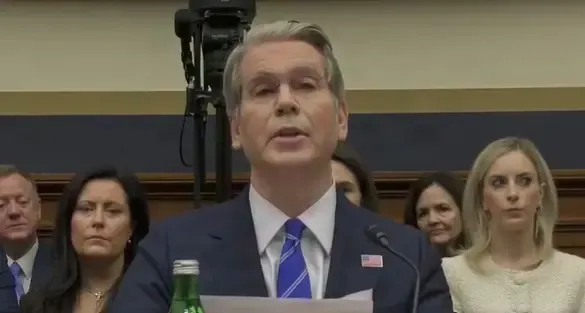
US Treasury Secretary Scott Bessent told the House Financial Services Committee on 16 September 2026 that China's Belt and Road Initiative has shifted from a lending to a debt collection operation.
Bessent accused Beijing of using opaque loan terms, tolling agreements, and hidden provisions that obstruct debt restructuring in developing nations.
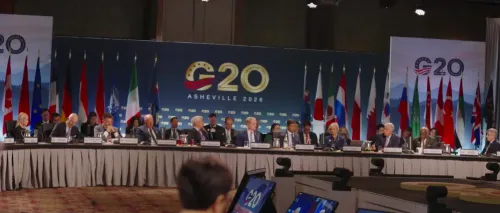
At the G20 in Asheville, North Carolina , China was the sole holdout — a 19-to-1 outcome — on a communiqué criticising non-market economies.
The World Bank plans to phase out lending to China by 2031 , a move endorsed by Committee Chairman French Hill .
The US dollar's share of global transactions rose this year, Bessent said, undermining de-dollarisation claims by China and Russia.
India has not joined the BRI, objecting specifically to the China-Pakistan Economic Corridor (CPEC) passing through Pakistan-occupied Kashmir .
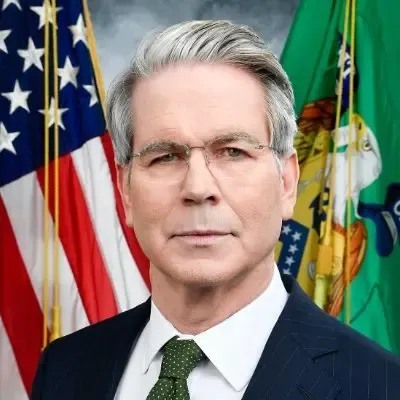
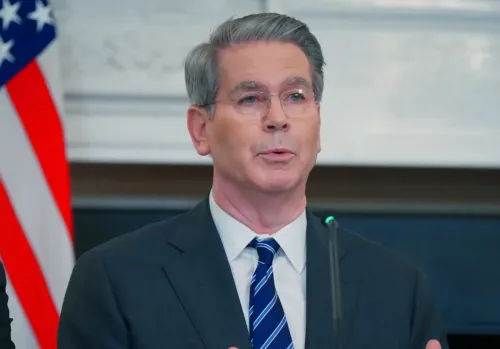
US Treasury Secretary Scott Bessent told a congressional panel on 16 September 2026 that China's Belt and Road Initiative (BRI) has fundamentally transformed — shifting from a large-scale infrastructure financing programme into what he described as a debt collection operation targeting nations unable to repay Chinese loans. The remarks came during a House Financial Services Committee hearing on the international financial system in Washington.
Bessent's Core Accusation
"It is also my opinion that this widely talked about Belt and Road Initiative has gone from a lending operation to a collection operation, as they have bankrupted many or are bankrupting many of their borrowers," Bessent told the committee. He accused Beijing of embedding opaque lending terms and hidden provisions in its loan agreements — structures he said actively obstruct debt restructuring efforts in developing economies.
Bessent specifically cited "tolling agreements" and concealed contractual clauses as instruments that trap borrower nations in cycles of unsustainable debt. He emphasised that transparency in lending terms is the foundational requirement for any successful debt restructuring process, a view he said the International Monetary Fund (IMF) also supports.
G20 in Asheville: China the Lone Holdout
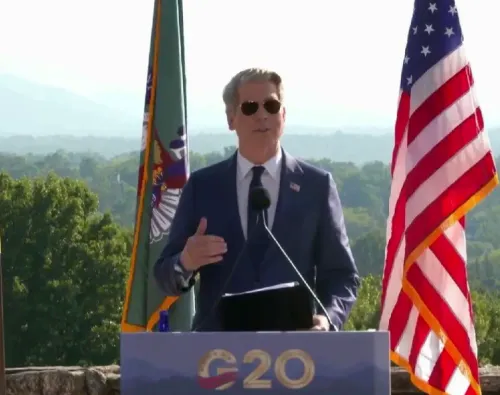
The Treasury Secretary revealed that the US raised China's lending practices during the recent Group of 20 (G20) meeting in Asheville, North Carolina. A communiqué criticising non-market economies was drafted at the summit — but China refused to endorse it.
"So 19-to-1. And if you could imagine getting all these countries from around the world to agree to that, China was the lone holdout," Bessent said. He was responding to questions from Republican Representative Scott Fitzgerald, who alleged that China was simultaneously delaying debt restructuring and distorting the international financial system through opaque lending and currency management practices.
Bessent added that the first debt restructuring following the G20 discussions was expected to proceed, though he declined to identify the country involved or provide a timeline.
China's Role at the IMF and World Bank
Committee Chairman French Hill highlighted the World Bank's decision to phase out lending to China by 2031 as "an important step in the right direction." Hill argued that American taxpayers should not be subsidising multilateral lending to the world's second-largest economy, which he described as a major global creditor deploying state-directed investment to advance its own geopolitical interests.
Hill also questioned whether the IMF was adequately addressing China's economic imbalances. Bessent said the fund was holding "advanced discussions" with Beijing about those imbalances and their potential spillover effects on global financial stability.
Dollar Dominance and De-dollarisation Efforts
Despite sustained efforts by China and Russia to reduce their dollar-denominated reserves, Bessent said the US dollar continues to dominate international transactions. He noted that the dollar's share of global transactions had actually increased over the course of the year — a data point that, according to him, undercuts the de-dollarisation narrative.
Background: BRI and India's Stance
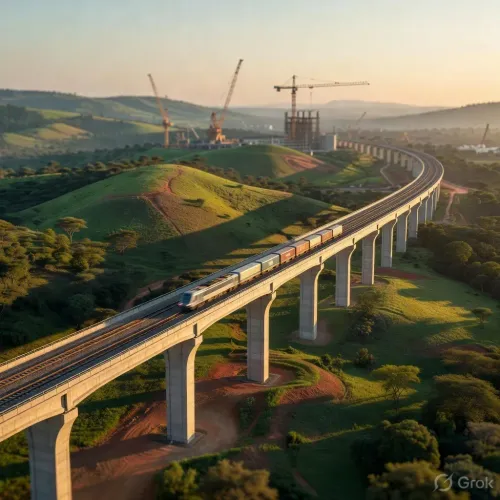
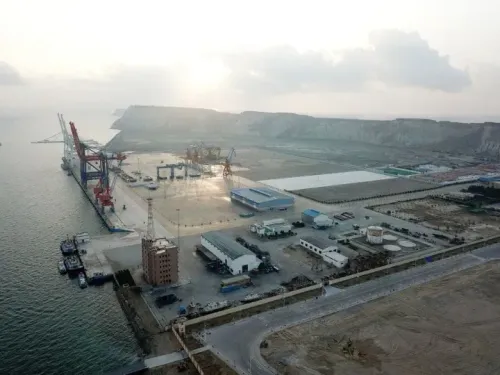
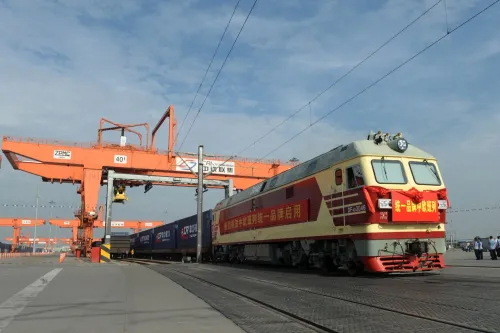
The Belt and Road Initiative was launched by Chinese President Xi Jinping in 2013 to finance ports, railways, roads, and energy infrastructure across Asia, Africa, Europe, and Latin America. Several recipient countries have since sought to renegotiate or restructure their debts after encountering severe repayment difficulties — fuelling the "debt trap" debate that Beijing firmly rejects, describing the BRI as a platform for infrastructure development and international economic cooperation.
India has declined to join the initiative. New Delhi has specifically objected to the China-Pakistan Economic Corridor (CPEC) because projects under that corridor pass through Pakistan-occupied Kashmir. Bessent's congressional testimony reinforces a growing consensus in Washington that the BRI's developmental framing masks a creditor-state strategy — a charge that will likely sharpen US-China tensions at future multilateral forums.
With the first post-G20 debt restructuring reportedly on the horizon, the coming months will test whether US pressure on BRI transparency translates into concrete changes in how Beijing manages its vast sovereign loan portfolio.
Point of View
And its delivery in a congressional hearing — rather than a diplomatic channel — signals a deliberate escalation for domestic and international audiences. The 19-to-1 G20 split on non-market economies is a significant diplomatic isolation moment for Beijing, yet its durability depends on whether the US can hold that coalition under economic pressure. Notably, the hearing's focus on IMF and World Bank governance points to a broader US strategy: contest Chinese influence not just bilaterally but through the multilateral architecture Washington built. India, a non-BRI holdout with its own border grievances against CPEC, stands to gain credibility as an alternative infrastructure partner — but only if New Delhi can scale its own development financing offers to match BRI's reach.
NationPress
16 Sept 2026
Frequently Asked Questions
What did US Treasury Secretary Scott Bessent say about China's Belt and Road Initiative?
Bessent told the House Financial Services Committee on 16 September 2026 that the Belt and Road Initiative has shifted from a lending operation to a debt collection operation, saying China has 'bankrupted many or is bankrupting many of their borrowers.' He accused Beijing of using opaque loan terms and hidden provisions that block debt restructuring in developing countries.
What happened at the G20 meeting in Asheville regarding China?
At the G20 summit in Asheville, North Carolina, a communiqué criticising non-market economies was drafted and agreed upon by 19 member nations — but China refused to sign it, making Beijing the sole holdout. Bessent described the 19-to-1 outcome as a significant demonstration of international consensus against Chinese economic practices.
What is the World Bank's decision on lending to China?
The World Bank has decided to phase out lending to China by 2031, a move that House Financial Services Committee Chairman French Hill called 'an important step in the right direction.' Hill argued that American taxpayers should not subsidise multilateral lending to the world's second-largest economy, which is itself a major global creditor.
Why has India not joined the Belt and Road Initiative?
India has declined to join the BRI primarily because of the China-Pakistan Economic Corridor (CPEC), whose projects pass through Pakistan-occupied Kashmir — territory India claims as its own. New Delhi considers the corridor a violation of its sovereignty, a position it has maintained since CPEC was announced.
Is the US dollar losing ground to Chinese and Russian de-dollarisation efforts?
According to Bessent, no. He told lawmakers that the US dollar's share of global transactions has actually increased over the course of the year, despite sustained efforts by China and Russia to reduce their dollar-denominated reserves. He presented this as evidence that de-dollarisation has not succeeded in displacing dollar dominance.