China's BRI influence in Latin America hits wall, Panama and Venezuela signal limits
Synopsis
Two decades of Chinese economic statecraft in Latin America — billions in investment, five Taiwan diplomatic switches, BRI expansion — are not translating into the geopolitical leverage Beijing expected. Panama's diplomatic pivot proved fragile, and Venezuela's political upheaval has rewritten the rules. The BRI's core assumption — that economic weight buys political influence — is facing its stiffest test yet in America's backyard.
Key Takeaways
China's Belt and Road Initiative , launched in 2013 , extended into Latin America but is yielding lower-than-expected geopolitical returns, according to an analysis in The Diplomat .
Over a nine-year period, five countries — Panama , Dominican Republic , El Salvador , Nicaragua , and Honduras — switched diplomatic recognition from Taiwan to China .
Panama's 2017 decision to join the BRI, once seen as a major Chinese diplomatic victory, has proved less durable than anticipated.
In Venezuela , the reported removal of President Nicolás Maduro and the Trump administration's push to restore US commercial ties have undermined Beijing's strategic position.
China's trade and investment presence in Latin America remains strong, but the assumed link between economic engagement and geopolitical influence is being called into question.
China's strategy of leveraging economic engagement — anchored by the Belt and Road Initiative (BRI) — to build geopolitical influence in Latin America is showing significant signs of strain, according to an analysis published in The Diplomat. After more than two decades of sustained investment, trade, and diplomatic outreach, the strategic returns Beijing anticipated from the region appear to be falling short of expectations.
The BRI's Western Hemisphere Ambitions
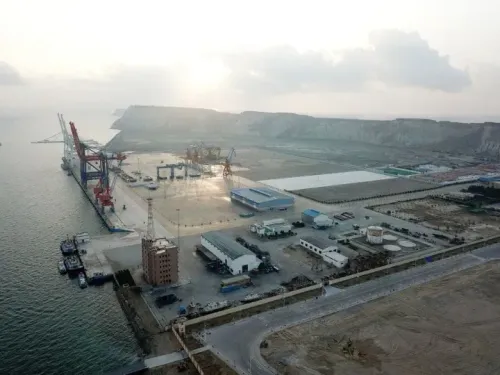
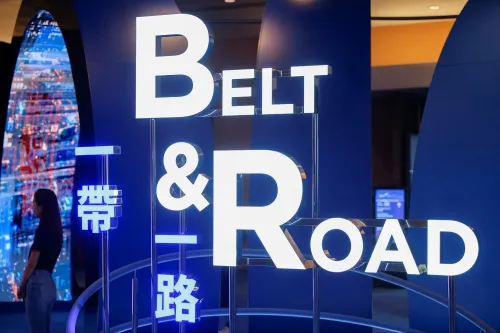
Launched in 2013, the BRI was designed to connect Asia, Africa, and Europe through an expansive network of ports, railways, highways, and trade corridors. Over time, Beijing extended the initiative into the Western Hemisphere, channelling enormous resources into Latin America's economic infrastructure. The underlying logic — that economic dependency would translate into geopolitical leverage — guided China's expansion from Africa and Southeast Asia to the Pacific Islands and beyond.
On paper, the economic footprint remains formidable. Trade volumes, investment flows, and commercial activity across Latin America continue to reflect Beijing's strong presence. The more contested question, according to the analysis, is whether that economic weight has generated commensurate geopolitical influence.
Diplomatic Wins That Did Not Hold
China did record tangible diplomatic gains in the region. Over a nine-year period, five Latin American nations switched diplomatic recognition from Taiwan to China: Panama, the Dominican Republic, El Salvador, Nicaragua, and Honduras. Panama also became the first Latin American country to formally join the BRI following its 2017 decision to establish diplomatic ties with Beijing — a move widely interpreted as one of China's most significant diplomatic victories in a region historically dominated by the United States.
Yet the durability of those gains is now in question. China's economic presence in Panama remains substantial, but the diplomatic achievement has reportedly proved less stable than many observers anticipated, according to the analysis.
Venezuela: A Strategic Relationship Under Pressure
For years, Beijing invested heavily in its relationship with Venezuela, becoming one of Caracas's most consequential external economic partners. The partnership was held up as a model of how economic and political interests could reinforce each other over time.
That calculus has shifted sharply. Following the reported capture of President Nicolás Maduro by US forces and the assumption of power by former Vice President Delcy Rodriguez, Venezuela has entered a new phase of engagement with Washington. The Donald Trump administration's efforts to restore American commercial activity in Venezuela — particularly in the oil sector — have reshaped the strategic landscape that Beijing spent years cultivating.
'China's investments, trade, and financial interests in Venezuela remain. What appears less certain is the political environment through which those interests will operate and the level of influence Beijing can continue to exercise,' the analysis notes.
What the Evidence Suggests
The Latin American case offers a rare opportunity to assess the long-term return on China's economic statecraft. Notably, this is not a story of economic failure — trade and investment ties remain intact across the region. What the evidence challenges, according to The Diplomat, is the assumed link between economic engagement and durable geopolitical leverage. Critics argue that commercial relationships, however deep, do not automatically translate into political alignment — particularly when US strategic interests reassert themselves.
As Latin America's geopolitical landscape continues to shift, Beijing's ability to convert its economic presence into reliable influence will remain a closely watched test of the BRI model's broader strategic logic.
Point of View
Not an ideological bloc. The harder question is whether Beijing's planners ever genuinely believed the two were interchangeable, or whether the geopolitical framing was always more useful as a domestic narrative than as an operational strategy.
NationPress
19 Sept 2026
Frequently Asked Questions
Why is China's Belt and Road Initiative strategy struggling in Latin America?
According to an analysis in The Diplomat, China's economic engagement in Latin America — through the BRI and bilateral investment — has not generated the level of geopolitical influence Beijing anticipated. Recent shifts in Panama and Venezuela illustrate how commercial ties do not automatically translate into durable political alignment, particularly when US strategic interests reassert themselves.
Which Latin American countries switched diplomatic recognition from Taiwan to China?
Five countries switched recognition from Taiwan to China over a nine-year period: Panama, the Dominican Republic, El Salvador, Nicaragua, and Honduras. Panama also became the first Latin American nation to formally join the BRI after establishing diplomatic ties with Beijing in 2017.
What happened to China's influence in Venezuela?
China had been one of Venezuela's most important external economic partners for years. However, the reported capture of President Nicolás Maduro by US forces and the subsequent leadership transition under Delcy Rodriguez, combined with the Trump administration's push to restore American commercial activity in Venezuela's oil sector, have significantly altered the strategic environment Beijing had cultivated.
Does China still have economic interests in Latin America?
Yes. China's trade volumes, investment flows, and commercial relationships across Latin America remain substantial. The analysis distinguishes between economic presence — which remains strong — and geopolitical influence, which appears to be delivering diminishing returns relative to Beijing's expectations.
What is the broader significance of the BRI's challenges in Latin America?
Latin America represents one of the longest-running tests of China's economic statecraft model. If the BRI's core assumption — that economic weight converts into political leverage — is not holding in this region after two decades, it raises broader questions about the strategic returns of China's global infrastructure investment strategy.