Chinese diaspora in US face Beijing's transnational repression: 319 cases since 2014
Synopsis
Freedom House has tied China to 319 transnational repression incidents since 2014 — the highest of any country globally. Now, a bipartisan US Senate bill aims to codify and criminalise such foreign government intimidation on American soil, just weeks after Beijing's ethnic unity law gave the CCP a legal pretext to target overseas critics.
Key Takeaways
Freedom House has linked China to 319 transnational repression incidents since 2014 — the most of any country worldwide.
A New York man was convicted in May of running a Beijing-backed 'secret police station' in Manhattan .
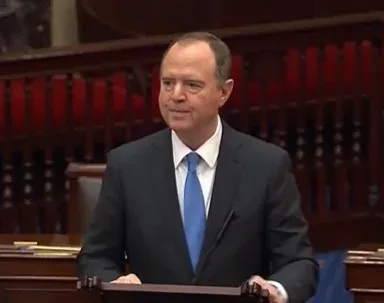
Democratic Senator Adam Schiff and Republican Senator John Curtis introduced a bipartisan bill imposing tougher penalties on foreign agents who intimidate people on US soil.
China's ethnic unity law , effective 1 July , asserts Beijing's right to target overseas critics — a trigger cited by lawmakers for the new legislation.
The bill formally defines transnational repression and covers harassment, coercion, kidnapping, and suppression of US constitutional rights .
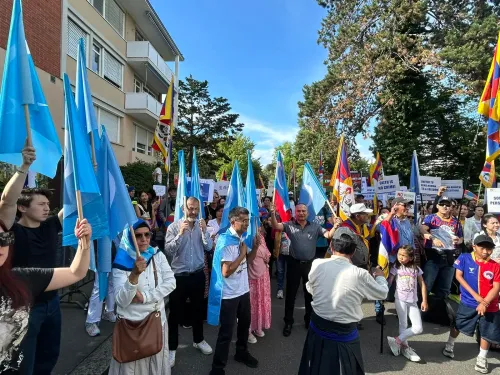
Several Chinese diaspora communities in the United States — including pro-democracy activists and advocates for Taiwan, Tibet, and Uyghur rights — have accused Beijing of deploying agents to harass, surveil, and intimidate them on American soil, according to a report citing findings by the US-based human rights organisation Freedom House.
Scale of the Problem
Freedom House has documented that China is linked to the highest number of transnational repression cases globally, with 319 incidents recorded since 2014. The cases span a range of tactics — from covert surveillance and online harassment to physical intimidation — targeting individuals who oppose the Chinese Communist Party (CCP).
In one of the most striking cases, a New York man was convicted in May of acting as an unregistered agent of the Chinese government. US federal prosecutors alleged he operated a 'secret police station' on behalf of Beijing in Manhattan — a case that drew widespread attention to the reach of CCP-linked operations inside the United States.
Bipartisan Bill to Counter Foreign Intimidation
Last week, US lawmakers introduced a bipartisan bill to impose tougher penalties on foreign government agents who threaten individuals on American soil. The legislation was introduced by Democratic Senator Adam Schiff and Republican Senator John Curtis, marking a rare show of cross-party unity on a national security issue.
The bill's introduction follows China's ethnic unity law, which came into force on 1 July and under which Beijing has asserted the right to target certain critics living abroad. Legislators described the law as a direct escalation in CCP efforts to extend its authority beyond its borders.
Senator Schiff said the measure represents 'a bipartisan effort to counter a national threat that reports show is only expanding in scope, with new and brazen efforts by countries like China trying to expand its intimidation of those not in lockstep with the regime.'
Senator Curtis characterised transnational repression as 'an attack on both our sovereignty and our freedoms.'
What the Bill Defines and Covers
The proposed legislation formally defines transnational repression as activities carried out by a foreign government — or its agents and proxies — that extend beyond internationally recognised borders to harass, threaten, coerce, retaliate against, physically harm, kidnap, or kill individuals in the United States. It also covers efforts to prevent people from exercising rights protected under the US Constitution, including freedom of speech.
This is a significant legislative step: prior to this bill, US law lacked a codified definition of transnational repression, making prosecution and penalty structuring more difficult for federal authorities.
A Growing Focus for US Law Enforcement
Transnational repression has emerged as an increasing priority for both US lawmakers and federal law enforcement agencies in recent years. Authorities have pursued multiple cases involving alleged plots by foreign governments — not limited to China — to target dissidents, journalists, and activists residing in the United States.
Notably, this legislative push comes amid broader US-China tensions over trade, technology, and Taiwan. Critics argue that Beijing's ethnic unity law signals a deliberate policy shift toward asserting extraterritorial authority over Chinese diaspora communities worldwide — a trend that Freedom House's data suggests has been accelerating since 2014.
With the bill now before the Senate, its passage would mark one of the most direct legislative responses to foreign government intimidation campaigns on US soil in recent memory.
Point of View
But it almost certainly undercounts — most victims do not report for fear of retaliation against family in China. The Manhattan 'secret police station' conviction was a rare successful prosecution; the structural problem is that existing US law was not built for this threat model. Beijing's ethnic unity law is the clearest signal yet that transnational repression is now official policy, not rogue behaviour. The bipartisan bill is overdue, but codifying a definition is only step one — enforcement capacity and witness protection for diaspora communities will determine whether it has teeth.
NationPress
27 Jul 2026
Frequently Asked Questions
What is transnational repression and how does it affect Chinese communities in the US?
Transnational repression refers to actions by a foreign government — or its agents — to harass, intimidate, coerce, or harm individuals living outside its borders. Chinese diaspora communities in the US, including pro-democracy activists and advocates for Taiwan, Tibet, and Uyghur rights, have reported surveillance, harassment, and threats linked to Beijing-directed agents.
How many transnational repression cases has China been linked to?
According to Freedom House, China has been linked to 319 transnational repression incidents since 2014, the highest number recorded for any single country globally.
What is the bipartisan bill introduced by Senators Schiff and Curtis?
The bill, introduced by Democratic Senator Adam Schiff and Republican Senator John Curtis, proposes tougher penalties for foreign government agents who threaten or intimidate people on American soil. It formally defines transnational repression and covers acts ranging from harassment and coercion to kidnapping and suppression of constitutional rights.
What is China's ethnic unity law and why is it relevant?
China's ethnic unity law came into force on 1 July and includes provisions under which Beijing asserts the right to target certain critics living abroad. US lawmakers cited it as a direct escalation that made the new bipartisan bill urgent.
What was the Manhattan 'secret police station' case?
A New York man was convicted in May of acting as an unregistered agent of the Chinese government after federal prosecutors alleged he operated a covert police station in Manhattan on behalf of Beijing, used to monitor and pressure Chinese dissidents living in the United States.