US senators introduce Stop Transnational Repression Act targeting foreign threats on American soil
Synopsis
For the first time, the US may have a federal law defining and criminalising transnational repression — the practice of foreign governments silencing critics on American soil. The bipartisan Stop Transnational Repression Act names China, India, and Iran as examples, proposes 10-year sentencing enhancements, and would hand the FBI and Justice Department new statutory authority to act. The bill's passage could reshape how Washington prosecutes foreign-directed harassment.
Key Takeaways
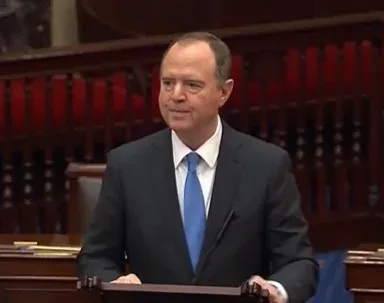
Senators Adam Schiff (Democrat, California) and John Curtis (Republican, Utah) introduced the Stop Transnational Repression Act on 25 July .
The bill would create the first federal criminal definition of transnational repression in US law.
Convicted offenders could face up to 10 additional years in prison and fines of up to $100,000 .
Oversight would be centralised under the Justice Department's National Security Division and the FBI .
Cases cited include an alleged Indian government-linked assassination plot against a Sikh activist in New York , and alleged Chinese and Iranian operations targeting US-based critics.
Federal agencies would be required to develop a strategy addressing the use of artificial intelligence in facilitating transnational repression.
Two bipartisan US senators have introduced the Stop Transnational Repression Act, landmark legislation that would, for the first time, create a federal legal definition of transnational repression, stiffen criminal penalties for offenders, and centralise oversight of related investigations — responding to what they describe as a growing pattern of foreign governments targeting dissidents, activists, and journalists inside the United States.
The bill was introduced on 25 July by Democratic Senator Adam Schiff of California and Republican Senator John Curtis of Utah, making it one of the few pieces of national-security legislation this session to draw cross-aisle co-sponsorship from the outset.
What the Bill Proposes
Under the proposed legislation, anyone convicted of a federal offence involving transnational repression could face a sentencing enhancement of up to 10 years in prison and an additional fine of up to $100,000. The bill would codify, for the first time, a federal criminal definition of transnational repression — covering activities by a foreign government, its agents, or proxies that harass, threaten, coerce, surveil, physically harm, kidnap, or kill individuals on US soil, or that seek to suppress rights protected under the US Constitution, including freedom of speech.
Oversight of prosecutions would be centralised within the Justice Department's National Security Division, while criminal investigations would fall under the purview of the FBI. Federal agencies would be required to conduct a review of existing authorities, submit annual reports and briefings to Congress on documented incidents, and develop a whole-of-government strategy — including measures to counter the use of artificial intelligence in facilitating such operations.
Cases That Prompted the Legislation
The senators cited several high-profile cases as the backdrop for the bill. Among them is an alleged assassination plot against a Sikh activist and US citizen in New York, which the FBI reportedly disrupted last year. According to public court documents, the intended target had allegedly been identified by an employee of the Indian government — an allegation that has not been formally adjudicated.
The senators also pointed to China's recently enacted Ethnic Unity and Progress Promotion law, which they argued could provide a legal basis for targeting individuals beyond China's borders. Alleged efforts by Iran, through proxies, to kidnap or kill US-based journalists critical of Tehran were cited as a further example.
What the Senators Said
Senator Schiff said the legislation was a necessary response to an expanding threat. 'With transnational repression on the rise, it is critical that we take strong action to investigate and prosecute bad actors who would intimidate and attack dissidents and critics on US soil. This is a bipartisan effort to counter a national threat that reports show is only expanding in scope, with new and brazen efforts by countries like China and India trying to expand its intimidation of those not in lock step with the regime,' he said, adding that the bill provides 'the clarity and the teeth' needed to safeguard fundamental rights.
Senator Curtis framed the issue as one of sovereignty. 'No foreign government should be able to threaten or silence people on American soil. Whether it's the Chinese Communist Party, the Iranian regime, or any other authoritarian government, transnational repression is an attack on both our sovereignty and our freedoms. This bipartisan bill gives law enforcement stronger tools to hold perpetrators accountable,' he said.
Broader Context and What Comes Next
Transnational repression has become an increasing focus of US lawmakers and federal law enforcement in recent years, as authorities have pursued cases involving alleged plots by foreign governments against dissidents and journalists residing in the country. The bill's introduction reflects a broader legislative trend toward codifying responses to state-sponsored harassment that has previously been handled on a case-by-case basis.
The legislation must now advance through the Senate before any floor vote. Both sponsors have called on colleagues to act quickly, though the bill's timeline through committee remains to be confirmed. If passed, it would represent the most significant statutory expansion of the federal government's toolkit against foreign-directed intimidation in recent memory.
Point of View
Particularly given the unresolved Sikh activist case. The AI provision is forward-looking but vague, and its practical enforceability will depend entirely on how the Justice Department chooses to operationalise it. The real test of the bill is not its passage but whether the centralised oversight structure it creates will actually accelerate prosecutions — or simply add bureaucratic layers to an already complex interagency process.
NationPress
23 Oct 2026
Frequently Asked Questions
What is the Stop Transnational Repression Act?
It is a bipartisan US Senate bill introduced on 25 July by Senators Adam Schiff and John Curtis that would create the first federal legal definition of transnational repression and establish stronger criminal penalties for foreign governments or their proxies that target dissidents, journalists, or activists on American soil. Convicted offenders could face up to 10 additional years in prison and fines of up to $100,000.
Which countries are named in the bill?
The bill's sponsors specifically cited China, India, and Iran as countries allegedly engaged in transnational repression. Cases referenced include an alleged Indian government-linked assassination plot against a Sikh activist in New York, China's Ethnic Unity and Progress Promotion law, and alleged Iranian proxy operations targeting US-based journalists critical of Tehran.
What new powers would the legislation give US law enforcement?
The bill would centralise prosecution oversight within the Justice Department's National Security Division and criminal investigations under the FBI. It would also require annual congressional briefings on transnational repression incidents and mandate a whole-of-government strategy, including measures to counter the use of artificial intelligence in such operations.
What is transnational repression, as defined by the bill?
Under the proposed legislation, transnational repression covers activities by a foreign government, its agents, or proxies that harass, threaten, coerce, surveil, physically harm, kidnap, or kill individuals in the United States, or that seek to prevent people from exercising rights protected under the US Constitution, including freedom of speech.
What happens next with the bill?
The legislation must advance through Senate committee review before a floor vote can be scheduled. Both sponsors have urged colleagues to act quickly, though no timeline has been confirmed. If enacted, it would represent the most significant statutory expansion of federal authority against foreign-directed intimidation in recent years.