Congo Ebola outbreak: Over 900 suspected cases, 101 confirmed as WHO raises alarm
Synopsis
The DRC's Ebola outbreak has crossed 900 suspected cases — and the WHO's own Director-General warns that armed conflict in Ituri is the single biggest obstacle to containment. With a PHEIC declared, risk upgraded to 'very high' nationally, and health workers fleeing violence, this is shaping up as one of the most operationally complex Ebola responses since the 2014–2016 West Africa crisis.
Key Takeaways
More than 900 suspected Ebola cases have been identified in the DRC , with 101 confirmed , as of 25 May 2025 .
WHO declared the outbreak a public health emergency of international concern (PHEIC) on 16 May 2025 .
Risk assessment was upgraded to 'very high' at the national level on 22 May 2025 .
The outbreak is caused by the Bundibugyo virus strain and is centred in conflict-riven Ituri province , home to nearly 5 million people .
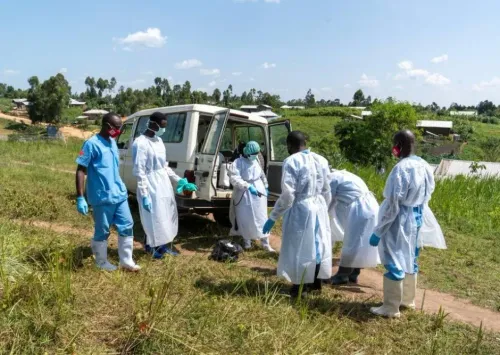
Ongoing armed conflict is forcing health workers to flee, severely hampering contact tracing and early case identification.
Average Ebola case fatality rate is approximately 50% , with historical rates ranging from 25% to 90% .
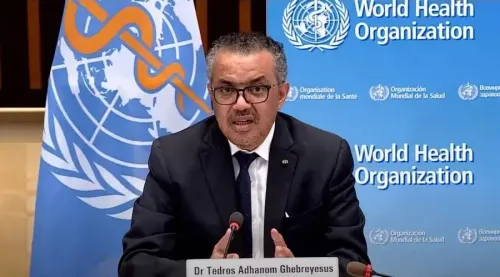
World Health Organization (WHO) Director-General Tedros Adhanom Ghebreyesus has disclosed that more than 900 suspected cases of Ebola have been identified in the Democratic Republic of the Congo (DRC) as the country scales up disease surveillance, with 101 cases confirmed so far. The outbreak, centred in Ituri province, has already been declared a public health emergency of international concern (PHEIC) — the WHO's highest alert level — since 16 May 2025.
Crisis at the Epicentre
Ituri province, where the outbreak is concentrated, is home to nearly 5 million people living amid active armed conflict. According to Tedros, one in four residents requires humanitarian assistance and one in five is internally displaced. The volatile security environment is directly hampering the Ebola response.
'The violence is forcing people to flee, including health and humanitarian workers. This is severely impeding efforts to scale up Ebola contact tracing and identify infections early enough to provide supportive care,' Tedros said, adding that insecurity and fear are also fuelling deep mistrust within affected communities.
WHO's Risk Assessment Upgraded
On 22 May 2025, the WHO revised its risk assessment for the outbreak to 'very high' at the national level, while maintaining it at 'high' at the regional level and 'low' globally. The escalation follows the initial PHEIC declaration on 16 May, when Tedros determined that the Ebola disease — caused by the Bundibugyo virus strain — in the DRC and neighbouring Uganda posed an international public health threat.
Healthcare Delivery as a Trust-Building Tool
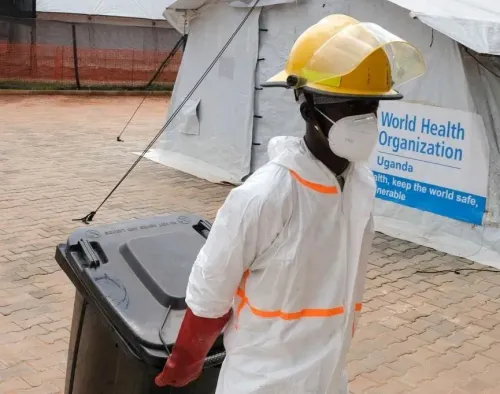
The WHO and humanitarian health partners maintain an operational presence across Ituri, including in some of the most insecure and hard-to-reach zones. Tedros emphasised that delivering a comprehensive package of healthcare services is essential — not only to address urgent medical needs, but also to build community trust, which is critical for an effective Ebola response. Communities in the region face not just Ebola but a broad range of diseases compounded by displacement and conflict.
About the Bundibugyo Virus and Ebola's History
Ebola disease is a severe, often fatal illness affecting humans and other primates, with an average case fatality rate of approximately 50%. Rates in past outbreaks have ranged from 25% to 90%. The virus spreads to humans from wild animals — including fruit bats, porcupines, and non-human primates — and then transmits person-to-person through direct contact with blood, bodily fluids, or contaminated surfaces.
The first Ebola outbreaks were recorded in remote villages of Central Africa near tropical rainforests. The deadliest on record was the 2014–2016 West Africa outbreak, which began in Guinea before spreading to Sierra Leone and Liberia — causing more cases and deaths than all previous outbreaks combined since the virus was first identified in 1976.
What Comes Next
With surveillance expanding and the case count expected to rise further, the international community faces pressure to accelerate support for contact tracing, healthcare worker protection, and community engagement in conflict-affected Ituri. The WHO's PHEIC designation is intended to unlock coordinated global resources, though insecurity on the ground remains the central obstacle to containment.
Point of View
The more cases it finds — and the harder it becomes to contain them in a conflict zone. Ituri is not a failure of epidemiology; it is a failure of security. Until armed violence is addressed, no contact-tracing protocol or healthcare package will be sufficient. The PHEIC designation is the right call, but it risks becoming a bureaucratic milestone rather than a turning point if the international community does not treat the conflict as inseparable from the outbreak. The Bundibugyo strain is less lethal than Zaire Ebola, but 'less lethal' in a displacement crisis with fractured trust is still catastrophic.
NationPress
20 Sept 2026
Frequently Asked Questions
How many Ebola cases have been confirmed in the DRC as of May 2025?
As of 25 May 2025, more than 900 suspected cases have been identified in the DRC, of which 101 have been confirmed. The case count is expected to grow as surveillance expands.
What is a public health emergency of international concern (PHEIC)?
A PHEIC is the WHO's highest level of global health alert, declared when an event poses a risk to multiple countries and requires a coordinated international response. The WHO declared the DRC Ebola outbreak a PHEIC on 16 May 2025.
Why is the Ebola response in Ituri province so difficult?
Ituri province is an active conflict zone where nearly one in five residents is internally displaced and one in four requires humanitarian aid. Armed violence is forcing health and humanitarian workers to flee, severely hampering contact tracing and early case identification.
Which Ebola virus strain is responsible for the current DRC outbreak?
The current outbreak is caused by the Bundibugyo virus, one of several strains of the Ebola virus. The WHO declared it a PHEIC on 16 May 2025, covering both the DRC and neighbouring Uganda.
What is the fatality rate for Ebola disease?
The average Ebola case fatality rate is approximately 50%, though it has ranged from 25% to 90% in past outbreaks depending on the strain, healthcare access, and speed of response.