Why Is There a Lack of Reflection in Pakistan's Parliamentary Debate on Balochistan?
Synopsis
The recent parliamentary debate in Pakistan regarding Balochistan highlights a troubling trend of introspection absence among political parties. While there is an agreement on addressing grievances, deeper structural issues remain unaddressed. This article explores the implications of such a narrow focus and the ongoing struggle for political reconciliation in the region.
Key Takeaways
Parliamentary debate reflects a lack of introspection.
Consensus on addressing Baloch grievances is superficial.
Political engagement is vital for reconciliation.
External actors exploit governance vacuums.
Root causes of violence remain unaddressed.
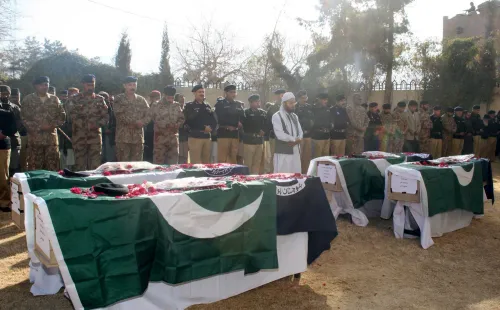
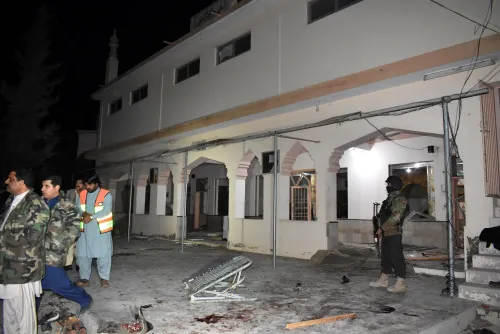
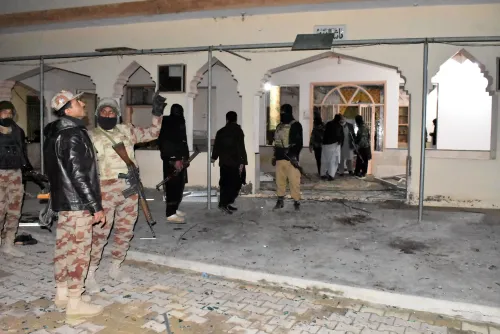
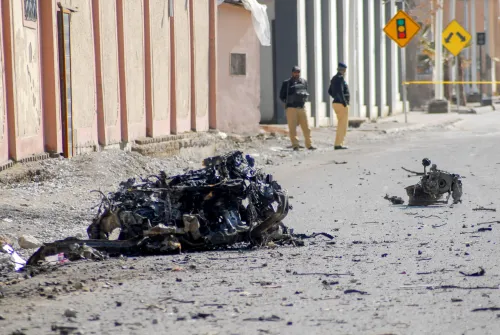
Islamabad, Feb 9 (NationPress) Political parties in Pakistan appear to be losing their ability to view significant national matters through a cohesive national lens, which was evident in the recent discussions surrounding Balochistan in both the National Assembly and the Senate, according to a report.
"In this light, the parliamentary discourse on Balochistan showcased a rare form of agreement, yet simultaneously highlighted a lack of self-reflection. Lawmakers from all parties in both the National Assembly and the Senate agreed on two main points: first, the need to address the grievances of the Baloch people, albeit without detailing what those issues entail, and second, that mere condemnations will not suffice to eliminate terrorism," stated security analyst Muhammad Amir Rana in Pakistan's prominent daily, Dawn.
"However, this consensus, viewed through a security-focused lens, was largely superficial. The dialogue ultimately failed to delve into the deeper political and structural factors that have allowed violence to take root in the province," he further noted.
A number of parliamentarians underscored the government's inability to tackle the grievances of the populace, particularly the denial of political rights, economic opportunities, and meaningful participation for Baloch youth.
They emphasized that external hostile actors and violent networks have capitalized on the governance void. Lawmakers raised concerns regarding the effectiveness of counter-smuggling initiatives, questioning how oil continues to flow from border areas to major urban centers despite existing security measures and what concrete steps are being taken to address external interference.
During the session, issues pertaining to Balochistan were also addressed in the resolutions passed by both houses.
However, dissenting opinions, especially those advocating for political engagement and reconciliation, were notably absent from the final agreement. Nevertheless, a few opposition figures, including National Assembly opposition leader Mehmood Achakzai and Senator Jan Buledi, called for political dialogue and reconciliation to tackle the challenges facing Balochistan, as highlighted in the Dawn report.
"These resolutions also demonstrated an alignment with the country’s power elites under the perceived framework of a hard state. While we are not venturing into an academic discussion about the hard state concept, one glaring flaw is apparent in this approach: it becomes overly focused on a limited perspective, analyzing issues through a singular lens and losing the ability to embrace diverse viewpoints, which is foundational to political processes," Rana wrote.
"This mindset is evident at multiple levels, but Balochistan emerges as its primary victim, as the opportunity to resolve the province’s intricate issues through political means has progressively diminished," he continued.
Baloch and Pakhtun nationalist parties, including Akhtar Mengal’s Balochistan National Party (BNP), Abdul Malik’s National Party (NP), and Achakzai’s Pakhtunkhwa Milli Awami Party (PkMAP), persist in advocating for political reconciliation. Recently, Sardar Akhtar Mengal has adopted a more hard-line stance to safeguard his political standing. While mainstream political parties such as the Pakistan Muslim League-Nawaz (PML-N) and Pakistan Peoples Party (PPP) have occasionally acknowledged their concerns, they have failed to effectively address the issues plaguing Balochistan, the report noted.
Point of View
I believe this debate underscores a critical moment for Pakistan. The lack of introspection among political leaders threatens to undermine the very fabric of our democracy. It is crucial that we not only acknowledge the grievances of marginalized communities but also engage in meaningful dialogue to address the systemic issues at play. The future of Balochistan and, indeed, the nation depends on our collective ability to embrace diverse perspectives and seek genuine reconciliation.
NationPress
3 Oct 2026
Frequently Asked Questions
What are the key grievances of the Baloch people?
The key grievances of the Baloch people include the denial of political rights, lack of economic opportunities, and meaningful involvement in governance.
Why is political engagement important for Balochistan?
Political engagement is essential for Balochistan to address its complex issues, foster reconciliation, and empower local communities.
What challenges does Balochistan face?
Balochistan faces numerous challenges, including violence, governance issues, and the exploitation of its resources by external actors.
How can political parties in Pakistan improve their approach to Balochistan?
Political parties can improve their approach by engaging in genuine dialogue, addressing the root causes of grievances, and prioritizing the voices of Baloch communities.
What role do external actors play in Balochistan's situation?
External actors have exploited the governance vacuum in Balochistan, contributing to instability and violence in the region.