WHO says DR Congo Ebola response catching up; 344 cases, 60 deaths confirmed
Synopsis
The DR Congo Ebola outbreak has 344 confirmed cases and 60 deaths, but WHO chief Tedros says the response is finally catching up after suspected cases fell from 1,000 to 116 in a week. The catch: there is no approved vaccine for the Bundibugyo strain driving this outbreak, and Goma — the epicentre — sits under M23 rebel control.
Key Takeaways
WHO confirms 344 Ebola cases and 60 deaths in DR Congo across 24 health zones in three provinces.
Suspected cases have dropped to 116 from more than 1,000 a week earlier.
Outbreak is driven by the Bundibugyo strain, for which no licensed vaccine or specific therapeutic exists.
An 80-bed Ebola treatment centre is operational in Goma , North Kivu; six patients have recovered overall.
WHO and Uganda outbreak declared a public health emergency of international concern on 17 May .
Goma has been under M23 rebel control since early 2025, complicating humanitarian access.
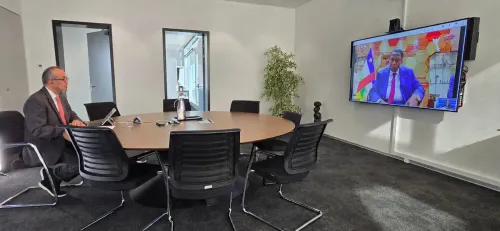
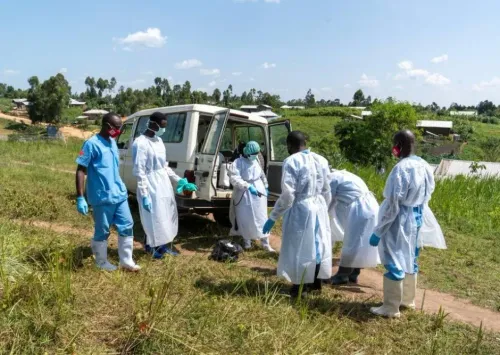
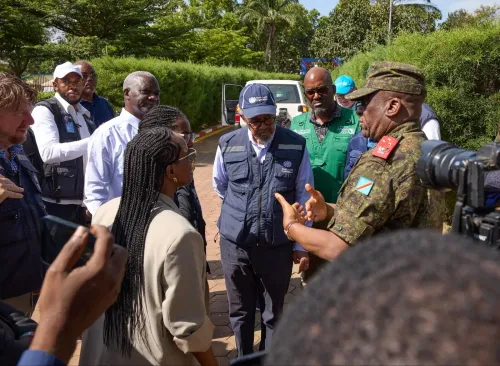
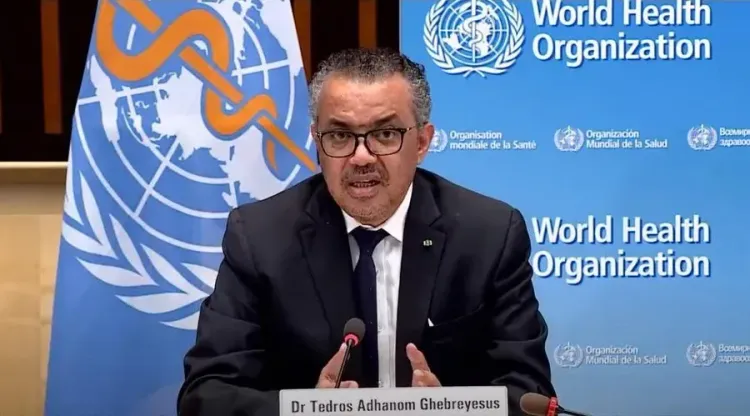
The World Health Organization (WHO) on Wednesday said the response to the ongoing Ebola outbreak in the Democratic Republic of the Congo (DRC) is finally catching up, even as 344 cases and 60 deaths have been confirmed across 24 health zones in three provinces. The update came at a press briefing in Geneva following Director-General Tedros Adhanom Ghebreyesus's visit to the central African nation.
What the WHO chief said
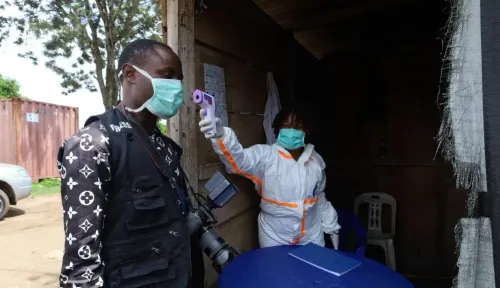
“What I saw gave me hope, although challenges remain,” Tedros said, describing the level of commitment on the ground as encouraging. He added that the number of suspected cases has been brought down sharply to 116, from more than 1,000 a week ago — a sign that surveillance and triage are improving.
Tedros said the agency's risk assessment remains unchanged: very high at the national level, high regionally, and low globally. “The outbreak had a big head start, and we're still behind, but under the leadership of the Government of DRC, we are catching up,” he said.
The challenges that persist
Tedros flagged several bottlenecks: limited laboratory and diagnostic capacity that delays case confirmation, gaps in contact tracing, travel restrictions disrupting supply chains, community mistrust, and — critically — the absence of any licensed vaccine or specific therapeutic for the Bundibugyo strain driving this outbreak. That is a sharp contrast to the Zaire ebolavirus, for which approved vaccines and monoclonal therapies exist.
A recovery in Goma
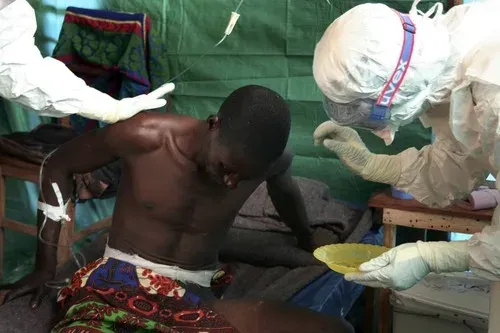
In Goma, the capital of North Kivu Province in eastern DRC, a patient was discharged on Wednesday after being declared recovered by medical teams. “We are very happy. Her illness worried us deeply. Since she was hospitalised, none of us could go to work. We were all anxious,” said Kavira Kazadi, a family member.
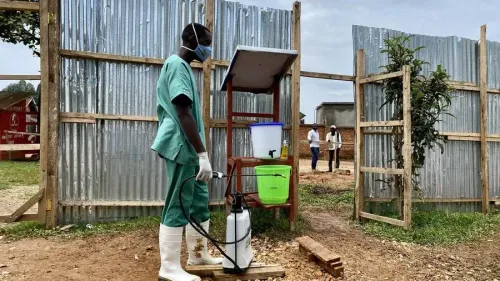
The DRC government said that, as of Monday, six patients have recovered overall. Medical charity Doctors Without Borders reported that an 80-bed Ebola treatment centre has been set up in Goma, drawing on systems built during earlier epidemics in the region.
Operating in a conflict zone
Goma has been under the control of the March 23 Movement (M23) rebel group since early 2025, and access to parts of North Kivu remains difficult amid continued insecurity. The WHO insisted it has maintained its footprint despite the volatility. “We have never left Kivu,” said Mohamed Yakub Janabi, WHO regional director for Africa.
What happens next
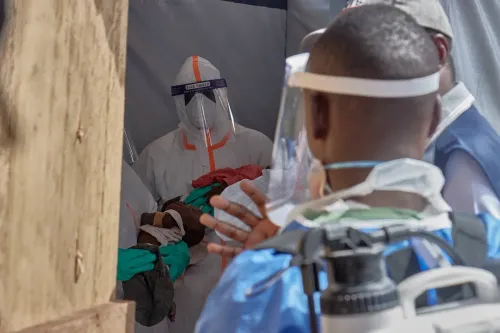
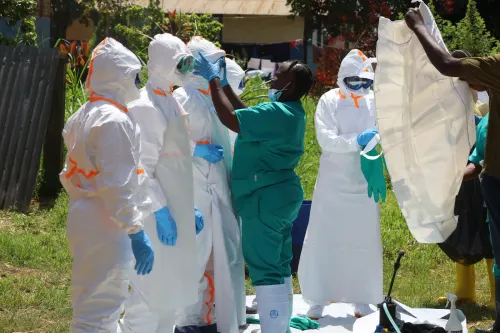
The WHO declared the Ebola outbreak in the DRC and Uganda a public health emergency of international concern on 17 May. With no approved vaccine for the Bundibugyo strain, the response will hinge on classical outbreak control — faster diagnostics, robust contact tracing, and community engagement — even as humanitarian access in eastern DRC remains contingent on the security situation.
Point of View
Which means classical containment is the only lever. Layer on M23's control of Goma and disrupted supply chains, and the WHO's ‘catching up' framing is best read as cautious optimism, not a turning point. The international community's slow investment in Bundibugyo-specific countermeasures is the structural failure here, and it will keep mattering long after this outbreak ends.
NationPress
19 Sept 2026
Frequently Asked Questions
How many Ebola cases and deaths have been reported in DR Congo?
As of the latest WHO update, 344 Ebola cases have been confirmed in the Democratic Republic of the Congo, including 60 deaths, spread across 24 health zones in three provinces. Suspected cases have also fallen to 116 from over 1,000 the previous week.
Which Ebola strain is behind the current DRC outbreak?
The outbreak is caused by the Bundibugyo strain of the Ebola virus. There is currently no licensed vaccine or specific therapeutic approved for this strain, unlike the Zaire ebolavirus for which authorised vaccines and treatments exist.
Why is the WHO response in eastern DRC particularly difficult?
Goma, the epicentre in North Kivu Province, has been under the control of the M23 rebel group since early 2025, making humanitarian access uneven. Travel restrictions and disrupted supply chains, combined with community mistrust, are slowing diagnostics and contact tracing.
When did the WHO declare this Ebola outbreak a global health emergency?
The WHO declared the Ebola outbreak in the DRC and Uganda a public health emergency of international concern on 17 May. The global risk level, however, remains assessed as low, with the very high risk concentrated at the national level.
What is being done on the ground to treat patients?
An 80-bed Ebola treatment centre has been set up in Goma by Doctors Without Borders, drawing on systems built during previous epidemics. Six patients have recovered so far, including one discharged in Goma this week.