Fed Chair Warsh warns AI 'super intelligence' could spike US unemployment
Synopsis
The head of the world’s most powerful central bank has put AI disruption squarely on the monetary policy agenda. Fed Chair Kevin Warsh’s three-scenario framework — broad prosperity, labour-market fracture, or a bust after a capital binge — signals that the Fed is no longer treating super intelligence as a background assumption. It is now a risk variable the FOMC will have to price in.
Key Takeaways
Federal Reserve Chairman Kevin Warsh warned on Monday that AI ‘super intelligence’ could push US unemployment above full-employment levels even while lifting GDP growth.
Warsh outlined three scenarios : broad shared prosperity; labour displacement despite growth; and a post-investment bust with no lasting productivity gains.
He stressed the remarks were ‘illustrative scenarios, not forecasts,’ with the Fed maintaining a neutral stance — ‘neither advocacy nor opposition.’ Warsh flagged critical infrastructure vulnerabilities as a distinct AI risk, citing the technology’s potential to empower ‘bad actors.’ The findings will feed into the Federal Open Market Committee (FOMC) via one of five task forces the Fed launched in June 2026 .
US productivity growth has been ‘reasonably strong’ in recent quarters but has not yet shown a ‘definitive, lasting upward shift,’ Warsh noted.
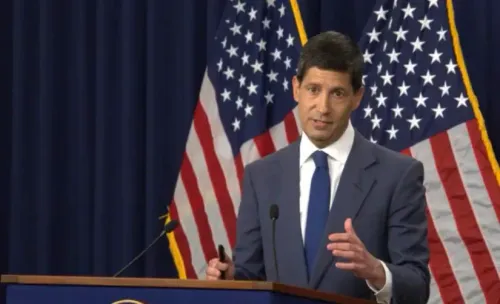
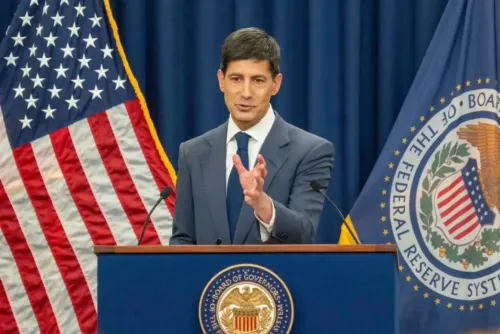
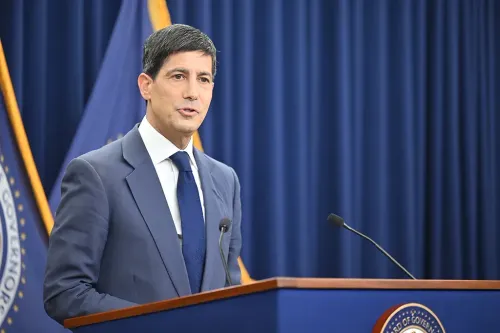
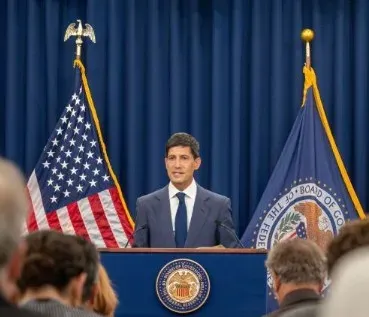
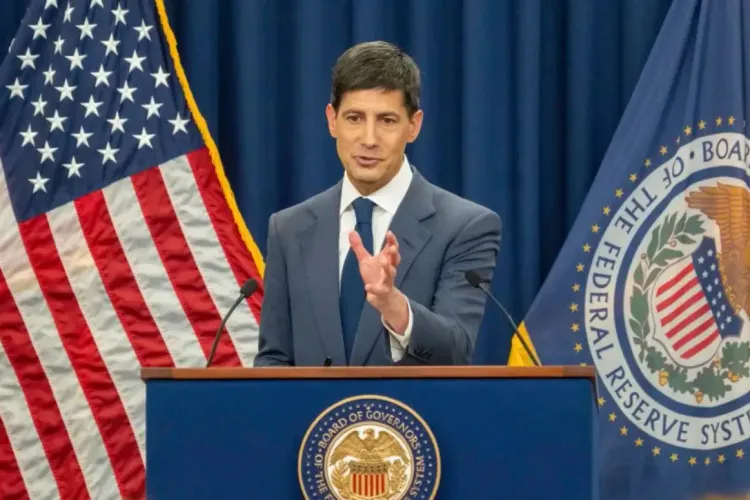
Federal Reserve Chairman Kevin Warsh on Monday cautioned that advanced artificial intelligence — which he termed ‘super intelligence’ — could displace workers and push unemployment above full-employment levels, even as it simultaneously accelerates broader economic growth. Speaking at the Federal Reserve’s Productivity and Jobs Task Force Conference in San Francisco, Warsh outlined three distinct scenarios the US central bank is actively modelling as it prepares monetary policy for a technology-driven future.
Three Scenarios the Fed Is Modelling
Warsh was careful to frame his remarks as exploratory rather than predictive. “These are illustrative scenarios, not forecasts,” he said, emphasising that multiple outcomes remain plausible. The conference was jointly hosted by the Fed Board and the San Francisco Federal Reserve Bank, and forms part of one of five task forces the central bank announced in June to examine issues central to monetary policy.
In the most optimistic scenario, productivity gains would be broadly shared between workers and capital owners, keeping the economy above its long-run growth average while the United States remained near full employment. A second, more disruptive scenario envisioned widespread automation creating ‘labour market frictions’ that push joblessness beyond sustainable levels. “GDP growth would still rise above its long-term average. But widespread automation, combined with labour market frictions, could push the jobless rate above levels consistent with full employment,” Warsh said in his published remarks. The third scenario was a cautionary tale of overinvestment: technology could ‘disappoint’ after substantial capital spending and equity market gains, triggering a slowdown. “After significant capital investment and stock market gains, expected returns could turn down, and equity valuations could fall, leading to an economic slowdown and a more notable rise in unemployment,” he warned, adding that “in time, the economy would recover, but without the productivity gains.”
What Makes This Wave Different
Warsh argued that artificial intelligence is structurally distinct from earlier technological revolutions such as electricity and the internal combustion engine. Unlike those innovations, he said, super intelligence could accelerate the ‘creation of ideas’ itself — potentially sustaining growth above its historical average over a longer horizon. He noted that US productivity growth had been ‘reasonably strong’ in recent quarters but had not yet shown a ‘definitive, lasting upward shift’ that would confirm the AI thesis.
Central questions for the Fed, Warsh said, include the scale and timing of productivity gains, whether wider access to specialised knowledge would raise living standards, and whether benefits would materialise faster in the United States than in competitor economies.
Security Risks and the Limits of Machines
Beyond employment and financial markets, Warsh flagged infrastructure vulnerabilities as a separate dimension of risk. “SI empowers all, including bad actors, so we are thinking especially of critical infrastructures and their potential vulnerabilities,” he said. At the same time, he was emphatic about the irreplaceable role of human judgement. “Machines that can amass or even exceed human knowledge are still machines. They do not take the place of human judgment, morality, or responsibility,” Warsh said. “Humans are the designers and the builders, and humans must be the deciders.”
The Fed’s Stated Neutrality
Warsh was explicit that the central bank is not positioning itself as either a champion or a critic of the technology. “Neither advocacy nor opposition” describes the Fed’s role, he said — its responsibility is to understand how widespread AI adoption would affect economic conditions and, by extension, monetary policy decisions by the Federal Open Market Committee (FOMC). The productivity and jobs task force is one of five such groups announced in June, each supported by Fed staff and expected to feed findings directly to the FOMC.
As AI investment continues to surge globally, the Fed’s formal engagement with these scenarios signals that super-intelligence risk is now a live variable in US monetary policy deliberations — not a distant hypothetical.
Point of View
It signals that this risk is migrating from academic seminars into rate-setting deliberations. The uncomfortable tension in his remarks is that two of the three scenarios involve elevated unemployment, yet both could also feature above-trend GDP growth — a combination that would severely complicate the Fed’s dual mandate. How the FOMC responds to a world of rising output and rising joblessness simultaneously is a question monetary policy frameworks were not designed to answer.
NationPress
17 Nov 2026
Frequently Asked Questions
What did Fed Chair Kevin Warsh say about AI and jobs?
Warsh warned that advanced AI, which he called ‘super intelligence,’ could displace workers and push unemployment above full-employment levels even as it accelerates GDP growth. He outlined three possible scenarios the Fed is modelling, stressing they are illustrative and not official forecasts.
What are the three AI scenarios the Federal Reserve is studying?
The Fed is modelling three outcomes: a best case where productivity gains are broadly shared and the US stays near full employment; a disruptive case where automation creates labour market frictions that push joblessness higher despite above-trend growth; and a bust scenario where over-investment in AI leads to falling equity valuations, an economic slowdown, and unemployment without lasting productivity gains.
Why is the Federal Reserve studying AI’s economic impact?
The Fed’s productivity and jobs task force, one of five launched in June 2026, is tasked with understanding how widespread AI adoption could reshape productivity, employment and investment — and what that means for monetary policy decisions by the FOMC. Warsh said the central bank’s role is ‘neither advocacy nor opposition.’
What security risks did Warsh flag alongside the economic concerns?
Warsh warned that AI ‘empowers all, including bad actors,’ and said the Fed is specifically focused on vulnerabilities in critical infrastructure. He also emphasised that machines cannot replace human judgement, morality, or responsibility.
How does Warsh say AI differs from past technological revolutions?
Warsh argued that unlike electricity or the internal combustion engine, super intelligence could accelerate the creation of ideas itself, potentially sustaining economic growth above its historical average for longer — though he cautioned that a definitive, lasting productivity shift had not yet been confirmed in US data.