France recalls carrier Charles de Gaulle as US-Iran nuclear deal eases tensions
Synopsis
France is pulling its flagship aircraft carrier Charles de Gaulle out of the Middle East after a US-Iran memorandum of understanding shifted the regional threat calculus. But with mine-clearance assets staying put and Trump claiming Iran has agreed to 'just about everything,' the Hormuz mission is on pause — not cancelled.
Key Takeaways
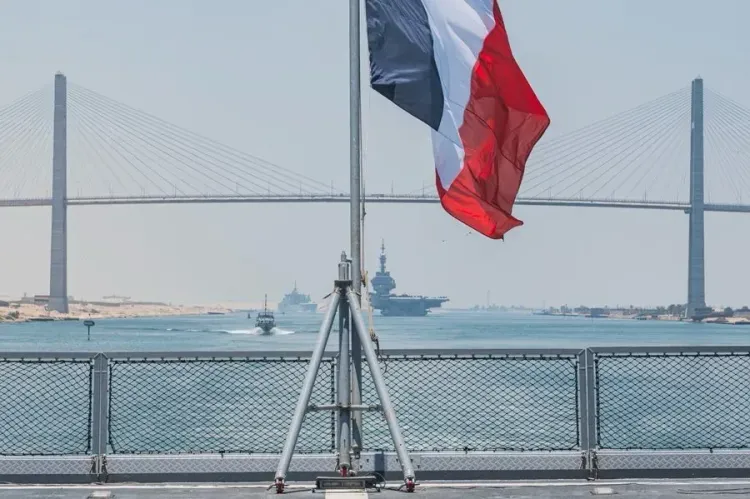
France is withdrawing the aircraft carrier Charles de Gaulle from the Middle East , with the vessel heading back to Toulon .
President Emmanuel Macron cited a US-Iran memorandum of understanding signed on 14 June as 'significant progress' prompting the redeployment.
French mine-clearance and escort assets will remain in the region, ready for operations with partner nations.
The carrier was originally deployed in May to prepare for a France-Britain led multinational escort mission in the Strait of Hormuz .
US President Donald Trump said Iran had agreed to 'just about everything we need' on its nuclear programme, describing the US goal as 'the denuking of Iran.'
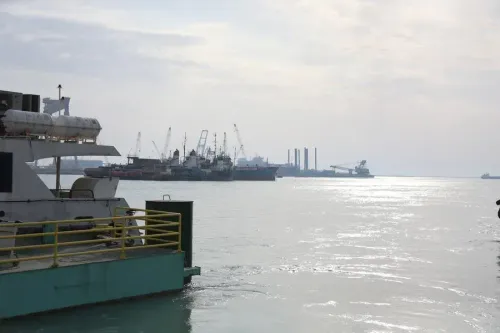
France is withdrawing its aircraft carrier Charles de Gaulle from the Middle East, with the vessel now en route to its home port of Toulon, French President Emmanuel Macron announced on 4 July via social media platform X. The pullback follows a memorandum of understanding reached between the United States and Iran on 14 June, which Macron described as 'significant progress' for regional stability.
Background: Why the Carrier Was Deployed
In mid-April, France and Britain jointly announced plans to lead a defensive, multinational escort mission in the Strait of Hormuz. France subsequently deployed the Charles de Gaulle to the region in May to prepare for the mission's formal launch, contingent on a reduction in hostilities. The carrier is currently transiting the Mediterranean Sea, according to reports citing the French president's office.
What Macron Said
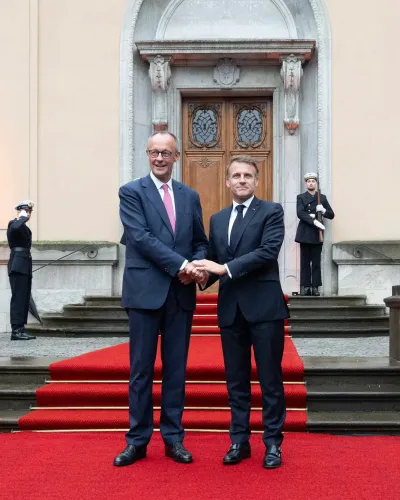
In his X post, Macron confirmed that the US-Iran memorandum of understanding had prompted France to recalibrate its military posture in the region. However, he stressed that French mine-clearance assets and their escort vessels would remain deployed and ready to conduct operations alongside partner nations. The carrier's withdrawal does not represent a full French disengagement from the Hormuz mission framework.
Trump on Iran Nuclear Negotiations
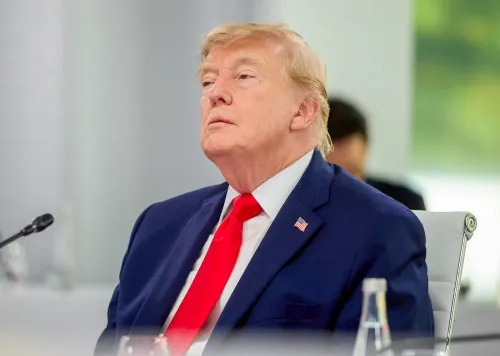
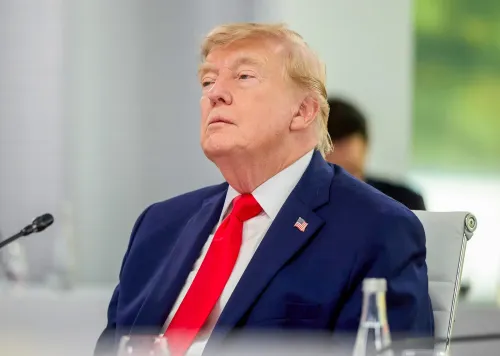
US President Donald Trump, speaking in an interview with CNBC, said on Thursday that Iran had agreed to 'just about everything we need' in ongoing nuclear negotiations. Trump characterised the US objective as 'the denuking of Iran,' insisting that Tehran would never be permitted to acquire a nuclear weapon. 'This is the denuking of Iran. You can't let them have a nuclear weapon,' he said. Asked whether Washington sought regime change in Tehran, Trump was unequivocal: 'I'm not looking for regime change. I'm looking for something very simple. They cannot have a nuclear weapon.' Trump also stated that US military operations had significantly weakened Iran's military capabilities since he returned to office, though he did not elaborate on specifics.
Strategic Significance of the Strait of Hormuz
The Strait of Hormuz is one of the world's most critical maritime chokepoints, through which roughly 20% of global oil supplies transit. Heightened tensions between the US and Iran earlier this year had raised fears of disruption to shipping lanes, prompting the Franco-British escort initiative. The US-Iran memorandum has, at least temporarily, reduced that threat calculus for European powers. Notably, this is not the first time France has repositioned naval assets in response to diplomatic shifts in the Gulf — a pattern that underscores how closely Paris tracks Washington's lead on Iran policy even as it maintains an independent foreign policy posture.
What Happens Next
The multinational Hormuz escort mission framework remains active in principle, with French mine-clearance and escort assets still on standby. The durability of the US-Iran memorandum — and whether it translates into a formal nuclear agreement — will determine whether the Charles de Gaulle or equivalent assets return to the region. Analysts will watch the next round of US-Iran negotiations closely for signs of a binding deal.
Point of View
Its Gulf military posture continues to move in lockstep with Washington's diplomatic calendar. If the US-Iran deal unravels — as several previous frameworks have — the Charles de Gaulle could be back in the Arabian Sea faster than the ink dries on any agreement. Trump's 'denuking' framing also raises questions about whether Washington and Tehran are actually negotiating the same deal.
NationPress
4 Jul 2026
Frequently Asked Questions
Why is France withdrawing the Charles de Gaulle from the Middle East?
France is recalling the Charles de Gaulle to its home port of Toulon following a memorandum of understanding signed between the United States and Iran on 14 June, which President Macron described as 'significant progress' for regional stability. The carrier had been stationed in the region to prepare for a Franco-British multinational escort mission in the Strait of Hormuz.
Will France completely withdraw from the Strait of Hormuz mission?
No. While the Charles de Gaulle is returning to Toulon, French mine-clearance assets and their escort vessels will remain deployed in the region, ready to conduct operations with partner nations. The multinational escort mission framework remains active.
What did Trump say about US-Iran nuclear negotiations?
Speaking to CNBC, President Trump said Iran had agreed to 'just about everything we need' in nuclear talks, framing the US objective as 'the denuking of Iran.' He stated that Washington was not seeking regime change in Tehran, only a guarantee that Iran would not acquire a nuclear weapon.
What is the Strait of Hormuz escort mission?
France and Britain announced in mid-April that they would jointly lead a defensive multinational maritime security mission in the Strait of Hormuz, a critical chokepoint through which roughly 20% of global oil supplies transit. The mission was designed to protect commercial shipping amid elevated US-Iran tensions.
What is the US-Iran memorandum of understanding?
The US and Iran reached a memorandum of understanding on 14 June, the details of which have not been fully disclosed publicly. It is understood to relate to Iran's nuclear programme and is being cited by both Washington and Paris as a basis for de-escalation in the Middle East.