Rubio: Free trade agreement era unlikely to return for foreseeable future
Synopsis
In a sweeping declaration from Reykjavik, US Secretary of State Marco Rubio effectively closed the door on comprehensive free trade agreements for the foreseeable future — a statement that goes far beyond Iceland and redefines Washington's entire approach to global economic engagement. For countries banking on an FTA with the US, the playbook just changed.
Key Takeaways
US Secretary of State Marco Rubio declared on 7 October 2026 that the era of free trade agreements is 'probably not going to be there' for the foreseeable future.
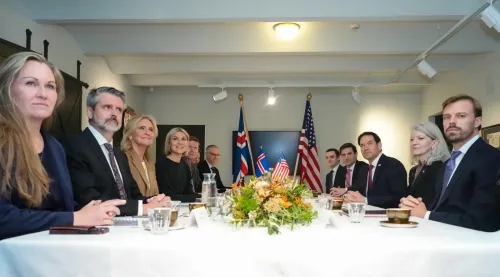
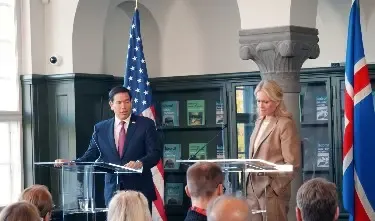
Rubio made the remarks in Reykjavik alongside Icelandic Foreign Minister Thorgerdur Katrin Gunnarsdottir , clarifying the position applies broadly, not just to Iceland.
Washington's preferred alternative is bilateral and reciprocal trade arrangements , with meetings to advance a US-Iceland deal already being organised.
Rubio identified pharmaceuticals and biotechnology as priority sectors for US-Iceland commercial cooperation.
The US has not concluded a major free trade agreement since 2012 ; Rubio's statement elevates this gap from political inertia to stated doctrine.
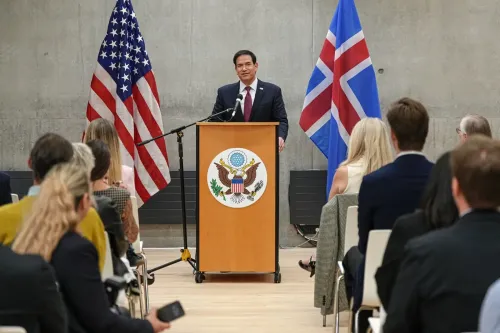
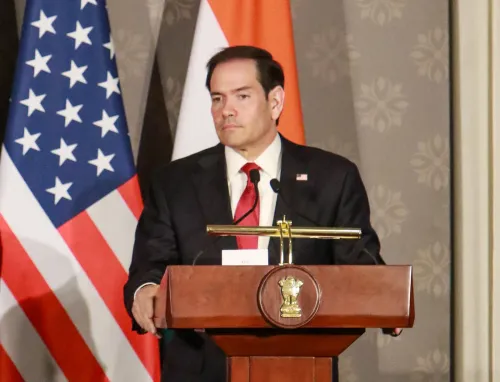
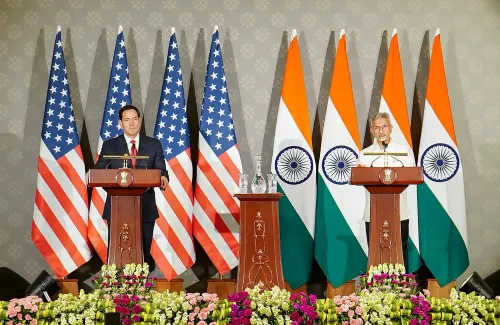
US Secretary of State Marco Rubio declared on 7 October 2026 that the era of free trade agreements is unlikely to return 'for the foreseeable future', signalling a decisive shift in Washington's trade posture toward bilateral and reciprocal arrangements. The remarks, made in Reykjavik during a joint media availability with Icelandic Foreign Minister Thorgerdur Katrin Gunnarsdottir, carry broad implications for the global trading order.
What Rubio Said
When asked whether the United States was willing to explore a free trade agreement with Iceland, Rubio was direct. 'As far as free trade agreements are concerned, look, I think the era of free trade agreements for the foreseeable future is probably not going to be there,' he said. He was quick to clarify that the assessment was not Iceland-specific. 'I mean, not with Iceland, but just in general writ large,' he added.
Instead, Rubio pointed to bilateral and reciprocal trade understandings as the preferred framework. 'Where I do think we have real opportunities is a bilateral trade agreement, bilateral trade, a reciprocal trade understanding between our countries,' he said, noting that preliminary meetings to pursue such an arrangement with Iceland were already being organised ahead of his visit.
The US-Iceland Trade Opportunity
Beyond the broader trade doctrine, Rubio identified concrete sectors for deeper US-Iceland economic cooperation, including pharmaceuticals and biotechnology. He said Iceland had specialised companies in these fields that Washington would like to see engaged in the US market, and vice versa. 'There are companies here to do very unique things that we would like to see in the United States,' he said.
Rubio also outlined a government-facilitated model for business connectivity, with both countries' embassies serving as conduits for investor matchmaking. 'We want to use the government, our embassy, our presence here, your embassy in the United States, to connect and create that synergy,' he said. 'We will both benefit from it. You'll become more prosperous, we'll become more prosperous, and I think will only bind us together more closely.'
Broader Context: A Shift in US Trade Doctrine
Rubio's comments are consistent with a broader realignment in US trade policy that has increasingly prioritised reciprocity and bilateral negotiations over the sweeping multilateral tariff reductions historically associated with free trade agreements. This comes amid ongoing tensions over existing trade frameworks and growing protectionist sentiment within Washington's policy establishment.
Notably, comprehensive free trade agreements — once a cornerstone of US global economic engagement — have faced political headwinds domestically for over a decade. The last major US free trade deal to take effect was the US-Colombia Free Trade Agreement in 2012; attempts since then, including the Trans-Pacific Partnership, collapsed under political pressure. Rubio's remarks suggest this trend is now explicit policy rather than circumstantial stagnation.
What This Means for Trading Partners
For countries that have been pursuing or hoping to negotiate free trade agreements with the United States — including several in Asia and the Indo-Pacific — the remarks are a significant signal. Washington appears to be recasting its trade engagement model around deal-by-deal reciprocity rather than broad-based liberalisation frameworks. Countries seeking deeper US market access may need to recalibrate their negotiating strategies accordingly.
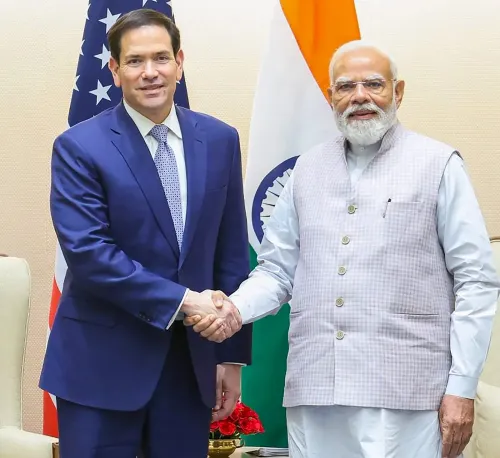
How major trading partners, including India, respond to this shift in US trade doctrine will be closely watched in the weeks ahead.
Point of View
But stating it as settled doctrine — rather than political posturing — changes the calculus for every country holding out hope for a comprehensive FTA with Washington. For India, which has long sought a trade deal with the US and recently navigated tariff friction, this signals that any agreement will be transactional, narrow, and conditional. The broader risk is that Washington's pivot accelerates a fragmentation of the global trading system into rival bilateral webs, where size and leverage — not rules — determine outcomes.
NationPress
7 Oct 2026
Frequently Asked Questions
What did US Secretary of State Marco Rubio say about free trade agreements?
Rubio said the era of free trade agreements is unlikely to return 'for the foreseeable future,' framing this as a general assessment of US trade policy rather than a position specific to Iceland. He made the remarks on 7 October 2026 in Reykjavik during a joint media availability with Iceland's Foreign Minister.
What trade framework does the US now prefer under Rubio?
The US favours bilateral and reciprocal trade arrangements over comprehensive free trade agreements. Rubio specifically highlighted 'a bilateral trade agreement, bilateral trade, a reciprocal trade understanding' as the preferred model, with government and embassy channels facilitating business connectivity.
Why do Rubio's remarks matter beyond Iceland?
Rubio explicitly said his assessment applies 'in general writ large,' not just to Iceland. This signals a broader US policy doctrine that could affect any country seeking a free trade agreement with Washington, including nations in Asia and the Indo-Pacific region.
What sectors did Rubio identify for US-Iceland cooperation?
Rubio highlighted pharmaceuticals and biotechnology as sectors where Iceland has specialised companies that Washington would like to engage. He said both countries' governments and embassies would help connect businesses and investors on both sides.
How does this fit into the broader history of US trade agreements?
The US has not concluded a major new free trade agreement since the US-Colombia deal took effect in 2012. Attempts like the Trans-Pacific Partnership collapsed under political pressure. Rubio's statement suggests the absence of new FTAs is now explicit US policy rather than a temporary political impasse.