Iran attacks Jordan, Kuwait, Bahrain as US-Iran hostilities widen
Synopsis
Iran's strikes are no longer confined to US targets — they are hitting Gulf infrastructure and triggering air-defence responses across three Arab nations simultaneously. With eight US strike waves already logged and Iranian retaliation now reaching Kuwait's water and power grid, the Middle East is closer to a multi-front conflict than at any point in recent memory.
Key Takeaways
Jordan intercepted three Iranian missiles on 20 July ; a fourth landed in a remote southern area without casualties.
Missiles were reportedly aimed at US military aircraft in Aqaba , which borders Israel's Eilat .
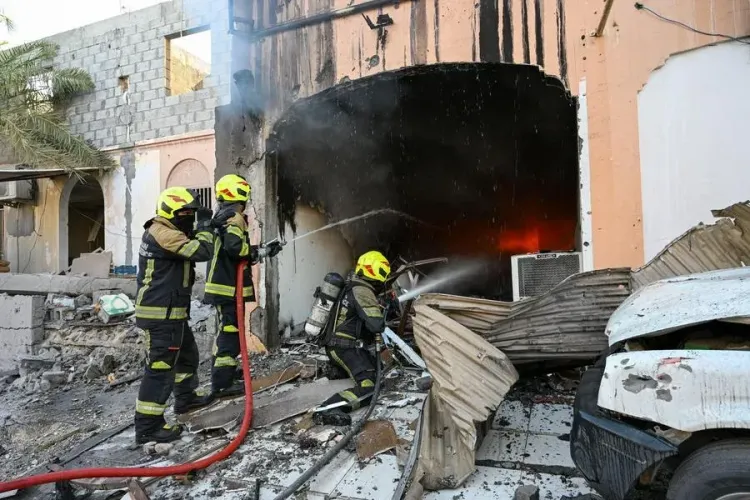
Kuwait said air defences intercepted ballistic missiles and drones ; a separate strike hit a power generation and water desalination facility , causing fires.
Bahrain confirmed its air defences intercepted several Iranian aerial attacks .
Arab League Secretary-General Nabil Fahmy warned of risk of mutual destruction and called on the US and Iran to de-escalate immediately.
The United States has conducted eight waves of strikes on Iranian targets; Iran has responded with strikes on US bases and facilities across the region.
Jordan, Kuwait, and Bahrain reported fresh Iranian missile and drone attacks on Sunday, 20 July, as escalating US-Iran hostilities spilled across the Middle East, triggering urgent calls for de-escalation from regional leaders and international bodies.
Missile Strikes on Jordan
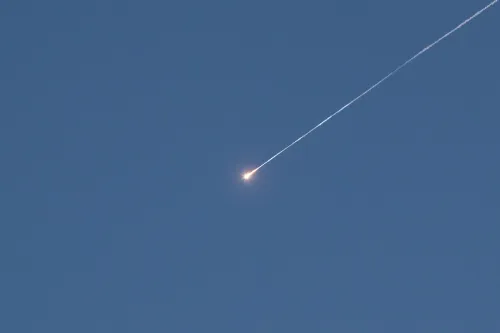
Jordan's air defences intercepted three missiles launched from Iran toward Jordanian territory, while a fourth missile fell in a remote area in southern Jordan without causing casualties or material damage, according to state broadcaster Jordan Radio and Television Corporation, which posted the update on X.
The missiles were reportedly aimed at US military aircraft stationed in the southern Jordanian coastal city of Aqaba, which directly borders the Israeli city of Eilat. Following the strikes, Israel's Channel 13 News reported that the US military evacuated refuelling aircraft from Ramon Airport in southern Israel, approximately 18 km north of Eilat. Israel's state-run Kan TV News said commercial passenger flights at the airport were subsequently delayed.
Earlier on Sunday, the US Embassy in Amman issued a security alert stating that Aqaba's airport and seaport had been evacuated due to a 'specific and credible threat,' urging American citizens to avoid both sites. Jordanian authorities later rejected the embassy's characterisation, asserting that both facilities were operating normally.
Kuwait Hit: Power and Water Infrastructure Targeted
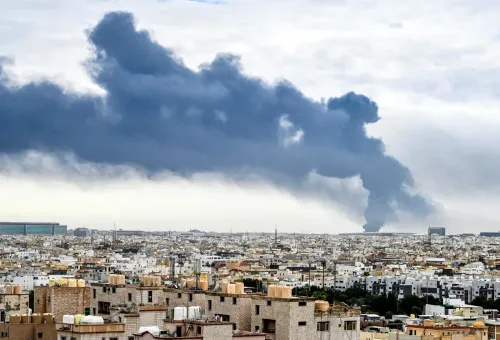
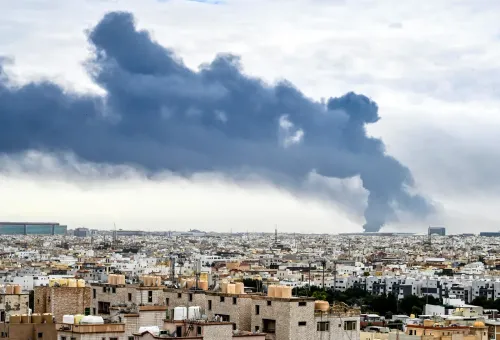
Kuwait's Armed Forces said air defences intercepted hostile ballistic missiles and drones over the country on the same day. A separate attack struck a power generation and water desalination facility, causing fires and extensive damage.
In a statement posted on X, the Kuwaiti Army said incoming missiles and drones had been detected and engaged since dawn, without specifying the number of projectiles involved. The military directly accused Iran of targeting civilian and vital infrastructure, stating that facilities operated by the Ministry of Electricity, Water and Renewable Energy had been hit.
Bahrain Also Targeted
Bahraini authorities confirmed that the country's air defences intercepted several Iranian aerial attacks, adding to the widening theatre of the conflict. No further details on casualties or damage in Bahrain were immediately available.
Calls for De-escalation
Arab League Secretary-General Nabil Fahmy warned of serious consequences from the ongoing escalation, urging both the United States and Iran to immediately work toward de-escalation. In a statement, Fahmy cautioned that continued hostilities risked spiralling out of control, leading to 'mutual destruction and worsening economic conditions in the region and beyond.'
Jordan's Deputy Prime Minister and Foreign Minister Ayman Safadi held separate phone calls with Turkish Foreign Minister Hakan Fidan and Kuwaiti Foreign Minister Sheikh Jarrah Jaber Al-Ahmad Al-Sabah. In his call with Fidan, Safadi stressed the need to end the escalation, implement the US-Iran ceasefire agreement, and return to negotiations to address the root causes of tensions, according to a Jordanian foreign ministry statement. In his call with the Kuwaiti counterpart, Safadi expressed Jordan's solidarity with Kuwait and other Gulf Cooperation Council (GCC) states facing Iranian attacks.
Broader Context: Eight US Strike Waves, Multiple Iranian Responses
The latest attacks come amid a rapidly deteriorating security environment. The United States has conducted eight waves of strikes on Iranian targets, while Iran has responded by striking US bases and facilities across multiple countries in the region. The widening of attacks to include Gulf states marks a significant escalation in the conflict's geographic footprint. How Washington and Tehran respond to diplomatic pressure in the coming days will determine whether the region edges toward a broader confrontation or a negotiated pause.
Point of View
Their tolerance for hosting US forces erodes. The Arab League's call for de-escalation is diplomatically significant but structurally weak — Fahmy has no enforcement mechanism. The real pressure point is whether GCC states, particularly Saudi Arabia, escalate their own diplomatic engagement with Tehran or quietly signal to Washington that the cost of continued operations is rising. Eight US strike waves without a political off-ramp is a pattern, not a strategy.
NationPress
21 Jul 2026
Frequently Asked Questions
What happened in Jordan, Kuwait, and Bahrain on 20 July?
Iran launched missile and drone attacks on all three countries on 20 July. Jordan intercepted three missiles and a fourth landed in a remote southern area; Kuwait's air defences engaged ballistic missiles and drones while a power and water facility was struck; Bahrain intercepted several Iranian aerial attacks.
What were the Iranian missiles in Jordan targeting?
According to reports, the missiles were aimed at US military aircraft stationed in Aqaba, a southern Jordanian coastal city that borders Israel's Eilat. The US military subsequently evacuated refuelling aircraft from Ramon Airport in southern Israel, approximately 18 km north of Eilat.
How serious is the damage in Kuwait?
A power generation and water desalination facility operated by Kuwait's Ministry of Electricity, Water and Renewable Energy was struck, causing fires and extensive damage. Kuwait's military accused Iran of deliberately targeting civilian and vital infrastructure.
What has the Arab League said about the escalation?
Arab League Secretary-General Nabil Fahmy warned of serious consequences and the risk of mutual destruction. He called on the United States and Iran to immediately de-escalate, noting that continued conflict would worsen economic conditions across the region and beyond.
How many times has the US struck Iran, and how has Iran responded?
The United States has conducted eight waves of strikes on Iranian targets. Iran has responded by striking US bases and facilities in multiple countries across the region, with the latest attacks hitting Jordan, Kuwait, and Bahrain simultaneously.