G20 mobilises $470 million for DRC Ebola fight, total pledges top $2 billion
Synopsis
At a specially convened G20 Foreign Ministers' meeting, nations pledged over $470 million in fresh Ebola funding for the DRC — pushing total commitments past $2 billion — but the real alarm is scientific: existing vaccines and therapies are not fully effective against the Bundibugyo strain at the heart of this outbreak, making money necessary but not sufficient.
Key Takeaways
G20 nations and donors pledged more than $470 million in new funding for the DRC Ebola outbreak , announced on 30 September .
Total global commitments have now surpassed $2 billion since the outbreak began in May .
The United States committed an additional $267 million , bringing its total direct assistance to $887 million .
The World Bank announced $90 million ; the UK pledged $67.5 million , Germany $24.8 million , and South Korea $18 million .
The Bundibugyo strain involved is centred in a conflict-affected area, and existing vaccines and therapies are not fully effective against it.
Uganda's Ebola outbreak was successfully ended in August , cited as proof the disease can be contained.
G20 nations and major international donors have collectively pledged more than $470 million in fresh funding to contain the Ebola outbreak in the Democratic Republic of Congo (DRC), pushing total global commitments beyond $2 billion since the outbreak was first recorded in May, according to the United States government on Wednesday, 30 September. The pledges were announced at a G20 Foreign Ministers' meeting convened by Washington specifically to accelerate the international response.
How the Meeting Was Convened
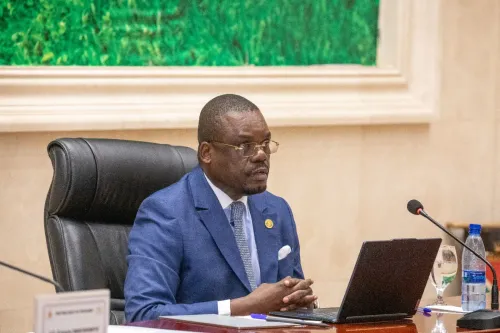
The United States, which currently holds the G20 presidency, organised the ministerial gathering and extended invitations beyond the core grouping to include major health and humanitarian donors such as Poland, Ireland, the Netherlands, Norway, Singapore, Qatar, and the United Arab Emirates. Key multilateral bodies — including the Africa CDC, the UN Office for the Coordination of Humanitarian Affairs (OCHA), the Pandemic Fund, UNICEF, and the World Bank — also participated in the discussions.
Why This Outbreak Is Unusually Difficult
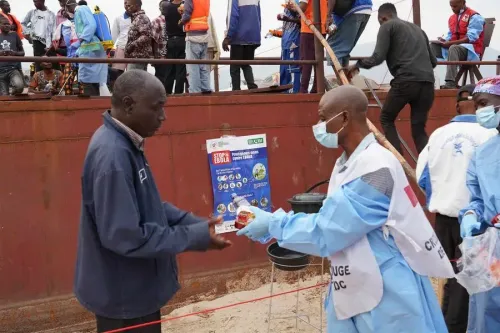
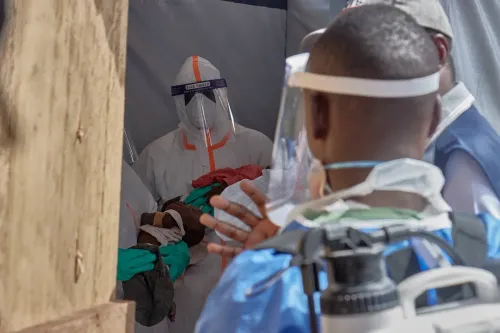
The G20 chair's statement underscored that the current outbreak presents compounding challenges rarely seen in previous Ebola responses. The disease is centred in an isolated, conflict-affected area of the DRC, severely hampering access for health workers and supplies. Critically, the statement noted that existing vaccines, diagnostics, and therapies are not fully effective against the Bundibugyo strain involved in this outbreak.
'We commend the health care workers, volunteers, and local communities battling this disease, which — as President Trump and other G7 Leaders recognised in June — poses unique challenges: it is centred in an isolated, conflict-affected area, and existing vaccines, diagnostics, and therapies are not fully effective against this Bundibugyo strain,' the statement read.
Despite the obstacles, the statement pointed to a recent precedent for optimism: Uganda's Ebola outbreak was successfully contained and declared over in August, demonstrating that the disease can be defeated with coordinated action.
Country-by-Country Commitments
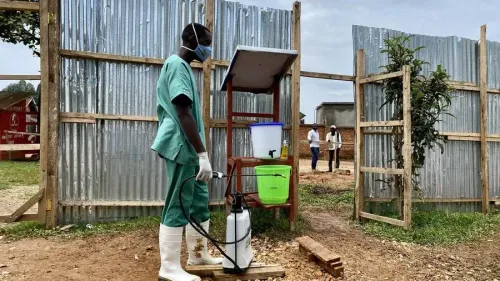
The United States announced an additional $267 million in health and humanitarian assistance, raising its total direct government contribution to $887 million. Washington also separately mobilised $350 million in broader humanitarian assistance to the region this year through its global partnership with OCHA. The new US funds will support Ebola treatment units, safe and dignified burial teams, large-scale procurement of personal protective equipment, and expanded disease surveillance through local implementers.
The United Kingdom unveiled a $67.5 million package, taking its total support to $105.6 million, earmarked for disease surveillance, frontline health worker support, and treatment access. Germany pledged an additional $24.8 million, bringing its total to $30.7 million, to fund laboratories, treatment capacity, health worker training, and risk communication.
South Korea announced $18 million through global health partners to improve access to vaccines, therapeutics, and medical countermeasures. France pledged $16 million, raising its cumulative contribution to $34 million, while Italy committed $11.3 million toward clinical trials of new vaccines, essential medical supplies, and prevention efforts. The UAE announced $10 million, Japan pledged an additional $5 million in emergency grant aid — taking its overall support to nearly $12.4 million — and Australia announced $3.5 million.
The World Bank separately announced $90 million, comprising $80 million from its Crisis Response Window and $10 million from the Global Financing Facility to protect essential health services in the affected region.
Measures on the Ground
The G20 statement called for intensified operations in outbreak zones and stronger preparedness in high-risk areas. Specific measures endorsed include expanded contact tracing, protection of frontline responders, increased treatment bed capacity, deployment of new diagnostics, and accelerated investment in vaccine development suited to the Bundibugyo strain. This comes amid growing concern that the conflict environment in eastern DRC could allow the virus to spread to neighbouring countries before containment is achieved.
What Comes Next
With pledges now exceeding $2 billion in total since May, the immediate challenge shifts from fundraising to rapid, effective deployment in one of the world's most difficult operating environments. Multilateral organisations will be central to channelling funds to local implementers, and the pace of vaccine development against the Bundibugyo strain will be closely watched in the weeks ahead.
Point of View
But it risks obscuring the harder problem: money cannot compensate for the absence of an effective vaccine against the Bundibugyo strain. Every previous Ebola success story relied on tools that simply do not work as well here, and the conflict geography of eastern DRC means even well-funded interventions face severe delivery constraints. The G20's willingness to convene a dedicated Foreign Ministers' meeting is a political signal worth noting, but the real test will be whether accelerated vaccine development timelines are attached to these pledges — or whether the funding flows into a containment model that the science no longer fully supports.
NationPress
1 Oct 2026
Frequently Asked Questions
How much has the G20 pledged to fight the Ebola outbreak in the DRC?
G20 nations and other major donors have pledged more than $470 million in new funding, pushing total global commitments beyond $2 billion since the outbreak began in May. The pledges were announced at a G20 Foreign Ministers' meeting convened by the United States on 30 September.
Why is the DRC Ebola outbreak considered unusually difficult to contain?
The outbreak is centred in an isolated, conflict-affected area of the Democratic Republic of Congo, severely limiting access for health workers and supplies. Compounding the challenge, existing vaccines, diagnostics, and therapies are not fully effective against the Bundibugyo strain involved in this outbreak.
How much has the United States contributed to the Ebola response?
The US announced an additional $267 million in health and humanitarian assistance on 30 September, bringing its total direct government contribution to $887 million. Washington also separately mobilised $350 million in broader humanitarian assistance to the region this year through its partnership with OCHA.
Which other countries and organisations have pledged funds?
Major contributors include the UK ($67.5 million new, $105.6 million total), Germany ($24.8 million new, $30.7 million total), South Korea ($18 million), France ($16 million new, $34 million total), Italy ($11.3 million), the UAE ($10 million), Japan ($5 million new, nearly $12.4 million total), and Australia ($3.5 million). The World Bank also announced $90 million in additional support.
Has any recent Ebola outbreak been successfully contained?
Yes. Uganda's Ebola outbreak was declared over in August, and the G20 statement cited it as evidence that the disease can be defeated with coordinated international action. However, the DRC outbreak involves a different strain and a far more challenging operating environment.