Russia's Indian Ocean rail corridor: Bold plan, daunting hurdles
Synopsis
Russia's proposal for a rail corridor to the Indian Ocean through Afghanistan and Pakistan is as geopolitically charged as it is logistically fraught. It positions Moscow as a rival to China's BRI dominance and a potential partner for India — but Afghanistan's instability, Western sanctions, and Pakistan's internal volatility could stall the plan before a single track is laid.
Key Takeaways
Russian Deputy Prime Minister Marat Khusnullin has reportedly proposed a railway corridor linking Russia to the Indian Ocean via Turkmenistan , Iran , Afghanistan , and Pakistan .
The proposal is framed as an alternative to the Strait of Hormuz , which faces risks from the US-Israel-Iran conflict .
The corridor could compete with China's BRI and CPEC , while potentially complementing the 7,200-km INSTC network.
Afghanistan's instability, Western sanctions on Russia, and Pakistan's internal volatility are cited as major execution risks.
For India , a route through Pakistan raises significant safety and security concerns despite ongoing India-Russia railway cooperation talks.
Russia has proposed building a railway corridor to the Indian Ocean through Afghanistan, Central Asia, and Pakistan, framing it as a strategic alternative to the Strait of Hormuz amid mounting tensions from the US-Israel-Iran conflict. The proposal, reportedly floated by Russian Deputy Prime Minister Marat Khusnullin, could redraw Eurasian trade routes — but analysts warn that the execution challenges are as formidable as the ambition.
What Russia Is Proposing
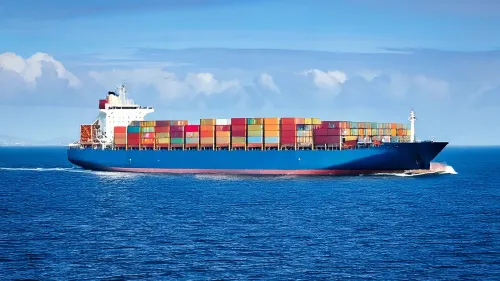
According to reports, Khusnullin has argued that given potential risks to shipping through the Strait of Hormuz, Moscow should explore overland alternatives for accessing South Asian markets. The proposed route would link Russia to the Indian Ocean via Turkmenistan, Iran, Afghanistan, and Pakistan, bypassing Western-controlled sea lanes. The corridor is envisioned to carry oil, gas, fertilisers, and industrial goods to South Asia and beyond, reducing Moscow's dependence on maritime chokepoints including the Strait of Hormuz and the Bosphorus.
How It Stacks Up Against China's BRI
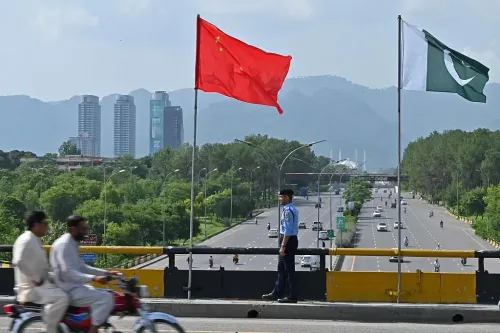
The proposed corridor sits in direct tension — and potential overlap — with China's Belt and Road Initiative (BRI). Beijing already holds a strong foothold in the region through the China-Pakistan Economic Corridor (CPEC), which connects western China to the Arabian Sea via Gwadar Port. A parallel Russian route through Afghanistan and Pakistan could dilute China's leverage over South Asian trade flows.
Notably, Russia's emphasis on connecting with India — which has resisted joining the BRI over sovereignty concerns related to CPEC — positions Moscow as a potential alternative infrastructure partner for New Delhi. This corridor could, in theory, offer nations a transcontinental trade route outside Beijing's sphere of influence.
At the same time, the plan could complement rather than compete with parts of the BRI, particularly in Iran, where Chinese and Russian investments already overlap. Both nations share an interest in reducing dependence on Western-controlled maritime routes, and coordination could allow them to pool resources and strengthen their collective bargaining power against Western sanctions.
Links to the INSTC
The proposed Afghan route could also integrate with the International North-South Transport Corridor (INSTC), a 7,200-km multimodal network of road, rail, and sea links connecting Azerbaijan, Central Asia, Europe, India, Iran, and Russia. If Moscow successfully merges its new corridor with the INSTC, the combined network would represent one of the most expansive trade arteries in Eurasia — though that integration itself remains complex and contested.
Security and Engineering Challenges
Afghanistan remains the most critical obstacle. The country continues to face deep instability, making large-scale railway construction and sustained operation highly risky. Pakistan's volatile border regions and its persistent struggles with militancy and political upheaval add further uncertainty.
Western sanctions on Russia complicate international financing and technology partnerships. Inhospitable terrain across Central Asia and the absence of existing rail networks across key stretches raise the engineering and cost bar significantly.
For India, which has engaged Russia in talks on railway cooperation including modernisation and signalling systems, a route transiting Pakistan raises acute safety and security concerns — making New Delhi's participation in any such corridor far from straightforward.
What Comes Next
The proposal remains at an exploratory stage, and no formal bilateral agreements have been reported. Whether Moscow can reconcile its overlapping ambitions with Beijing, navigate the security minefield in Afghanistan, and secure financing under sanctions will determine whether this corridor moves from geopolitical concept to ground-level infrastructure.
Point of View
And Western sanctions have narrowed Russia's financing options to a handful of willing partners. The more consequential question is whether India, which has carefully avoided the BRI, would consider engaging with a corridor that transits Pakistan — a country with which it has no active rail links and deep security distrust. If New Delhi stays out, the corridor's claim to be an 'India-facing' alternative loses much of its strategic logic.
NationPress
10 Aug 2026
Frequently Asked Questions
What is Russia's proposed railway corridor to the Indian Ocean?
It is a proposed overland rail route that would connect Russia to the Indian Ocean via Turkmenistan, Iran, Afghanistan, and Pakistan, bypassing the Strait of Hormuz. Russian Deputy Prime Minister Marat Khusnullin has reportedly raised the idea as an alternative amid rising tensions affecting maritime shipping.
Why is Russia proposing this corridor now?
The proposal comes amid uncertainty over safe passage through the Strait of Hormuz due to the ongoing US-Israel-Iran conflict. Moscow reportedly wants to reduce dependence on maritime chokepoints, including the Strait of Hormuz and the Bosphorus, both of which are vulnerable to geopolitical disruption.
How does this corridor relate to China's Belt and Road Initiative?
The proposed route would run parallel to China's CPEC, which links western China to the Arabian Sea via Gwadar Port, and could dilute Beijing's leverage over South Asian trade flows. However, it could also complement the BRI in areas like Iran where Chinese and Russian investments already overlap.
What are the main challenges facing the corridor?
Afghanistan's ongoing instability makes construction and operation highly risky, while Pakistan's border volatility and militancy add further uncertainty. Western sanctions on Russia complicate financing, and the absence of existing rail networks across key stretches raises significant engineering and cost challenges.
How does India factor into this proposal?
Russia has framed the corridor partly as a connectivity option for India, which has resisted the BRI over sovereignty concerns related to CPEC. However, a route transiting Pakistan raises acute security concerns for New Delhi, making Indian participation far from certain despite ongoing India-Russia railway cooperation talks.