Foreign Secretary Misri warns of fragmented global security at VISV-2026
Synopsis
Foreign Secretary Vikram Misri used DRDO's first-ever outreach event for foreign defence attachés to deliver a sweeping assessment of a world in disorder — conflicts in Europe and West Asia, weaponised supply chains, militarisation of space and the deep seas — and positioned India's strategic autonomy as the anchor of its defence partnerships in this turbulent environment.
Key Takeaways
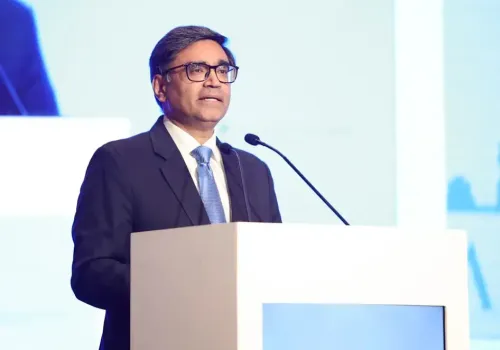
Foreign Secretary Vikram Misri addressed VISV-2026 at the Manekshaw Centre, New Delhi on 30 October 2026 .
Misri called the current moment a 'defining geopolitical inflection point,' citing conflicts in Europe and West Asia and the weaponisation of supply chains and critical technologies.
He warned of expanding military competition into space and the deep seas , outpacing international law and diplomacy.
Terrorism and stress on the global commons — seas, cyberspace, outer space — were flagged as compounding threats.
India's defence diplomacy rests on strategic autonomy — 'the freedom to decide in our own interest guided by our own assessment,' Misri said.
VISV-2026 , organised by DRDO and CENJOWS , is DRDO's first dedicated outreach programme for foreign defence attachés, aimed at showcasing indigenous defence capabilities.
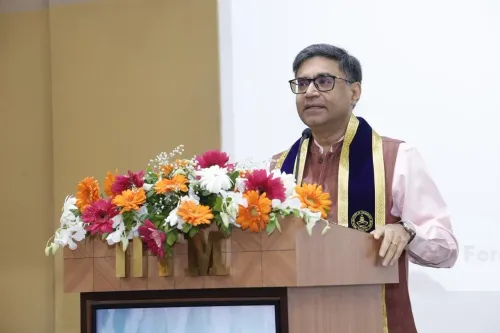
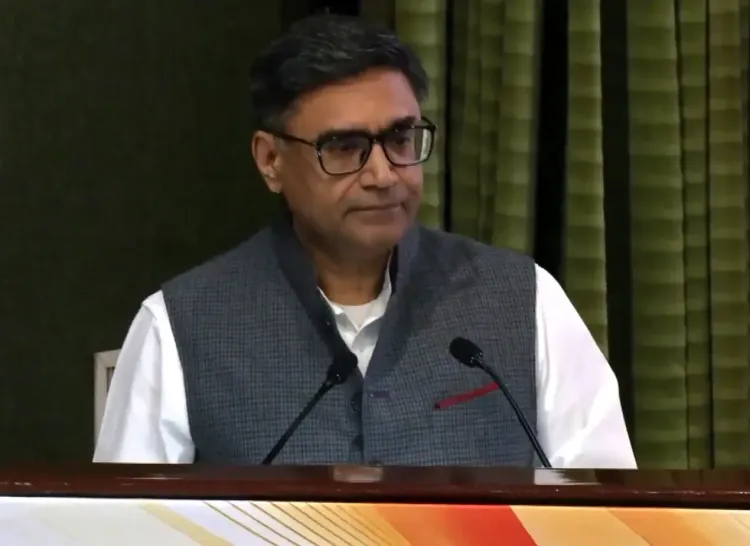
Foreign Secretary Vikram Misri on Friday, 30 October 2026, declared that the global strategic landscape had become more fragmented and contested than at any point in recent memory, citing active conflicts in Europe and West Asia, the weaponisation of supply chains, and critical technologies being deployed as instruments of geopolitical leverage. He was speaking at VISV-2026 — Vision, Innovation, Synergy, Values — held at the Manekshaw Centre in New Delhi, organised by the Defence Research and Development Organisation (DRDO) in collaboration with the Centre for Joint Warfare Studies (CENJOWS).
Setting the Stage: A Defining Inflection Point
Misri described the current international environment as a 'defining geopolitical inflection point,' noting that developments in military competition and technology were outpacing existing international law, policy frameworks, and even diplomacy itself. He pointed specifically to the expansion of military rivalry into space and the deep seas as areas of growing concern.
'Conflicts rage in Europe and West Asia. Supply chains have been weaponised. Critical technologies have become instruments of leverage,' Misri said, framing the challenge in stark terms for an audience of foreign defence attachés representing several friendly nations.
Terrorism and the Global Commons Under Stress
The Foreign Secretary did not limit his assessment to state-level rivalries. He warned that terrorism continued to threaten societies and alleged that some states still treat it as an instrument of state policy — remarks that carry particular resonance given India's longstanding position on cross-border terrorism. Misri added that the global commons — encompassing the seas, cyberspace, and outer space — were under growing and compounding stress. He also flagged climate instability as a force pushing resource scarcity toward a crisis point, underscoring the need for greater international cooperation on emerging security challenges.
India's Approach: Strategic Autonomy and Defence Diplomacy
Misri used the platform to articulate India's framework for navigating this turbulent environment. 'We must build resilience, and we must build partnerships, and that is how India approaches defence diplomacy,' he said. He reiterated that India's foreign policy rests on strategic autonomy — 'the freedom to decide in our own interest guided by our own assessment' — a principle that has defined New Delhi's approach across multilateral forums and bilateral ties alike.
He expressed hope that initiatives such as VISV-2026 would broaden understanding of the evolving geopolitical environment and help countries identify opportunities for mutual benefit. He commended the Ministry of Defence and DRDO for organising the event, calling it DRDO's first outreach programme specifically for foreign defence attachés.
About VISV-2026 and What It Signals
Union Minister of State for Defence Sanjay Seth also attended the event, themed 'Showcasing Defence Capabilities, Strengthening Global Partnerships.' VISV-2026 brings together representatives from the defence establishment, industry, academia, and the diplomatic community to familiarise international partners with India's progress in defence research, development, and production. The forum is explicitly aimed at exploring technology-led cooperation and strategic partnerships, positioning DRDO as a bridge between indigenous capability-building and global defence engagement. This comes amid India's accelerating push for defence exports and self-reliance under the Atmanirbhar Bharat framework, making Misri's remarks a signal of intent as much as a geopolitical assessment.
Point of View
Not alliance-driven. Notably, the reference to states using terrorism as an instrument of policy — without naming them — echoes a well-worn Indian diplomatic posture, but its inclusion in a speech to foreign military diplomats gives it sharper edge. The real question is whether DRDO's outreach translates into actual co-development or co-production agreements, or remains a visibility exercise at a time when India's defence export ambitions are still running well ahead of delivery.
NationPress
30 Oct 2026
Frequently Asked Questions
What did Foreign Secretary Vikram Misri say at VISV-2026?
Vikram Misri said the global strategic landscape had become more fragmented and contested than at any point in recent memory, citing conflicts in Europe and West Asia, the weaponisation of supply chains, and critical technologies being used as instruments of leverage. He also stressed India's commitment to strategic autonomy in defence diplomacy.
What is VISV-2026 and who organised it?
VISV-2026 — Vision, Innovation, Synergy, Values — is DRDO's first outreach programme for foreign defence attachés, organised in collaboration with the Centre for Joint Warfare Studies (CENJOWS) at the Manekshaw Centre in New Delhi. It is themed 'Showcasing Defence Capabilities, Strengthening Global Partnerships' and brings together defence, industry, academic, and diplomatic representatives.
Why did Misri mention terrorism in his speech?
Misri warned that terrorism still threatens societies and that some states treat it as an instrument of state policy — a longstanding Indian diplomatic position that gains added weight when delivered to an audience of foreign military diplomats. The remark underscores India's consistent demand for accountability on state-sponsored terrorism.
What is India's stated approach to defence diplomacy?
Misri articulated India's approach as building resilience and partnerships anchored in strategic autonomy — the freedom to decide in India's own interest guided by its own assessment. This reflects New Delhi's consistent refusal to align exclusively with any single bloc or alliance.
Which other official attended VISV-2026 alongside Misri?
Union Minister of State for Defence Sanjay Seth also attended VISV-2026 at the Manekshaw Centre in New Delhi on 30 October 2026.