Good India-Bangladesh ties could cushion Dhaka's economic slide: Report
Synopsis
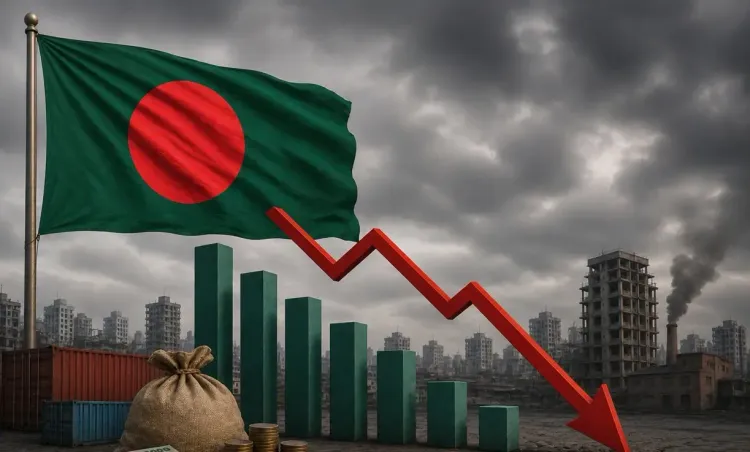
Bangladesh's economy is deteriorating fast — private-sector credit at a 33-year low, capital goods imports down 45%, inflation above 8% for four straight years. A report now argues that warmer ties with India, historically a critical supply lifeline, could be PM Tarique Rahman's most pragmatic economic lever — making his reportedly planned November visit to New Delhi far more than a diplomatic courtesy call.
Key Takeaways
Bangladesh private-sector credit growth fell to a 33-year low of 4.62 per cent in June 2026 , down from 7.15 per cent in January 2025.
Chattogram Port capital goods imports dropped 45 per cent between 2021–22 and 2024–25 , from 22.6 lakh tonnes to 12.4 lakh tonnes .
Bangladesh GDP growth slowed from 7.1 per cent in 2022 to 3.5 per cent in 2025; ADB projects 3.7 per cent for 2026.
Headline inflation has exceeded 8 per cent for more than four years; ADB forecasts 9.0 per cent for 2026–27 .
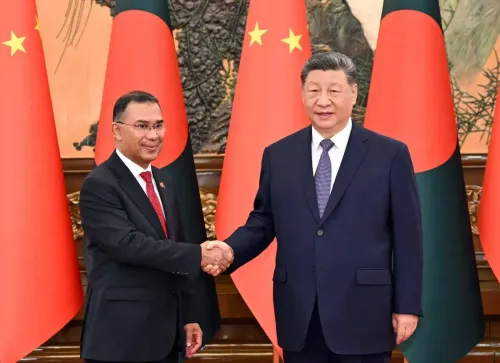
Prime Minister Tarique Rahman is reportedly planning an India visit in November 2026 , which analysts say could help stabilise the economy.
A proposal to double public-sector salaries risks adding further inflationary pressure, according to the report.
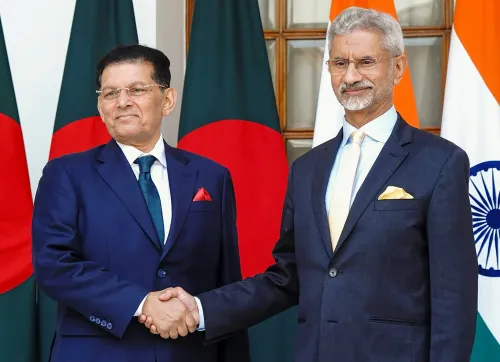
Stronger bilateral relations with India could provide meaningful relief to Bangladesh's struggling economy, according to an analysis that underscored the growth support New Delhi extended during the 2020–21 supply-chain crisis. The report comes as Bangladesh Prime Minister Tarique Rahman is reportedly planning a visit to India in November 2026 — a move analysts describe as one of the more consequential foreign-policy decisions since he assumed office.
A Economy Under Pressure
Bangladesh is navigating a sharp economic deterioration on multiple fronts. Data from Chattogram Port shows imports of capital machinery, medical equipment, vehicles, and heavy machinery fell 45 per cent between 2021–22 and 2024–25, dropping from 22.6 lakh tonnes to 12.4 lakh tonnes. The decline in capital goods inflows is consistent with a broader slowdown in private-sector credit, which has contracted sharply since August 2024.
Private-sector credit growth fell from 7.15 per cent in January 2025 to a 33-year low of 4.62 per cent in June 2026, according to the analysis. Factory closures and a shrinking job market have compounded the distress, even as headline inflation has remained above 8 per cent for more than four years running.
GDP Growth in Freefall
The growth trajectory tells a sobering story. According to the World Bank, Bangladesh posted 7.1 per cent GDP growth in 2022 despite global headwinds — a peak it has not revisited since. Growth slipped to 5.8 per cent in the final full year of the Sheikh Hasina administration, and fell further to 3.5 per cent in 2025.
The Asian Development Bank (ADB) projected 3.7 per cent growth for 2026, but cautioned that if the slide in private-sector credit persists, Bangladesh could post an even weaker number than 2025. The ADB's September 2026 forecast pegged annual average inflation at 8.7 per cent in 2025–26, rising to 9.0 per cent in 2026–27.
The India Factor
The report draws a direct line between New Delhi's support and Bangladesh's earlier resilience. India's backing through easier supplies of essential goods and industrial raw materials helped Dhaka sustain growth during the 2020–21 supply-chain disruptions — and did so, the analysis notes, despite periodic diplomatic strains. This precedent makes a renewed engagement with India economically compelling for the Rahman administration.
The report also flagged a domestic risk: Dhaka's proposal to double public-sector salaries in a bid to boost consumption could, if implemented, pour further fuel on already elevated inflation.
What the Rahman Visit Could Signal
A November 2026 visit by Prime Minister Rahman to India would represent a significant diplomatic reset. Bangladesh faces the twin challenge of arresting an investment drought — evidenced by collapsing capital-goods imports — while stabilising prices that have eroded household purchasing power for four consecutive years. Analysts suggest that restoring smooth trade ties with its largest neighbour could ease both pressures, even if deeper structural reforms remain pending.
How quickly that diplomatic signalling translates into tangible economic flows will likely define Bangladesh's growth outlook through the remainder of 2026 and into 2027.
Point of View
Capital imports, GDP, inflation — is moving the wrong way simultaneously. Bangladesh's economic model, built on garment exports and remittances, is showing structural fatigue that bilateral goodwill alone cannot fix. What the India relationship can realistically deliver is a floor — easier raw-material access, smoother border trade, and a confidence signal to investors — not a ceiling. Rahman's reported India visit is necessary but not sufficient; the harder work of domestic credit, industrial policy, and inflation management remains entirely in Dhaka's hands.
NationPress
10 Oct 2026
Frequently Asked Questions
Why is good India-Bangladesh relations important for Bangladesh's economy?
India has historically supported Bangladesh through easier supplies of essential goods and industrial raw materials, which helped Dhaka sustain growth during the 2020–21 supply-chain disruptions. Restoring smooth trade ties could ease the current investment drought and help stabilise prices, according to the report.
How bad is Bangladesh's economic situation in 2026?
Bangladesh's economy is under significant stress, with private-sector credit growth hitting a 33-year low of 4.62 per cent in June 2026, capital goods imports falling 45 per cent since 2021–22, GDP slowing to 3.5 per cent in 2025, and headline inflation staying above 8 per cent for over four years.
Is Bangladesh Prime Minister Tarique Rahman visiting India?
Prime Minister Tarique Rahman is reportedly planning a visit to India in November 2026, according to the analysis. The visit, if confirmed, would mark a significant diplomatic reset that analysts say could carry tangible economic benefits for Bangladesh.
What does the ADB forecast for Bangladesh's growth and inflation?
The Asian Development Bank projected 3.7 per cent GDP growth for Bangladesh in 2026, though it cautioned that falling private-sector credit could push the actual figure lower. It also forecast annual average inflation of 8.7 per cent in 2025–26, rising to 9.0 per cent in 2026–27.
What is the risk of Bangladesh's plan to double public-sector salaries?
The report warns that doubling public-sector salaries to boost consumption could further fuel inflation, which has already remained above 8 per cent for more than four years. The ADB has already projected inflation rising to 9.0 per cent in 2026–27.