IMF warns high oil prices near $100 may persist through 2027
Synopsis
The IMF is not just flagging a temporary energy spike — it is warning that $100-a-barrel oil could be the new baseline through 2027, regardless of how the Gulf conflict ends. With a historic refining crunch, a Hormuz-throttled gas market, and winter demand still ahead, the Fund sees a compounding shock that markets and policymakers are only beginning to price in.
Key Takeaways
IMF Managing Director Kristalina Georgieva warned on 7 October that high energy prices may persist through 2027 even if the Gulf war ends soon.
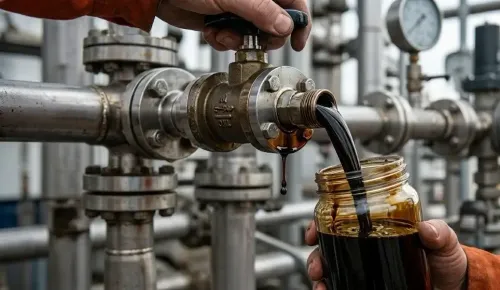
Crude oil remains near $100 a barrel ; a global refining capacity shortage has pushed the crack spread to roughly another $100 a barrel , driving record diesel retail prices.
Natural gas from the Gulf is severely disrupted due to threats to shipping through the Strait of Hormuz , hitting Asia and Europe hardest.
Higher energy costs are feeding into fertilisers, food, and industrial inputs, with El Nino adding additional food security pressure.
US , German , and Japanese 10-year bond yields have hit multi-decade highs, reflecting sustained inflation risk.
The IMF's World Economic Outlook , due next week, will show the sharpest growth losses in war-affected and energy-importing developing economies.
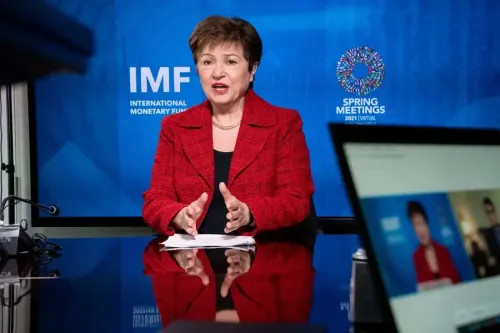
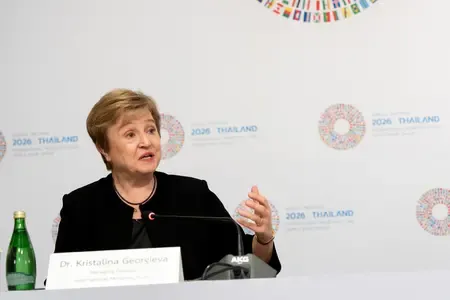
The International Monetary Fund (IMF) on Wednesday, 7 October warned that elevated energy prices could persist well into 2027, even if the ongoing war in the Gulf concludes in the near term. IMF Managing Director Kristalina Georgieva said crude oil remains near $100 a barrel, while structural constraints on refining capacity and natural gas supply are compounding inflationary pressure and dragging on global growth.
The Energy Shock in Numbers
Speaking in Singapore ahead of next week's IMF-World Bank Annual Meetings in Thailand, Georgieva acknowledged that the energy shock had so far been cushioned by improvements in efficiency, diversified fuel sourcing, contingency planning, strategic reserve releases, and supply-demand adjustments. However, she cautioned that significant risks remain.
'Nonetheless, despite a shaky recovery of flows out of the Gulf, oil prices remain around $100 per barrel reflecting risks, high transport costs, and other factors,' Georgieva said.
The strain goes beyond crude. A structural global shortage of refining capacity has driven the crack spread — the margin between crude oil prices and refined petroleum product values — to approximately another $100 a barrel, resulting in record retail prices for diesel and other refined products.
Natural Gas and the Hormuz Chokepoint
Natural gas supplies from the Gulf region remain severely disrupted, primarily because LNG transportation options are constrained so long as shipping through the Strait of Hormuz faces threats. Georgieva noted this has produced uneven consequences globally, with Asia and Europe particularly hard-hit.
Higher energy costs are transmitting rapidly into fertilisers, food prices, and key industrial inputs. Georgieva also flagged that El Nino is adding further strain on global food security — a combination that simultaneously pushes inflation higher and depresses economic growth.
Winter Demand to Add Further Pressure
The IMF chief warned that price pressures could intensify over the coming months as colder weather lifts energy demand across the Northern Hemisphere and countries move to replenish strategic reserves. 'And, to quote from Game of Thrones, winter is coming,' Georgieva said. 'Price pressures may build further as demand rises with the approach of the Northern hemisphere cold season and as countries replenish reserves.'
Critically, she noted that a resolution of the Gulf conflict would not automatically translate into lower energy prices. 'Brent futures currently point to high oil prices through 2027,' she added.
Impact on Financial Markets and Monetary Policy
The energy shock is feeding through to sovereign bond markets. US, German, and Japanese 10-year government bond yields have risen sharply this year, reaching their highest levels since 2007, 2009, and 1996 respectively, according to Georgieva. Higher energy costs sustain upward pressure on inflation, interest rates, and benchmark yields — tightening financial conditions across major economies.
The IMF has identified the energy shock as one of three forces reshaping the world economy, alongside the rapid expansion of artificial intelligence and record levels of public debt. Georgieva described the global economy as being pulled simultaneously by a negative energy supply shock and a positive AI-driven demand shock, with sharply divergent outcomes across countries.
What the IMF Outlook Will Show
The IMF's World Economic Outlook, due for release next week, is expected to show the steepest growth losses this year in economies directly affected by the war, with secondary hits concentrated in energy-importing developing countries that lack the fiscal space to cushion the blow. The IMF-World Bank Annual Meetings will convene finance ministers and central bank governors from the Fund's 191 member countries in Thailand next week — where the energy outlook is set to dominate discussions.
Point of View
Fertilisers, and freight — the persistence of $100 oil through 2027 is a direct threat to the Reserve Bank of India's inflation trajectory and the Centre's subsidy bill. What mainstream coverage underplays is the crack spread figure: another $100 per barrel on refined products means the pain at the pump is far larger than the headline crude price suggests. The convergence of the energy shock with record public debt and AI-driven demand asymmetry makes this a structural, not cyclical, challenge — one that demands a policy response well beyond strategic reserve management.
NationPress
7 Oct 2026
Frequently Asked Questions
Why does the IMF expect high oil prices to persist through 2027?
The IMF says structural factors — including a global refining capacity shortage, disrupted natural gas flows from the Gulf, and threats to shipping through the Strait of Hormuz — mean energy prices will remain elevated even if the Gulf conflict ends. Brent futures already point to high oil prices through 2027, according to IMF Managing Director Kristalina Georgieva.
What is the crack spread and why does it matter?
The crack spread is the difference between crude oil prices and the value of refined petroleum products such as diesel and petrol. The IMF says the global refining shortage has pushed this spread to roughly $100 a barrel on top of the crude price, resulting in record retail prices for refined fuels and amplifying the inflation impact beyond what the crude oil headline alone suggests.
Which countries are most affected by the energy shock?
Asia and Europe are particularly hard-hit, according to Georgieva, due to their dependence on Gulf natural gas and LNG imports. Developing economies that rely on imported energy and lack fiscal space to cushion the blow are also expected to see significant growth losses, as the IMF's forthcoming World Economic Outlook will show.
How is the energy crisis affecting inflation and bond markets?
Higher energy costs feed directly into fertilisers, food prices, and industrial inputs, sustaining inflation pressure. The IMF notes that US, German, and Japanese 10-year sovereign yields have risen to their highest levels since 2007, 2009, and 1996 respectively — a sign that markets are pricing in prolonged tightening.
When is the IMF's World Economic Outlook being released?
The IMF's World Economic Outlook is due for release next week, coinciding with the IMF-World Bank Annual Meetings in Thailand. It will bring together finance ministers and central bank governors from the IMF's 191 member countries and is expected to detail the growth impact of the energy shock across different economies.