India, Australia join US-led AI security pact with 8 nations on 15 Nov 2026
Synopsis
Ten nations — including India, Australia, Japan, the UK and the US — signed the San Francisco Declaration on 15 November 2026, forming a trust-based coalition to protect AI supply chains, semiconductors and critical infrastructure from hostile acquisition. For India, it is the latest signal of its deepening integration into Western-led technology governance — and a direct counter to concentrated supply chain dependencies.
Key Takeaways
India , Australia and 8 other nations signed the San Francisco Declaration on the Secure Foundations of Enduring Prosperity on 15 November 2026 .
The declaration is anchored in Pax Silica , a US-led initiative covering semiconductors , critical minerals , advanced manufacturing and AI .
Signatories committed to 5 working group areas : pro-innovation policy, AI adoption, supply chain cooperation, safe harbour development, and AI security and resilience.
Two priority protection areas identified: sensitive technologies (including AI supply chain inputs) and critical infrastructure (ports, energy, communications, digital platforms).
The pact explicitly aims to reduce over-dependence on concentrated supply chains and prevent hostile acquisition of strategic technologies.
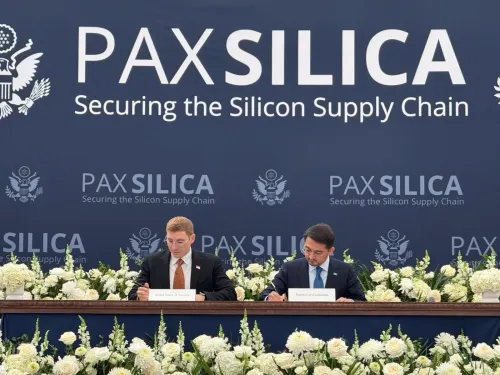
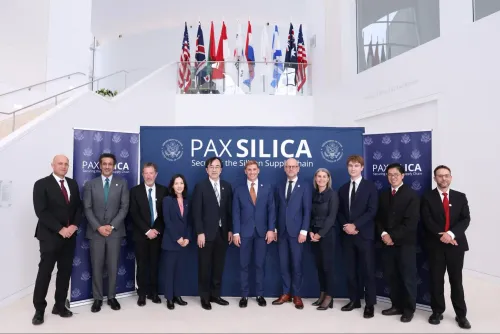
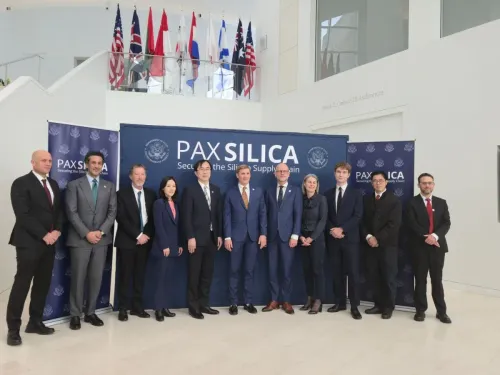
India and Australia have joined eight other nations in signing a US-led declaration on 15 November 2026 aimed at protecting the critical technologies, infrastructure and supply chains that underpin artificial intelligence. The San Francisco Declaration on the Secure Foundations of Enduring Prosperity was signed at the Pax Silica Founders Retreat, bringing together 10 countries in a coordinated push to reduce dependence on concentrated AI supply chains.
What Is Pax Silica and Who Has Signed
The declaration forms a cornerstone of Pax Silica, a US-initiated framework designed to strengthen cooperation among trusted partners across technology supply chains. The full list of signatories comprises the United States, Australia, India, Israel, Japan, South Korea, Qatar, Singapore, the United Arab Emirates and the United Kingdom. The grouping spans four continents, signalling a deliberate effort to build a geographically diversified coalition around advanced technology governance.
What the Declaration Commits Signatories To
The participating governments have committed to establishing working groups that translate the declaration's principles into actionable cooperation. Five proposed areas of work have been outlined: pro-innovation policy frameworks; adoption of advanced AI technologies across key sectors; cooperation across the AI supply chain; development of safe harbours and supply chain security hubs; and AI security and resilience. The declaration also calls for diversifying sources of critical materials and strengthening trusted manufacturing capabilities — covering semiconductors, critical minerals and advanced manufacturing.
Two Priority Areas: Sensitive Tech and Critical Infrastructure
The declaration identifies two distinct categories warranting protection. The first covers sensitive technologies — goods, software, materials, technical knowledge, components and manufacturing inputs essential to advanced AI supply chains. Signatories have expressed concern that theft, illicit transfer or acquisition of such technologies by hostile actors could yield significant military or intelligence advantages, or create undue economic leverage. The second priority encompasses critical infrastructure: ports, transport and logistics networks, communications systems, energy infrastructure and digital platforms. Unauthorised access to or hostile control of these systems, the declaration warns, could damage economic activity and disrupt essential services.
Why This Matters for India
For India, the signing marks a deepening alignment with Western-led technology governance frameworks — a trend evident in its participation in the Quad, the India-US Initiative on Critical and Emerging Technology (iCET), and bilateral semiconductor partnerships. The declaration's focus on supply chain diversification aligns closely with New Delhi's domestic ambitions in semiconductor fabrication and critical minerals processing. This comes amid growing global competition over AI infrastructure, with the US and its partners increasingly seeking to ring-fence advanced chip production and AI development from adversarial access. Notably, the grouping does not include any country perceived as a strategic rival, underscoring its explicitly trust-based architecture.
What Happens Next
Working groups are expected to be established to operationalise the declaration's five areas of cooperation. The pace at which signatories translate commitments into binding protocols or investment frameworks will determine the declaration's real-world impact. Industry observers note that similar multilateral technology pacts have historically moved slowly from principle to practice, making execution the central test for Pax Silica.
Point of View
Quad semiconductor dialogues and bilateral chip partnerships with the US and Japan, this is a pattern, not a one-off. The harder question is implementation: multilateral technology pacts routinely stall at the working-group stage, and the five proposed cooperation areas are broad enough to absorb indefinite delay. India's real leverage — and real risk — lies in whether Pax Silica delivers concrete supply chain commitments that actually shift semiconductor and critical minerals investment, or whether it remains a statement of intent in a document signed at a retreat.
NationPress
18 Nov 2026
Frequently Asked Questions
What is the San Francisco Declaration on the Secure Foundations of Enduring Prosperity?
It is a US-led multilateral declaration signed on 15 November 2026 at the Pax Silica Founders Retreat, committing ten countries — including India, Australia, Japan, the UK and the US — to protect AI-related technologies, supply chains and critical infrastructure from hostile acquisition or disruption. The declaration establishes working groups across five cooperation areas including AI supply chain security and pro-innovation policy frameworks.
Which countries signed the Pax Silica declaration?
The ten signatories are the United States, Australia, India, Israel, Japan, South Korea, Qatar, Singapore, the United Arab Emirates and the United Kingdom. The grouping spans four continents and is designed around a 'trusted partners' framework, with no adversarial state included.
What does the declaration mean for India specifically?
For India, signing the declaration deepens its alignment with Western-led technology governance frameworks, complementing existing arrangements such as the Quad and the India-US iCET initiative. The pact's focus on semiconductor supply chains and critical minerals also aligns with India's domestic ambitions in chip fabrication and minerals processing.
What are the two priority areas identified in the declaration?
The declaration identifies sensitive technologies — including AI supply chain inputs like goods, software, components and manufacturing materials — and critical infrastructure such as ports, energy systems, communications networks and digital platforms. Both are flagged as vulnerable to hostile acquisition or disruption that could yield military, intelligence or economic leverage.
What happens after the declaration is signed?
Participating governments are expected to establish working groups to operationalise the declaration across five areas: pro-innovation policy, AI technology adoption, supply chain cooperation, safe harbour and security hub development, and AI resilience. The pace of translating these commitments into binding protocols or investment frameworks will determine the pact's practical impact.