Paraguay joins Pax Silica Declaration as 26th signatory to US AI pact
Synopsis
Paraguay is now the 26th country to sign the Pax Silica Declaration, plugging its hydroelectric power and mineral reserves into a US-led framework that is quietly reshaping technology diplomacy across the Western Hemisphere. No projects, no dollars, no companies named yet — but Washington's intent to lock in energy-rich partners for the AI infrastructure race is unmistakable.
Key Takeaways
Paraguay signed the Pax Silica Declaration on 24 October 2026 , becoming the 26th signatory to the US-led AI and critical minerals pact.
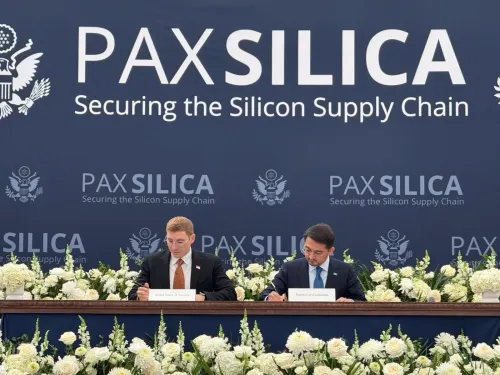
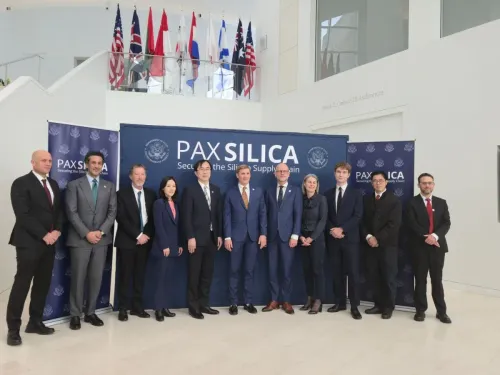
The signing took place at the US State Department in Washington , with Foreign Minister Ramírez and US Under Secretary Jacob Helberg in attendance.
The two governments agreed to explore Paraguay's hydroelectric power and critical minerals to support advanced AI infrastructure in the Americas.
No specific projects, investment figures, companies, or construction timelines were announced — the declaration is a cooperation framework , not a confirmed programme.
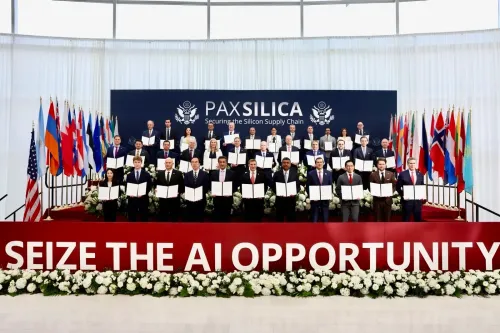
The initiative reflects Washington's broader strategy of linking energy resources, strategic minerals , and AI computing infrastructure across allied nations.
Paraguay has formally joined a US-led initiative to develop artificial intelligence infrastructure and secure critical mineral supply chains, becoming the 26th signatory to the Pax Silica Declaration on 24 October 2026. The agreement was formalised at the US State Department in Washington, with Paraguayan Foreign Minister Ramírez signing alongside US Under Secretary of State for Economic Affairs Jacob Helberg.
What the Declaration Covers
The two governments agreed to explore Paraguay's mineral resources and hydroelectric power as foundations for developing advanced AI infrastructure in the Americas. The State Department described the joint ambition as building 'super intelligence infrastructure in the Americas' — language that signals the strategic weight Washington attaches to the initiative.
Notably, the announcement did not identify specific mining projects, proposed data centres, American companies expected to participate, investment commitments, construction schedules, or financing arrangements. The signing establishes a framework for cooperation, not a confirmed or funded infrastructure programme.
Why Paraguay's Energy Profile Matters
Paraguay's abundant hydroelectric capacity gives it a potential edge in attracting energy-intensive computing facilities. Large-scale AI systems demand substantial electricity alongside specialised hardware and reliable data centre infrastructure — making cheap, clean power an increasingly decisive factor in technology investment decisions globally.
The State Department offered no assessment of commercial feasibility or the additional grid and logistics infrastructure that would be required to translate that hydropower advantage into operational data centres.
The Broader Pax Silica Strategy
By enlisting Paraguay, the United States extends the geographic reach of its technology diplomacy deeper into the Western Hemisphere. The Pax Silica framework links energy resources, strategic minerals, and AI computing infrastructure — sectors that governments worldwide are increasingly treating as matters of both economic competitiveness and national security.
Washington's interest in critical mineral supply chains reflects a wider effort to reduce dependence on single-source suppliers across advanced manufacturing, energy systems, and electronic equipment. Such supply chains span multiple countries, from raw extraction and processing through to finished industrial goods.
Context and What Comes Next
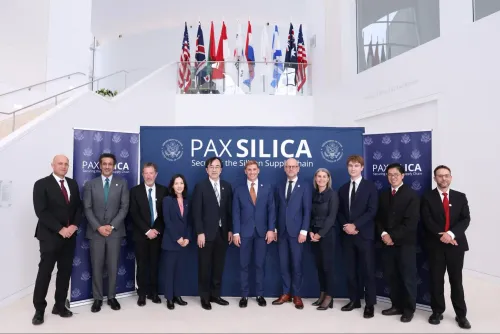
Paraguay's accession adds a second South American country in recent months to the growing Pax Silica coalition. The initiative gives member governments a multilateral platform to coordinate on sectors where energy availability, industrial capacity, and digital infrastructure increasingly converge.
Analysts note that the gap between joining the declaration and delivering on-the-ground projects remains wide — a distinction the State Department itself acknowledged. Concrete project announcements, investment figures, and corporate participants will be the metrics by which Paraguay's participation is ultimately measured.
Point of View
Not a commitment of capital, and the absence of any named companies, investment figures, or timelines in Paraguay's accession announcement underscores how early-stage this architecture remains. Washington is plainly using the initiative to stake out influence over energy-rich partners before rival technology powers do; the question is whether framework membership translates into actual infrastructure or becomes a soft-power trophy. For Paraguay, the calculus is about attracting data centre investment by monetising its hydropower surplus — but that requires regulatory clarity, grid upgrades, and corporate buy-in that no declaration alone can deliver.
NationPress
24 Oct 2026
Frequently Asked Questions
What is the Pax Silica Declaration?
The Pax Silica Declaration is a US-led multilateral framework linking energy resources, critical minerals, and artificial intelligence infrastructure development. Paraguay became its 26th signatory on 24 October 2026, joining a growing coalition of countries coordinating with Washington on technology and resource diplomacy.
What did Paraguay agree to under the Pax Silica Declaration?
Paraguay and the United States agreed to explore the use of Paraguay's critical mineral resources and abundant hydroelectric power to support the development of advanced AI infrastructure in the Americas. The signing establishes a cooperation framework; no specific projects, companies, or investment figures were announced.
Why does Paraguay's hydroelectric power matter for AI development?
Large-scale AI systems require enormous and reliable electricity supplies to power data centres and computing hardware. Paraguay's substantial hydroelectric capacity could offer cost-competitive, clean energy for such facilities, making it an attractive partner in Washington's AI infrastructure strategy.
Who signed the Pax Silica Declaration on behalf of Paraguay and the US?
Paraguayan Foreign Minister Ramírez signed the declaration on behalf of Paraguay, alongside US Under Secretary of State for Economic Affairs Jacob Helberg, at the US State Department in Washington on 24 October 2026.
Does signing the declaration mean AI infrastructure projects in Paraguay are confirmed?
No. The State Department clarified that the signing marks the beginning of Paraguay's participation in the initiative and establishes a framework for cooperation. No specific mining projects, data centres, American companies, investment commitments, or construction schedules were disclosed.