India-New Zealand FTA ratified, first naval exercise planned after Strategic Partnership upgrade
Synopsis
India and New Zealand have moved swiftly from a Strategic Partnership declaration to concrete deliverables: a ratified FTA eliminating tariffs on 95% of NZ exports, a $4 billion bilateral trade target by 2030, and the first-ever bilateral naval exercise on the horizon. For India, New Zealand is now a southern anchor in its expanding Indo-Pacific network beyond the Quad.
Key Takeaways
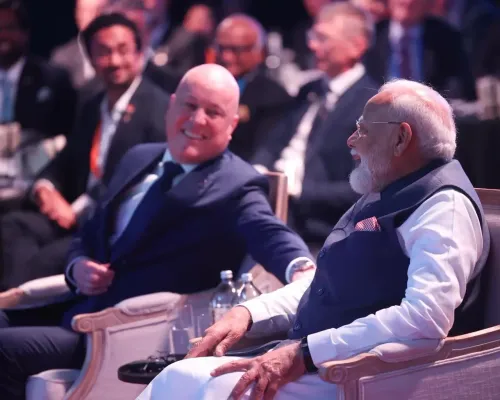
India-New Zealand ties were elevated to a 'Strategic Partnership' following PM Narendra Modi's visit in July 2026 .
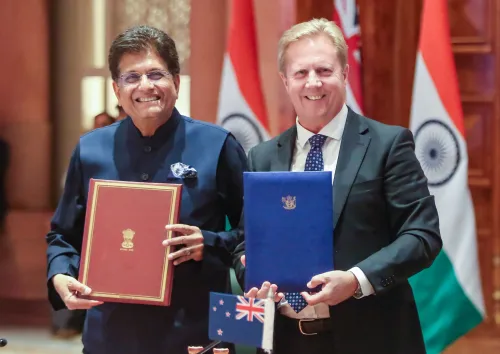
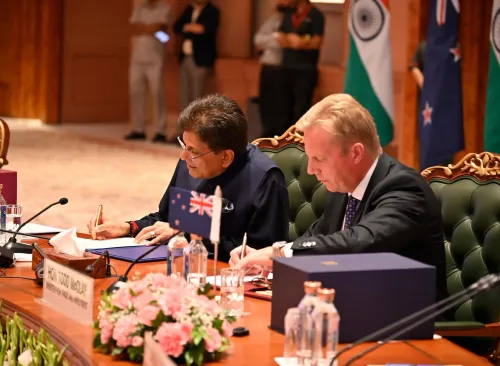
New Zealand's Parliament ratified the bilateral FTA , which will eliminate or reduce tariffs on 95% of New Zealand's exports to India.
Indian goods will receive duty-free access to New Zealand under the agreement.
Both countries have targeted doubling bilateral trade to $4.0 billion by 2030 ; India was just 1.8% of NZ exports in 2025 .
The two nations are moving towards their first-ever bilateral naval exercise as part of maritime security cooperation.
New Zealand is set to join the maritime-security pillar of India's Indo-Pacific Oceans Initiative , the Lowy Institute noted.
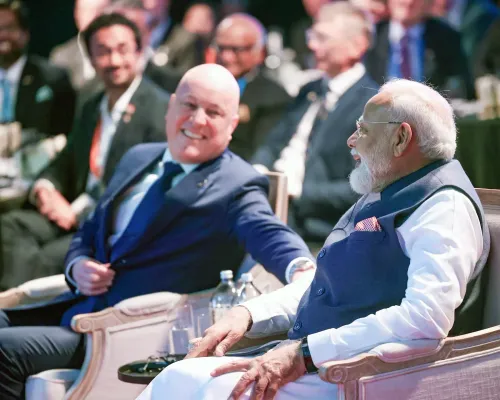
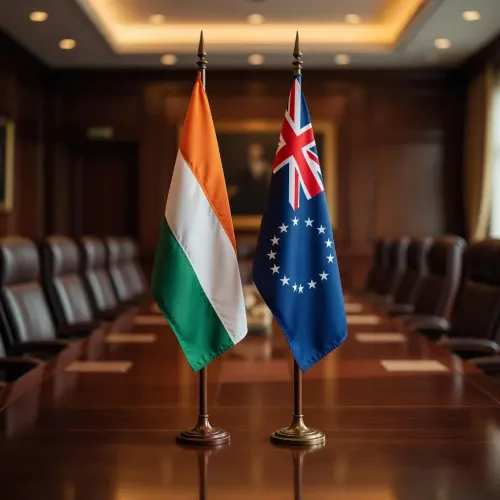
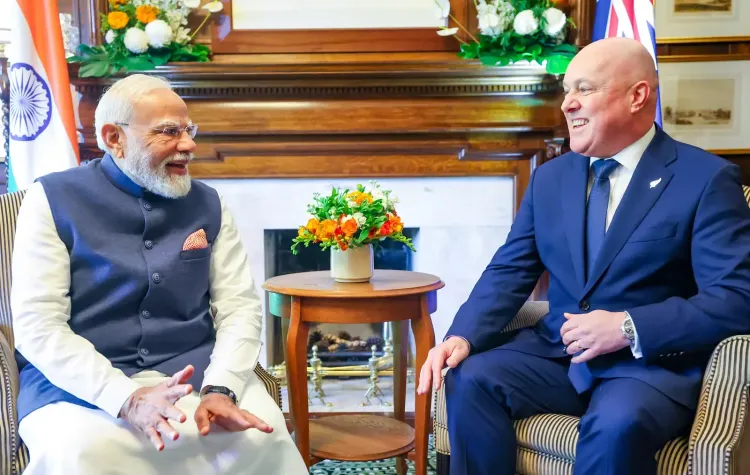
India and New Zealand are accelerating their newly elevated bilateral relationship on multiple fronts — from a landmark free trade agreement ratified by New Zealand's Parliament to plans for a first-ever bilateral naval exercise — following the upgrade of ties to a 'Strategic Partnership' after Prime Minister Narendra Modi's visit to the country in July 2026. The developments, analysed in a piece by the Lowy Institute, signal a structural deepening of a relationship that was, until recently, characterised by limited economic and strategic interaction.
What the FTA Changes
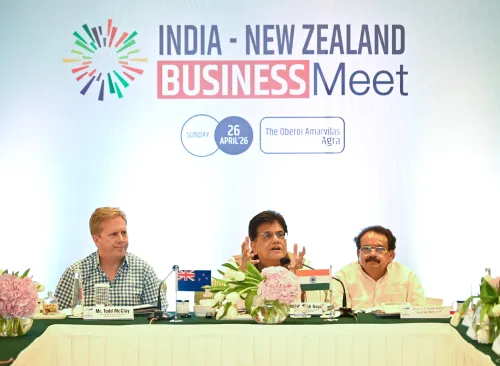
Once fully implemented, the free trade agreement will eliminate or reduce tariffs on approximately 95 per cent of New Zealand's exports to India, while Indian goods will receive duty-free access to the New Zealand market. The two countries have also set a target of doubling bilateral trade to $4.0 billion by 2030, a significant ambition given that India accounted for just 1.8 per cent of New Zealand's total exports in 2025.
The agreement is seen as particularly timely for New Zealand, which is seeking to diversify a trade portfolio heavily concentrated around China, Australia, and the United States. For India, the deal opens access to New Zealand's strengths in advanced research, education, investment, and agriculture and food technology — areas of growing strategic interest for New Delhi.
Maritime Cooperation and the Indo-Pacific Dimension
Beyond trade, the two countries are moving towards their first bilateral naval exercise as part of deepening maritime cooperation. According to the Lowy Institute analysis, the agreement to cooperate on maritime security, hydrography, logistics, and information exchange has opened the door for New Zealand to join the maritime-security pillar of India's Indo-Pacific Oceans Initiative (IORA).
This provides both geographically distant nations with practical mechanisms to collaborate on maritime domain awareness, secure sea lanes, disaster response, and the broader security of the commons — issues of growing salience across the Indo-Pacific.
India's Indo-Pacific Strategy Gets a Southern Anchor
The Lowy Institute piece underscores that New Zealand gives India a stronger foothold in Oceania, extending the geographical reach of India's vision of a free, open, inclusive, and secure Indo-Pacific. Notably, this partnership allows New Delhi to build an Indo-Pacific presence beyond the Quad — which groups India, the US, Australia, and Japan — through a wider network of bilateral partnerships.
This comes amid a broader Indian foreign-policy push to establish credible strategic relationships across the broader Indo-Pacific arc, from the Indian Ocean to the Pacific Islands, as competition for influence in the region intensifies.
What Comes Next
The full implementation of the FTA will depend on both sides completing domestic regulatory processes, while the timeline for the first bilateral naval exercise is yet to be officially announced. Industry and trade bodies on both sides will closely watch whether the $4.0 billion trade target by 2030 gains traction, particularly in sectors like dairy, agriculture, education, and manufacturing. The strategic trajectory of the partnership will likely be tested by how quickly operational maritime cooperation can be translated into joint exercises and shared maritime intelligence.
Point of View
The $4 billion trade target by 2030 demands a near-tripling of current flows. New Zealand's motivation is also partly defensive — China's dominance of its trade portfolio has become a strategic liability, and India offers a credible hedge. Whether the FTA's tariff benefits translate into actual trade diversification will depend on supply-chain linkages that neither country has yet fully developed.
NationPress
23 Sept 2026
Frequently Asked Questions
What is the India-New Zealand FTA and what does it cover?
The India-New Zealand Free Trade Agreement, ratified by New Zealand's Parliament in 2026, eliminates or reduces tariffs on approximately 95% of New Zealand's exports to India, while Indian goods receive duty-free access to New Zealand. Both countries have set a target of doubling bilateral trade to $4.0 billion by 2030.
What is the India-New Zealand Strategic Partnership?
The Strategic Partnership is an upgraded framework for India-New Zealand bilateral ties, announced following Prime Minister Narendra Modi's visit to New Zealand in July 2026. It covers economic, maritime, and defence cooperation, including plans for the two countries' first-ever bilateral naval exercise.
Why does the FTA matter for New Zealand?
New Zealand's trade is heavily concentrated around China, Australia, and the United States. With India accounting for just 1.8% of New Zealand's exports in 2025, the FTA offers a significant opportunity to diversify trade and tap into one of the world's fastest-growing major economies.
How does this partnership fit into India's Indo-Pacific strategy?
According to analysis by the Lowy Institute, New Zealand gives India a stronger connection to Oceania, extending its Indo-Pacific reach beyond the Quad. New Zealand is also expected to join the maritime-security pillar of India's Indo-Pacific Oceans Initiative, covering maritime awareness, secure sea lanes, and disaster response.
What is the next step in India-New Zealand maritime cooperation?
The two countries are moving towards their first bilateral naval exercise, following an agreement to cooperate on maritime security, hydrography, logistics, and information exchange. New Zealand joining India's Indo-Pacific Oceans Initiative maritime pillar is also anticipated as a near-term milestone.