India-New Zealand FTA: New shipping routes, Air links to boost bilateral trade

Synopsis
As US-Iran tensions rattle global supply chains, India and New Zealand are quietly building an alternative — new shipping corridors, three Air New Zealand offices in India, and a joint airline cooperation bid. Their FTA, signed in April 2025, already zeroes out tariffs on all Indian exports. Bilateral trade has nearly hit $1.3 billion, and both sides are betting the partnership can grow faster than the world's uncertainty.
Key Takeaways
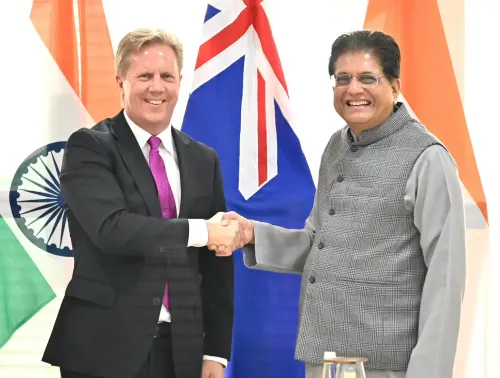
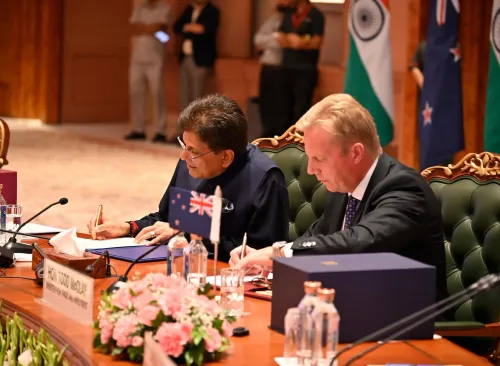
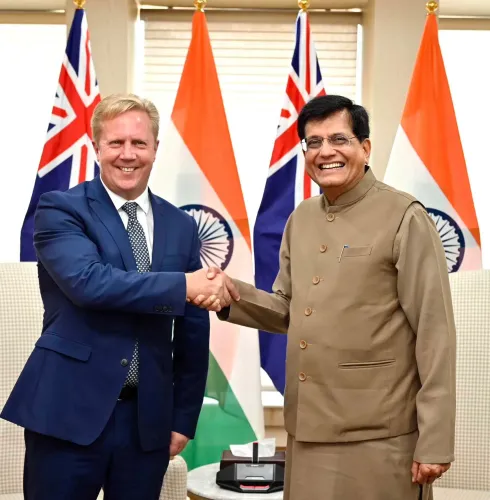
New Zealand Trade Minister Todd McClay confirmed on 10 July that India and New Zealand will build new connectivity links and firm up shipping routes.
The FTA signed on 27 April 2025 removes tariffs on 100% of India's exports and reduces or eliminates tariffs on 95% of New Zealand's exports to India.
Bilateral trade grew from $900 million in 2019-20 to $1.3 billion in 2024-25; India's exports nearly doubled to $711 million .
Air New Zealand will open three offices in India to promote air connectivity.
Air India and Air New Zealand have applied to New Zealand's commerce regulator to cooperate on flights.
McClay cited US-Iran tensions as a key driver for building alternative supply chain corridors.
New Zealand's Minister for Trade and Investment, Todd McClay, said on Friday, 10 July that India and New Zealand are set to build new connectivity links and firm up shipping routes between the two nations, even as US-Iran tensions continue to cast a shadow over global supply chains. Speaking from Auckland, McClay underscored that the recently signed Free Trade Agreement (FTA) provides a buffer of certainty against global disruptions.
New Connectivity Links on the Horizon
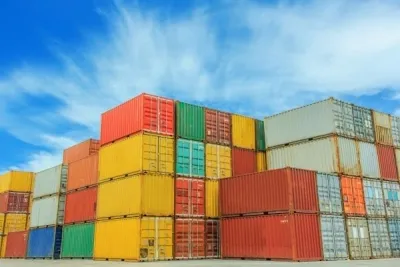
McClay stated that both governments have committed to deepening bilateral infrastructure ties. 'There are always challenges to supply chains and the ability to get resources. But what India and New Zealand have said is that we're going to build those links between each other. I think you'll see shipping routes firm up and increase between India and New Zealand,' he said.
On the aviation front, Air New Zealand is set to open three offices in India to actively promote air connectivity. Additionally, Air India and Air New Zealand have jointly applied to New Zealand's commerce regulator for permission to cooperate on flights — a move that signals deepening operational ties between the two countries' carriers.
The FTA and What It Changes
The landmark FTA, signed on 27 April 2025, eliminates tariffs on 100 per cent of India's exports to New Zealand and either sharply reduces or removes tariffs on 95 per cent of New Zealand's exports to India. McClay described the agreement as a mechanism that 'allows India and New Zealand to cooperate even more to build reliance upon each other' as global trade uncertainty grows.
This comes amid renewed turbulence in the Middle East, with McClay expressing a preference for diplomatic resolution: 'We would like peace to be there and issues to be worked out around the negotiating table.'
Bilateral Trade: A Steady Climb
The numbers tell a compelling story. Total bilateral trade between the two countries rose from approximately $900 million in 2019-20 to $1.3 billion in 2024-25 — a near 44% increase over five years. India's exports to New Zealand nearly doubled, surging from $379 million to $711 million, while New Zealand's exports to India grew more moderately from $522 million to $587 million.
The trade asymmetry — with India now running a clear surplus — reflects the growing competitiveness of Indian goods in the New Zealand market, particularly in sectors such as pharmaceuticals, textiles, and engineering products.
Strategic Significance Amid Global Headwinds
The push for new shipping routes and aviation cooperation is not happening in a vacuum. With the Strait of Hormuz under renewed pressure from US-Iran tensions, diversifying supply chain corridors has become a strategic priority for mid-sized trading nations. For India, cementing ties with Wellington offers an additional anchor in the Indo-Pacific — a region where New Delhi has been steadily expanding its diplomatic and economic footprint.
The FTA, combined with the planned air and shipping expansions, positions the two countries to deepen what officials describe as a 'stronger and longer-term strategic partnership.' With sectoral implementation underway, the coming months will reveal how quickly these commitments translate into on-ground trade flows.
Point of View
Not the headline tariff numbers. India's export surge to New Zealand already signals underlying competitiveness; the FTA formalises what the market was already doing. What's newer — and more strategically significant — is the push for dedicated shipping corridors and airline cooperation. These are the unglamorous plumbing of trade that actually determine whether an FTA delivers or sits on paper. With the Indo-Pacific becoming a contested zone and Middle East routes under pressure, Wellington's pivot toward New Delhi is as much geopolitical hedging as it is economics. The question is whether both sides move fast enough on port infrastructure and regulatory clearances to capitalise before the next global disruption resets the calculus.
NationPress
10 Jul 2026
Frequently Asked Questions
What did New Zealand's Trade Minister say about India-New Zealand ties?
New Zealand's Trade Minister Todd McClay said on 10 July that India and New Zealand are committed to building new connectivity links and firming up shipping routes between the two nations. He made the remarks in the context of rising US-Iran tensions threatening global supply chains.
What does the India-New Zealand FTA cover?
The FTA, signed on 27 April 2025, removes tariffs on 100 per cent of India's exports to New Zealand and either sharply reduces or eliminates tariffs on 95 per cent of New Zealand's exports to India. It is designed to boost bilateral trade and cement a longer-term strategic partnership.
How has bilateral trade between India and New Zealand grown?
Total bilateral trade rose from approximately $900 million in 2019-20 to $1.3 billion in 2024-25. India's exports to New Zealand nearly doubled from $379 million to $711 million, while New Zealand's exports to India grew from $522 million to $587 million.
What are the new aviation developments between India and New Zealand?
Air New Zealand is set to open three offices in India to promote air links. Separately, Air India and Air New Zealand have jointly applied to New Zealand's commerce regulator for permission to cooperate on flights, signalling deeper operational integration between the two countries.
Why are India and New Zealand building alternative supply chain links now?
Renewed US-Iran tensions are threatening global supply chains, particularly routes through the Middle East. Both governments see the FTA and new shipping corridors as a way to reduce dependence on vulnerable routes and build greater bilateral resilience.