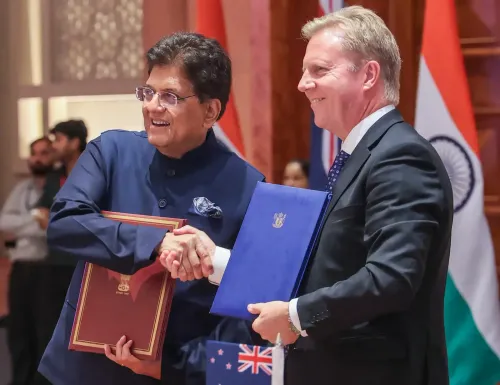
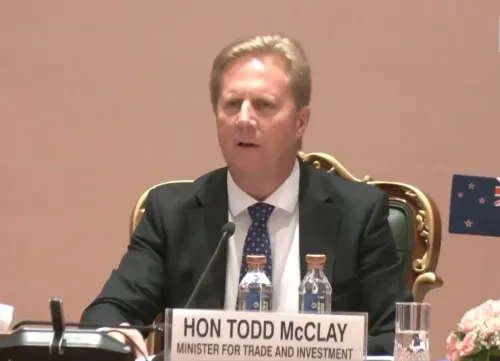
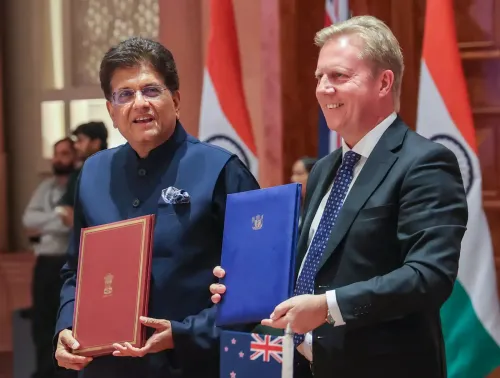
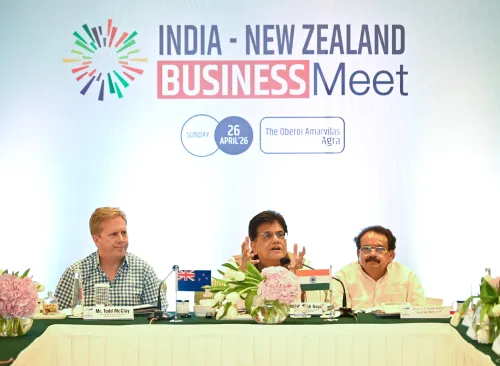
India-New Zealand FTA kicks in Oct 20, targets double trade by 2030
Synopsis
The India-New Zealand FTA comes into force on 20 October, granting full duty-free access for Indian exporters while shielding domestic dairy and farm sectors. With a $20 billion investment pledge from New Zealand and a target to double bilateral trade by 2030, this is one of India's most consequential Pacific trade moves — but the proof will be in execution.
Key Takeaways
The India-New Zealand Free Trade Agreement takes effect on 20 October 2025 , granting duty-free access for Indian exporters across all tariff lines.
The two countries have set a goal of doubling bilateral trade by 2030 ; New Zealand has committed $20 billion in investments in India over 15 years .
India will reduce or eliminate tariffs on around 70 per cent of its tariff lines; immediate duty-free access applies to wood, wool, sheep meat and raw hides .
Kiwi fruit imports will be duty-free up to 6,250 tonnes in year one, rising to 15,000 tonnes by year six; apple tariffs halve from 50 per cent to 25 per cent within set quotas.
India's dairy sector and several sensitive agricultural products are excluded from tariff concessions to protect domestic farmers.
Some tariffs phase down over several years; agricultural concessions are subject to quotas, minimum import prices, and seasonal conditions.
The India-New Zealand Free Trade Agreement (FTA) is set to come into force on 20 October 2025, marking a significant shift in bilateral economic ties between the two nations. The agreement, which grants Indian exporters duty-free access to New Zealand across all tariff lines, is aimed at doubling bilateral trade by 2030.
Key Benefits for Indian Exporters
The FTA is expected to sharpen the competitive edge of Indian products in the New Zealand market across several high-value sectors. According to reports, the sectors poised to gain the most include textiles and garments, leather and footwear, gems and jewellery, engineering goods, and processed foods. By removing customs duties, Indian goods will become cheaper relative to competing imports, potentially opening new export avenues for businesses seeking a foothold in the Pacific market.
Notably, New Zealand has also committed to investments worth $20 billion in India over the next 15 years as part of the broader framework of the agreement, adding a significant capital-flow dimension beyond trade.
How Tariff Changes Will Unfold
The transition will not be immediate across the board. Some tariffs will disappear on 20 October itself, while others will phase down over several years. Certain agricultural concessions will remain subject to quotas and safeguards, reflecting the complexity of aligning two distinct agricultural economies.
India has agreed to reduce or eliminate tariffs on approximately 70 per cent of its tariff lines covering imports from New Zealand. Products receiving immediate duty-free entry include wood, wool, sheep meat, and raw hides.
Kiwi Fruit, Apples and the Quota System
For Indian consumers, the most tangible near-term impact may come from selected imported goods. Kiwi fruit is among the notable beneficiaries: in the first year of the agreement, up to 6,250 tonnes of New Zealand kiwi fruit will be eligible for duty-free entry, with the quota progressively rising to 15,000 tonnes by the sixth year. The concession, however, will be subject to conditions including a minimum import price and seasonal requirements.
In the case of apples, a tariff-rate quota mechanism applies, with the applicable duty set at 25 per cent — half the existing 50 per cent tariff — again subject to minimum import prices and seasonal conditions. This quota mechanism allows India to extend greater market access to New Zealand while limiting the exposure of domestic fruit growers to cheaper imports.
Sensitive Sectors Shielded
India has deliberately chosen not to liberalise its politically and economically sensitive dairy sector, which remains insulated from lower tariffs under the deal. Several other agricultural products have similarly been excluded to protect the livelihoods of millions of small and marginal farmers across the country. This comes amid longstanding concerns in India's farming community about the asymmetric impact of trade liberalisation on domestic agriculture.
This is consistent with India's broader FTA negotiating posture — including its approach to the Regional Comprehensive Economic Partnership (RCEP), which it ultimately walked away from in 2019 over dairy and agricultural concerns.
What Comes Next
With the 20 October implementation date now weeks away, industry bodies and exporters will be closely tracking the publication of sector-specific guidelines and quota administration frameworks. The agreement's success will hinge not just on tariff elimination, but on whether Indian exporters can scale up supply chains fast enough to capitalise on the newly opened access — and whether bilateral investment commitments translate into ground-level capital deployment.
Point of View
Not a sweeping one — and that is precisely its political durability. By ring-fencing dairy and sensitive agriculture, India has avoided the fault lines that sank its RCEP participation, but it has also capped the agreement's transformative potential. The real test is whether the $20 billion investment pledge is backed by bankable projects or remains a headline figure, and whether Indian exporters in textiles, gems and engineering goods can convert duty-free access into actual market share gains in a high-income but small Pacific economy. Trade agreements only deliver when supply-side readiness matches the access on offer.
NationPress
29 Sept 2026
Frequently Asked Questions
When does the India-New Zealand Free Trade Agreement come into force?
The India-New Zealand FTA comes into force on 20 October 2025. The agreement grants Indian exporters duty-free access to New Zealand across all tariff lines and sets a target of doubling bilateral trade by 2030.
Which Indian sectors benefit most from the FTA with New Zealand?
Indian exporters in textiles and garments, leather and footwear, gems and jewellery, engineering goods, and processed foods are expected to benefit most. Duty-free access to New Zealand reduces the cost of Indian goods relative to competing imports in that market.
Will Indian consumers see cheaper New Zealand products after the FTA?
Selectively, yes. Kiwi fruit will be eligible for duty-free entry up to 6,250 tonnes in year one, rising to 15,000 tonnes by year six. Apple tariffs drop from 50 per cent to 25 per cent within a quota, and products like wool, sheep meat and wood also get immediate duty-free access.
Is India's dairy sector open to New Zealand imports under the FTA?
No. India has specifically excluded its dairy sector from tariff concessions under the agreement. Several other sensitive agricultural products are also protected to safeguard the livelihoods of small and marginal farmers.
How much has New Zealand committed to invest in India under the FTA?
New Zealand has committed investments worth $20 billion in India over the next 15 years as part of the broader FTA framework. This investment dimension complements the trade liberalisation provisions of the agreement.