Space Diplomacy Award for Indian mission in Abuja; ISRO honoured
Synopsis
Three years after Chandrayaan-3 touched down near the Moon's south pole, its legacy is still winning friends abroad. India's mission in Abuja took home a Space Diplomacy Award at ASEICC 2026, and ISRO was honoured, even as the agency works on landers that could survive 100–200 days on the Moon.
Key Takeaways
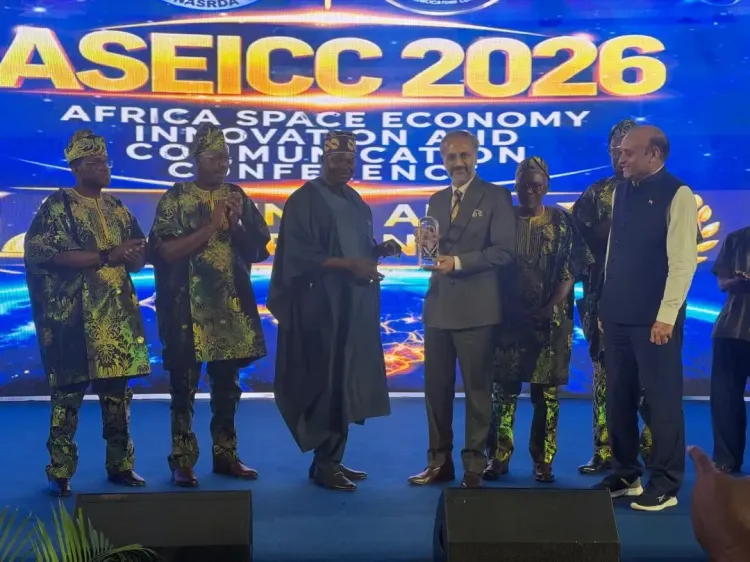
The High Commission of India in Abuja won the Space Diplomacy Award at ASEICC 2026 , held from 24 to 27 November .
High Commissioner Abhishek Singh received the award on behalf of the mission.
ISRO was given a certificate of appreciation for Chandrayaan-3 's achievements.
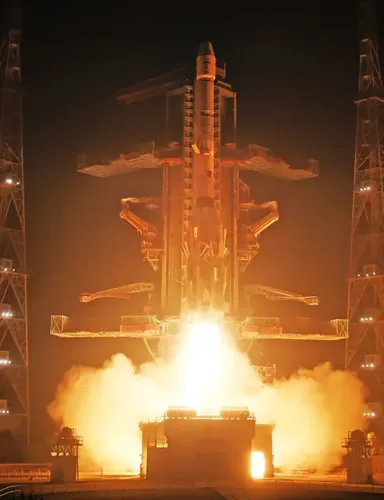
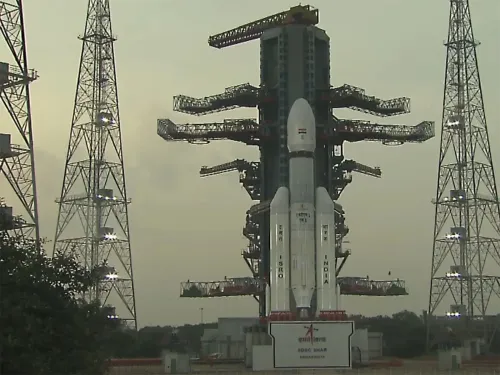
Chandrayaan-3 made India the first country to land near the Moon's south pole on 23 August 2023 .
Narayanan said in June that future landers could operate for 100–200 days , versus Chandrayaan-3's 14 days .
The High Commission of India in Abuja has been conferred the Space Diplomacy Award in Nigeria, and the Indian Space Research Organisation (ISRO) received a certificate of appreciation for the historic achievements of the Chandrayaan-3 Mission, the Indian mission said on Saturday, 28 November 2026. The recognition came at the Africa Space Economy, Innovation and Communication Conference (ASEICC 2026), held in Abuja from 24 to 27 November.
India's High Commissioner to Nigeria, Abhishek Singh, accepted the award on behalf of the mission.
Key Developments at ASEICC 2026
The High Commission announced the honour in a post on X. “The High Commission of India, Abuja, was honoured with the Space Diplomacy Award at the Africa Space Economy, Innovation and Communication Conference (ASEICC 2026), held in Abuja from 24–27 November. HC received the award on behalf of HCI Abuja. A certificate of appreciation was also presented to the Indian Space Research Organisation (ISRO) in recognition of the historic achievements of the Chandrayaan-3 Mission,” the mission posted.
The two-part recognition honours both India's diplomatic outreach on space matters in Nigeria and the scientific work behind one of ISRO's most celebrated missions.
What the Indian Mission Said
According to the High Commission, the award celebrates India's strides in space exploration and underlines the country's rising global profile in space science, technology and innovation.
“The honour celebrates India's remarkable strides in space exploration under the visionary leadership of PM Narendra Modi and the outstanding capabilities of ISRO, highlighting India's growing global stature in space science, technology and innovation,” the mission stated.
Notably, the recognition came at an Africa-focused conference on the space economy. That makes it a sign that India's space programme is drawing attention beyond its traditional partners.
Chandrayaan-3's Historic Legacy
On 23 August 2023, India became the first country to land near the Moon's south pole with Chandrayaan-3. The region is considered crucial for future exploration because water ice may be present there.
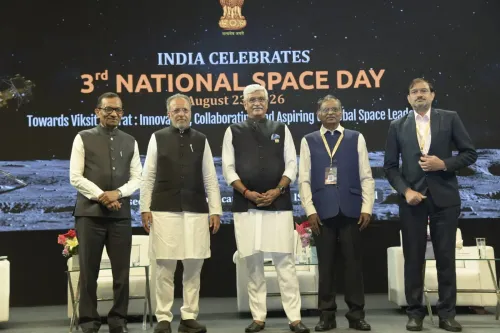
The landing date is now marked in India as National Space Day. More than three years on, the mission continues to earn international recognition, as the Abuja certificate shows.
ISRO's Next Lunar Ambitions
This comes amid ISRO's push to extend the working life of future lunar landers. In June, ISRO Chairman V. Narayanan said the agency is developing technologies that could stretch a lander's operational life to 100–200 days. That would be a major leap from the 14-day lifespan Chandrayaan-3 achieved.
The effort is being undertaken with the Department of Atomic Energy (DAE). It aims to tackle one of the hardest problems in lunar exploration: surviving the Moon's night, when temperatures plunge and solar power is unavailable.
“We are going to develop artificial heaters. If we succeed, such landers can survive for 100 to 200 days instead of only 14 days,” Narayanan had said.
As ISRO works toward longer-lived lunar missions, recognitions like the one in Abuja suggest India's space achievements are increasingly becoming an instrument of its diplomacy abroad.
Point of View
But this one points to something real. Chandrayaan-3 has become a soft-power asset in the Global South, where India's low-cost, high-precision space model resonates more than Western programmes do. The harder question is whether India can turn goodwill into tangible space partnerships in Africa: satellite services, launch contracts and training. Recognition is a start, but in diplomacy it only counts if it leads to agreements.
NationPress
28 Nov 2026
Frequently Asked Questions
Which award did India's mission in Nigeria win?
The High Commission of India in Abuja won the Space Diplomacy Award at the Africa Space Economy, Innovation and Communication Conference (ASEICC 2026). High Commissioner Abhishek Singh received it on behalf of the mission.
Why was ISRO honoured at ASEICC 2026?
ISRO received a certificate of appreciation in recognition of the historic achievements of the Chandrayaan-3 Mission. The mission made India the first country to land near the Moon's south pole.
When and where was ASEICC 2026 held?
ASEICC 2026 was held in Abuja, Nigeria, from 24 to 27 November 2026. The Indian mission announced the award on Saturday, 28 November.
When did Chandrayaan-3 land on the Moon?
Chandrayaan-3 landed near the Moon's south pole on 23 August 2023. India now celebrates that day as National Space Day.
How long could future ISRO lunar landers survive?
ISRO Chairman V. Narayanan said future landers could operate for 100 to 200 days if artificial heaters developed with the Department of Atomic Energy succeed. Chandrayaan-3's lander lasted 14 days.