India's engineering role helps Nigeria become petroleum exporter: Report
Synopsis
Nigeria has become a net exporter of refined petroleum products for the first time in decades — and India's Engineers India Ltd played a central role. With a renewed $350 million EIL contract and 800 Nigerians trained at BPCL in Mumbai, the Dangote Refinery's rise is as much an India-Africa story as it is a Nigerian milestone.
Key Takeaways
The Dangote Refinery in Lagos is operating at full capacity of 650,000 barrels per day , supplying fuel across Africa, Europe, and Asia.
Nigeria became a net exporter of refined petroleum products in March for the first time, reversing decades of import dependence.
Engineers India Ltd (EIL) renewed a $350 million contract in January to support refinery expansion as Project Management and EPCM consultant.
More than 8 Chinese firms provided industrial backbone; over 30,000 Nigerians , 6,400 Indians , and 3,250 Chinese workers were employed at peak construction.
Approximately 800 Nigerians were trained at BPCL Mumbai between 2016 and 2018 in batches of 50 over 24 months.
The Strait of Hormuz closure amid the US-Israel-Iran conflict has accelerated demand for Nigeria's newly available refining exports.
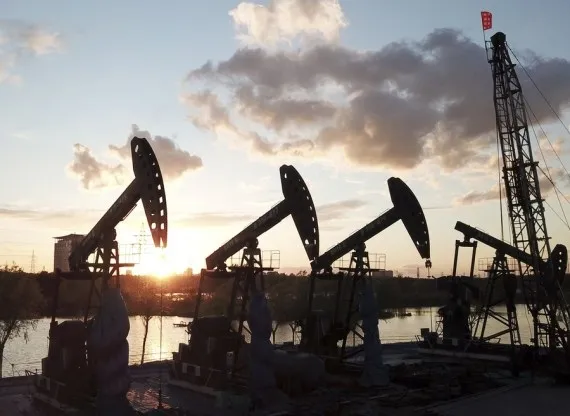
The Dangote Refinery in Lagos, Nigeria — built with significant Indian engineering oversight and Chinese industrial capacity — has helped transform Nigeria into a net exporter of refined petroleum products for the first time in decades, according to an article published by Business Insider Africa. The development comes as the closure of the Strait of Hormuz, amid the US-Israel conflict with Iran, has disrupted global fuel supply chains and created new export opportunities for coastal refining nations.
Dangote Refinery at Full Capacity
The Lagos-based refinery, owned by Aliko Dangote — Africa's richest man — is currently operating at its full capacity of 650,000 barrels per day, according to Business Insider Africa. The facility is supplying fuel across West, Central, and East Africa, with cargoes reaching markets from Senegal to Mozambique. Additional shipments have extended into Europe, including the Netherlands and the United Kingdom, as well as parts of Asia.
In March, Nigeria became a net exporter of refined petroleum products for the first time, reversing decades of import dependence — a milestone directly linked to the refinery's commissioning and ramp-up.
India's Engineering Role and the EIL Contract
India's contribution to the project has centred on engineering management and project continuity. In January, the Dangote Group renewed a $350 million contract with Engineers India Ltd (EIL) to support the expansion of the refinery and petrochemicals complex. EIL will serve as Project Management Consultant and Engineering, Procurement and Construction Management (EPCM) consultant, replicating its role from the initial phase commissioned in 2024.
Notably, Indian engineer Devakumar V. G. Edwin, who served as Vice President for Oil and Gas at Dangote Industries, played a key role in the refinery's technical development and operational rollout, according to the article.
Chinese Industrial Backbone
More than eight Chinese firms have been involved in the project since inception, providing the industrial backbone that enabled large-scale and timely delivery. The article notes that the refinery's execution reflects a combination of Chinese industrial capacity and Indian engineering oversight, which underpinned both delivery speed and project scale — comparing favourably with typically longer timelines associated with Western contractors.
Workforce and Capacity Building
At peak construction, more than 30,000 Nigerians were employed on the project alongside 6,400 Indian and 3,250 Chinese workers, reflecting the scale and technical complexity of the refinery. About 11,000 trained Indian workers were engaged overall, which drew scrutiny from regional stakeholders. The company maintained that the refinery's complexity required global expertise.
In a long-term capacity-building effort, between 2016 and 2018, the Dangote Group sent Nigerian graduates to Bharat Petroleum Corporation Limited (BPCL) in Mumbai for training in refinery operations, maintenance, and production. The programme covered approximately 800 Nigerians, trained in batches of 50 over a 24-month period, providing exposure to large-scale refining systems in India — home to the Jamnagar Refinery, the world's largest refining complex.
Geopolitical Context and What Comes Next
The timing of Nigeria's export breakthrough is significant. The closure of the Strait of Hormuz amid the ongoing US-Israel conflict with Iran has disrupted fuel supply chains for importing nations, accelerating demand for alternative sources. Nigeria's coastal refinery, with its scale and now-proven export reach, is positioned to fill part of that gap across African and European markets.
With EIL's expanded mandate in place and the refinery operating at full capacity, analysts will be watching whether Nigeria can sustain its net-exporter status and whether the Dangote-India-China model becomes a template for other large-scale African industrial projects.
Point of View
Embedded an Indian VP at Dangote Industries, and now holds a $350 million EPCM mandate for the expansion. That is infrastructure diplomacy with teeth. As the Strait of Hormuz disruption reshapes global energy flows, countries that built relationships on the ground — not just signed MoUs — are the ones now reaping export dividends.
NationPress
23 Sept 2026
Frequently Asked Questions
What is the Dangote Refinery and where is it located?
The Dangote Refinery is a large-scale petroleum refining facility located in Lagos, Nigeria, owned by Aliko Dangote, Africa's richest man. It operates at a capacity of 650,000 barrels per day and was commissioned in its initial phase in 2024.
What is India's role in the Dangote Refinery?
India's role has centred on engineering management and project continuity, primarily through Engineers India Ltd (EIL), which holds a $350 million contract as Project Management and EPCM consultant. Indian engineer Devakumar V. G. Edwin also served as Vice President for Oil and Gas at Dangote Industries, contributing to the refinery's technical development.
When did Nigeria become a net exporter of petroleum products?
Nigeria became a net exporter of refined petroleum products in March, according to the Business Insider Africa report. This reversed decades of import dependence and is directly linked to the Dangote Refinery operating at full capacity.
How did the Strait of Hormuz closure affect Nigeria's refinery exports?
The closure of the Strait of Hormuz amid the US-Israel conflict with Iran disrupted fuel supply chains for importing nations, creating new demand for alternative sources. Nigeria's coastal Dangote Refinery, already at full capacity, is well-positioned to supply African and European markets as a result.
How were Nigerian workers trained for the Dangote Refinery?
Between 2016 and 2018, the Dangote Group sent Nigerian graduates to Bharat Petroleum Corporation Limited (BPCL) in Mumbai for training in refinery operations, maintenance, and production. Approximately 800 Nigerians were trained in batches of 50 over a 24-month period.