Iran Claims Evidence of US and Israel Attacks on Arab Nations, Says Foreign Minister
Synopsis
In a revealing interview, Iranian Foreign Minister Seyed Abbas Araghchi claims Tehran has data proving that the US and Israel are conducting attacks on Arab states in West Asia. He calls for regional collaboration to investigate these incidents while asserting Iran's defensive stance.
Key Takeaways
Evidence: Iran claims the US and Israel are attacking Arab states.
Collaboration: Iran is open to forming a committee with regional nations.
Drone Warfare: The US has developed a drone similar to Iran's for military actions.
Regional Stability: Iran emphasizes the need for peace and reduced tensions in West Asia.
Supreme Leader's Condition: Khamenei is reported to be in good health and in charge.
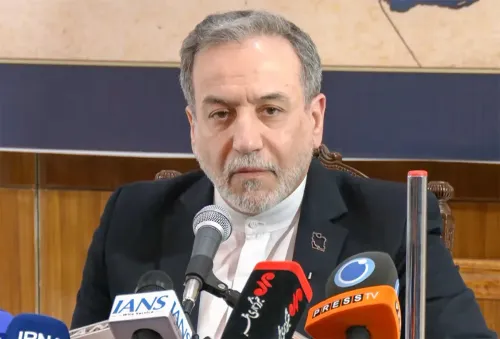
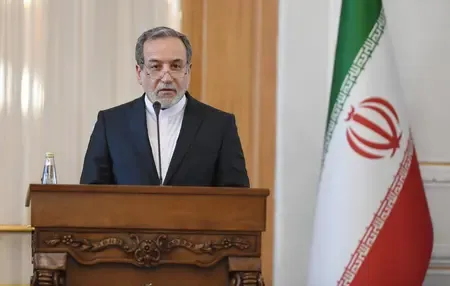
Tehran, March 15 (NationPress) Iranian Foreign Minister Seyed Abbas Araghchi stated on Sunday that Tehran possesses evidence indicating that the US and Israel are orchestrating attacks from specific sites against Arab nations within the West Asia region.
In an interview with the pan-Arab news platform Al-Araby Al-Jadeed, he questioned the source of the assaults on regional Arab nations that are often attributed to Iran.
Araghchi emphasized Iran's willingness to engage with neighboring states to form a collaborative committee aimed at investigating the characteristics of the attacked sites, as reported by Xinhua news agency.
He reiterated that Iran's military actions have solely targeted US military facilities and interests in response to attacks originating from those locations.
Additionally, Araghchi revealed that the US has developed a drone akin to Iran's Shahed 136, named 'LUCAS', designed to strike targets in Arab countries.
He accused Israel of launching attacks on Arab civilians to undermine their relationships with Iran, asserting, 'Iran has refrained from targeting any civilian or residential areas in the region thus far.'
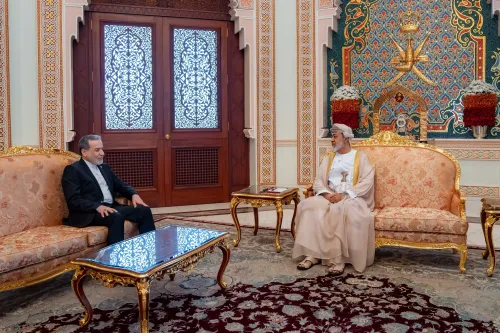
Continued discussions are taking place with neighboring countries such as Qatar, Saudi Arabia, and Oman, with regional nations mediating to alleviate tensions and propose solutions to end the ongoing conflict.
Regarding the Strait of Hormuz, Araghchi indicated it remains accessible to all except for US and allied vessels.
He described Iran's current situation as 'stable,' highlighting the absence of defections within state or military institutions, and confirmed that Supreme Leader Mojtaba Khamenei is in good health and maintains full authority.
Meanwhile, the Islamic Revolution Guards Corps announced on Sunday that a recent drone strike on the Riyadh region and the Eastern Province in Saudi Arabia was not connected to Iran, according to the semi-official Fars news agency.
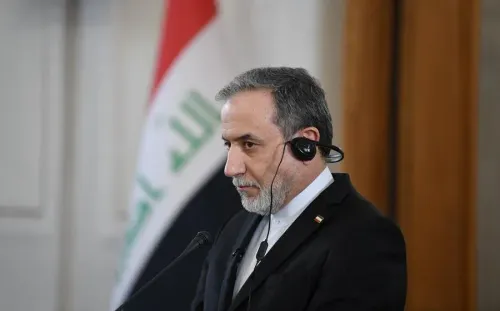
On the same day, the Iranian Foreign Ministry revealed that Araghchi had a telephone conversation with his French counterpart Jean-Noel Barrot to discuss the regional landscape.
Araghchi asserted that the US and Israel are the primary instigators of insecurity in West Asia and the Strait of Hormuz, urging all nations to denounce the 'criminal acts of the aggressors' against Iran and to refrain from escalating the conflict.
He further stated that Israel's 'aggression and dominance' are fundamental causes of instability in Lebanon, asserting that peace in the region hinges on ending Israel's 'occupation and military actions.'
Notably, on February 28, Israel and the US executed coordinated assaults on Tehran and other Iranian cities, resulting in the deaths of Iran's former Supreme Leader Ali Khamenei, senior military officers, and civilians.
In retaliation, Iran launched extensive missile and drone strikes targeting Israeli and US military bases and assets throughout the Middle East.
Point of View
Iranian Foreign Minister Seyed Abbas Araghchi's statements shed light on Tehran's perspective regarding foreign interventions. While the claims suggest a complex geopolitical landscape, it is crucial to consider the broader implications for regional stability and relationships among Middle Eastern nations.
NationPress
22 Sept 2026
Frequently Asked Questions
What did Iranian Foreign Minister Seyed Abbas Araghchi claim?
He claimed that Iran has evidence of the US and Israel launching attacks against Arab countries in West Asia.
What is Iran's proposed response to these attacks?
Iran is ready to meet with regional states to form a joint committee to investigate the nature of the attacked targets.
How did Iran respond to attacks on its territory?
Iran retaliated with missile and drone strikes targeting Israeli and US bases and assets in the Middle East.
What does Araghchi say about the US drone capabilities?
He mentioned that the US has developed a drone similar to Iran's Shahed 136, named 'LUCAS', for targeting Arab nations.
What is the current condition of Iran's Supreme Leader?
Araghchi stated that Supreme Leader Mojtaba Khamenei is in good health and remains in full control.