Strait of Hormuz safe passage not guaranteed without Iran: Deputy FM
Synopsis
Iran's Deputy Foreign Minister has put the world on notice: safe passage through the Strait of Hormuz — carrying a fifth of global oil trade — is not guaranteed unless Tehran is in the room. With the US and GCC declaring unconditional freedom of navigation just a day earlier, two incompatible positions now govern the same waterway, and the gap between them is a shipping lane the global economy cannot afford to lose.
Key Takeaways
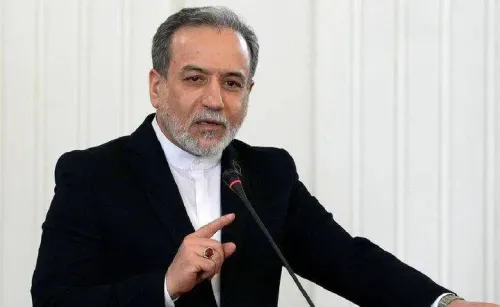
Iran's Deputy Foreign Minister Kazem Gharibabadi warned on 26 June that safe passage through the Strait of Hormuz is not guaranteed without coordination with Tehran.
He cited paragraph 5 of the Islamabad MOU as the only valid framework, threatening suspension of the parallel route otherwise.
The US and GCC jointly declared on Thursday that navigation through the Strait must remain free, unconditional, and unrestricted — with no tolls or fees.
The IRGC Navy separately warned that only routes authorised by Iranian authorities are legal; all others are 'dangerous and prohibited.' The Strait of Hormuz carries approximately 20% of the world's traded oil, making any disruption a global economic risk.
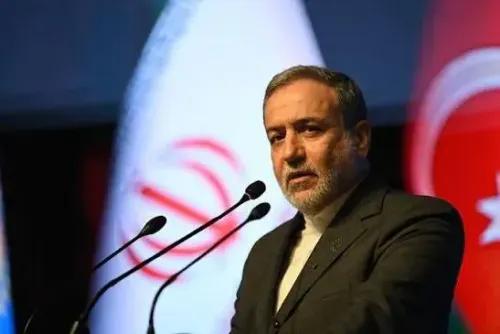
Iran's Deputy Foreign Minister Kazem Gharibabadi on Friday, 26 June issued a pointed warning that safe passage through the Strait of Hormuz cannot be assured under arrangements that bypass Tehran's authority as a coastal state. The statement directly challenges a joint US-GCC declaration from the previous day that asserted unconditional freedom of navigation through one of the world's most critical energy chokepoints.
What Gharibabadi Said
'Safe passage through the Strait of Hormuz under vague arrangements, parallel routes, or decision-making outside Iran's considerations as the coastal state is not guaranteed,' Gharibabadi wrote in a post on X.
He further stated that 'any valid framework must be based on coordination with Iran and the provisions of paragraph 5 of the Islamabad memorandum of understanding,' warning that failure to comply would result in 'the suspension of the designated parallel route.'
The US-GCC Declaration That Prompted the Response
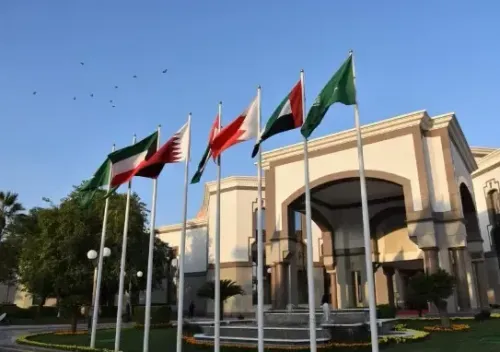
On Thursday, 26 June, the United States and the Gulf Cooperation Council (GCC) reaffirmed their strategic partnership at a ministerial meeting in Manama, co-chaired by US Secretary of State Marco Rubio and Bahraini Foreign Minister Abdullatif bin Rashid Al Zayani. Foreign ministers from all six GCC states and GCC Secretary General Jasem Albudaiwi also attended.
The joint declaration backed the 17 June memorandum of understanding (MOU) between Washington and Tehran, and affirmed that no tolls or fees should ever be imposed on ships transiting the Strait. The ministers declared that 'free, unconditional, and unrestricted navigation, including the right of transit passage as guaranteed under international law, remains essential to regional and global security,' explicitly rejecting 'any tolls, fees, or attempts to assert control over the Strait.'
IRGC Navy Reinforces Iran's Position
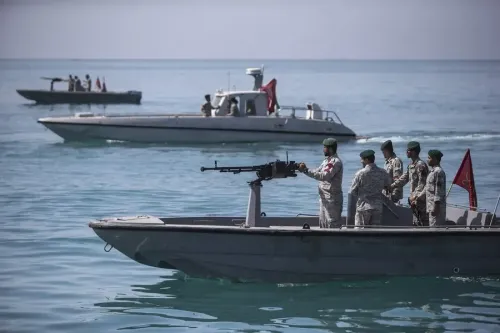
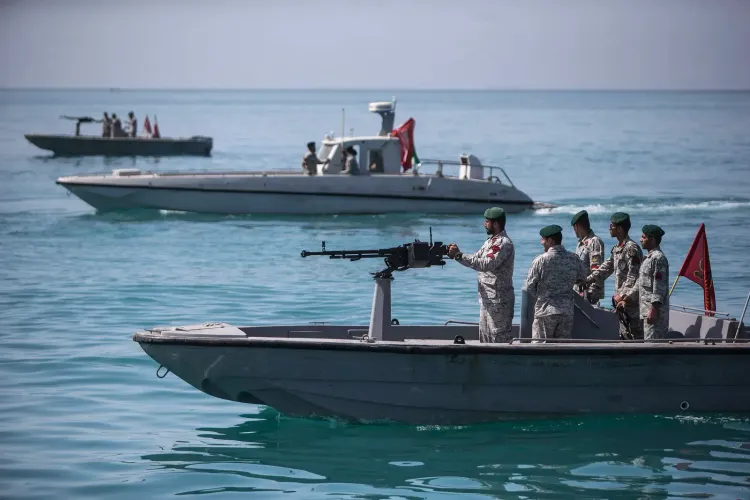
Iran's Islamic Revolution Guard Corps (IRGC) Navy issued a parallel statement on Thursday, stressing that the only authorised routes for vessels transiting the Strait of Hormuz are those announced by Iranian authorities. Published on the IRGC's official outlet Sepah News, the statement warned that movement through any other routes is 'dangerous and prohibited.'
This comes amid a broader pattern of Iran asserting navigational authority over the Strait, which carries an estimated 20% of the world's traded oil. Notably, Tehran's dual-track approach — engaging in diplomacy through the Islamabad MOU while simultaneously issuing navigational warnings — reflects a calibrated pressure strategy.
What the Standoff Means for Global Shipping
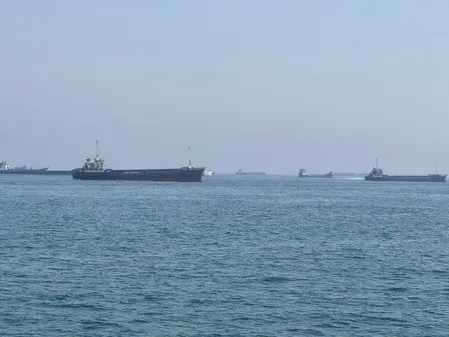
The Strait of Hormuz is the world's most critical maritime energy corridor, linking the Persian Gulf to the Arabian Sea. Any disruption — whether through route restrictions, fee imposition, or physical interference — carries immediate consequences for global oil prices and supply chains. The ministers also stressed that any lasting regional settlement must address what they described as the 'full spectrum of Iran's threats,' including ballistic missiles, drones, and support for proxy groups.
With the US-GCC bloc and Iran now staking out contradictory positions on the same waterway, the risk of an incident — even an unintended one — has risen. The next test will be whether vessels operating under the Islamabad MOU framework encounter any interference from Iranian authorities.
Point of View
Barely nine days old, is already being weaponised by Iran as a legitimising instrument for coastal-state veto power, which is precisely what the US-GCC bloc is trying to foreclose. The contradiction cannot be papered over: either the Strait operates under international law or under Iranian coordination — and both sides are now publicly committed to incompatible answers. What mainstream coverage underweights is the IRGC Navy's parallel statement, which signals that the military apparatus is aligned with the diplomatic posture, raising the operational risk for commercial shipping well above the rhetorical level.
NationPress
25 Sept 2026
Frequently Asked Questions
What did Iran's Deputy Foreign Minister say about the Strait of Hormuz?
Deputy Foreign Minister Kazem Gharibabadi stated that safe passage through the Strait of Hormuz is not guaranteed under arrangements that bypass Iran's role as a coastal state. He said any valid framework must be based on coordination with Iran and the provisions of paragraph 5 of the Islamabad memorandum of understanding, warning that non-compliance would result in suspension of the designated parallel route.
What did the US and GCC declare about the Strait of Hormuz?
At a ministerial meeting in Manama on Thursday, the US and all six GCC states jointly declared that navigation through the Strait of Hormuz must remain free, unconditional, and unrestricted under international law. They rejected any tolls, fees, or attempts by any party to assert control over the Strait, and backed the 17 June MOU between Washington and Tehran.
What is the Islamabad memorandum of understanding referenced in Iran's statement?
The Islamabad MOU is a memorandum of understanding signed between the United States and Iran on 17 June, which both sides have referenced in the context of Strait of Hormuz navigation arrangements. Iran's Deputy Foreign Minister has cited paragraph 5 of this document as the binding framework for any valid transit arrangement through the Strait.
What has the IRGC Navy said about ships transiting the Strait of Hormuz?
The IRGC Navy issued a statement on Thursday warning that the only authorised routes for vessels passing through the Strait of Hormuz are those officially announced by Iranian authorities. It declared movement through other routes 'dangerous and prohibited,' reinforcing the government's diplomatic position with a direct military-operational warning.
Why does the Strait of Hormuz matter to global trade?
The Strait of Hormuz is the world's most important maritime energy corridor, linking the Persian Gulf to the Arabian Sea and carrying an estimated 20% of the world's traded oil. Any disruption to navigation — whether through route restrictions or physical interference — would have immediate consequences for global oil prices and energy supply chains.