IRGC supertanker explosion: Iran mine blast rocks Hormuz Strait
Synopsis
Within a 24-hour window, Iran's IRGC claimed two separate strikes on vessels in the Strait of Hormuz — a supertanker destroyed by naval mines and an LPG carrier hit by its forces. With Tehran now warning enforcement will extend beyond Hormuz and President Pezeshkian simultaneously signalling openness to US talks, Iran is running a high-stakes dual track of military pressure and diplomatic engagement.
Key Takeaways
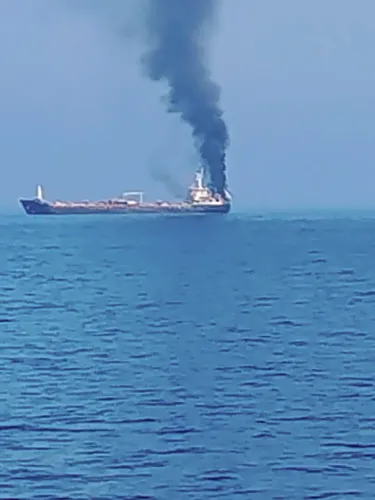
Iran's IRGC navy confirmed a supertanker exploded after hitting naval mines in the Strait of Hormuz on 11 October .
The vessel was carrying crude oil with its navigation and GPS systems switched off and was using an unauthorised route.
A day earlier, the IRGC said it struck the LPG carrier NV Sunshine on an 'illegal' southern route, setting its engine room on fire.
The IRGC warned enforcement will no longer be limited to the Strait of Hormuz — signalling a broader operational reach.
Iranian President Masoud Pezeshkian said Tehran will not abandon negotiations with the United States despite what he described as repeated US attacks during previous talks.
Iran has barred safe passage for US- and Israel-affiliated vessels through Hormuz since 28 February .
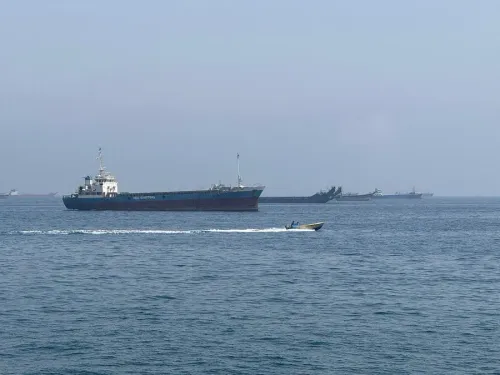
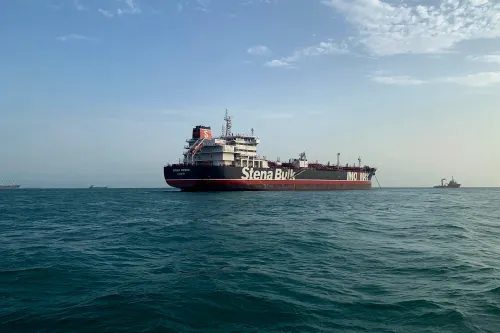
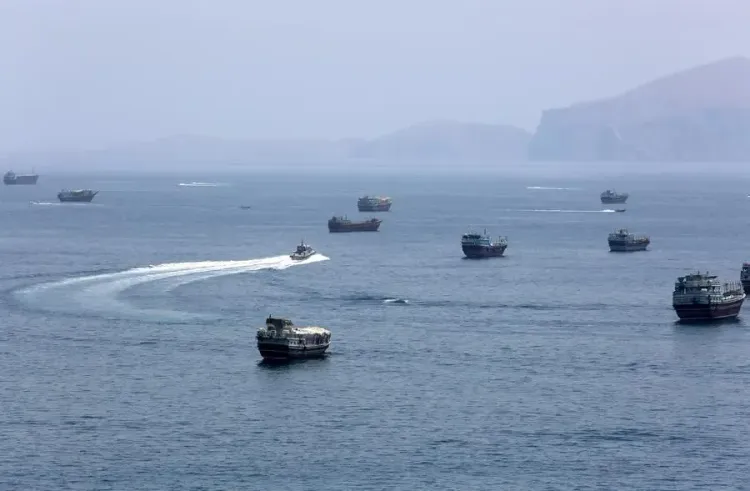
Iran's Islamic Revolutionary Guard Corps (IRGC) navy confirmed on Saturday, 11 October that a supertanker attempting to exit the Strait of Hormuz through an unauthorised route exploded after striking naval mines, triggering a massive fire aboard the crude-oil-carrying vessel. According to a statement published on the IRGC's official outlet Sepah News, the tanker had its navigation and GPS systems switched off at the time of the incident.
What Happened in the Strait
The IRGC navy stated that the vessel was attempting to use a route it had designated as high-risk, in violation of Iranian maritime regulations. The explosion caused the tanker to catch fire, the statement said. In a pointed warning, the IRGC declared that 'such a fate awaits any violating oil tanker' that disregards Iran's maritime rules.
Notably, this incident follows a separate episode reported on Friday, when the IRGC navy claimed its forces had struck a 'giant' liquefied petroleum gas carrier identified as NV Sunshine as it attempted to cross the strait via what Iran described as an 'illegal' southern route. The engine room and propulsion system of that vessel reportedly caught fire.
Iran's Escalating Maritime Posture
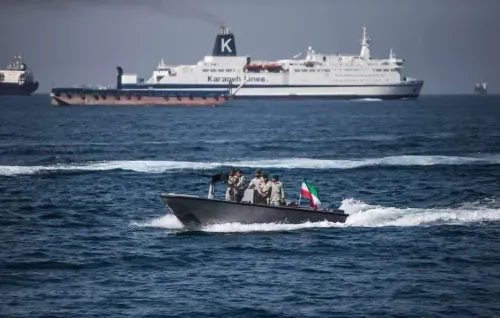
The IRGC navy attributed responsibility for rising maritime tensions in the region to the United States military. It further warned that enforcement actions against vessels using unauthorised routes will no longer be confined to the Strait of Hormuz — a significant escalation in rhetoric that signals a broader operational reach.
This comes amid a sharply deteriorating maritime environment in and around the strait. Iran tightened its grip on the waterway on 28 February, barring safe passage for vessels belonging to or affiliated with Israel and the United States, following what Tehran described as joint strikes on Iranian territory.
Pezeshkian's Diplomatic Signal
Separately, Iranian President Masoud Pezeshkian on Thursday signalled that Tehran remains committed to negotiations with Washington despite what he described as repeated US military actions during previous rounds of dialogue. Speaking at a meeting with Russian President Vladimir Putin in Turkmenbashi, Turkmenistan, Pezeshkian said, 'We are negotiating. However, whenever we engage in dialogue with the United States, they attack again. Nevertheless, we will not abandon the negotiating table and dialogue.'
Pezeshkian added that Iran had submitted proposals, received counter-proposals from the US, and was in the process of finalising revisions, with the stated aim of concluding an agreement 'through the existing mediators.'
Regional and Global Stakes
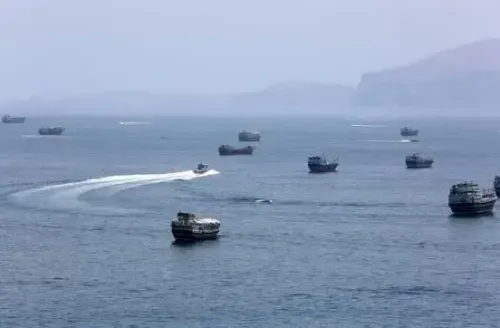
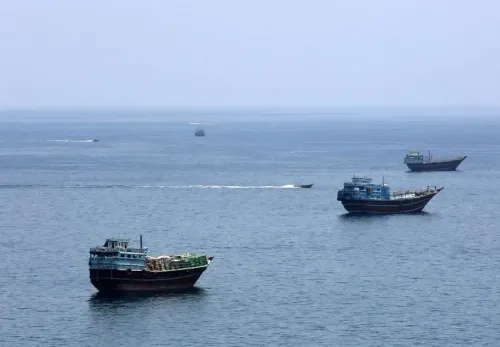
The Strait of Hormuz is one of the world's most critical energy chokepoints, with roughly 20% of global oil supply transiting through it. Any sustained disruption — whether from mine strikes, vessel seizures, or escalating IRGC enforcement — carries direct consequences for global crude prices and energy security. The dual incidents involving a supertanker and the NV Sunshine within a 24-hour window represent one of the most kinetic episodes in the strait in recent months, raising the risk premium on Gulf shipping.
How Washington and its regional partners respond to Iran's expanded enforcement warning will be closely watched in the days ahead.
Point of View
Not just rhetoric; it raises the exposure of every non-compliant vessel in the broader Gulf. Meanwhile, Pezeshkian's negotiation comments, made pointedly in front of Putin, suggest Tehran is using military pressure as leverage in talks rather than as a substitute for them. The risk is that miscalculation in the strait — a strike on a vessel with Western crew or cargo — collapses the diplomatic track before it produces anything.
NationPress
11 Oct 2026
Frequently Asked Questions
What happened to the supertanker in the Strait of Hormuz?
Iran's IRGC navy said the supertanker struck naval mines and exploded after attempting to exit the Strait of Hormuz through an unauthorised route on 11 October. The vessel, carrying crude oil with its GPS and navigation systems turned off, caught fire following the blast.
What is the NV Sunshine and what happened to it?
The NV Sunshine is a liquefied petroleum gas carrier that the IRGC said it struck on Friday as it tried to cross the Strait of Hormuz via an 'illegal' southern route. The vessel's engine room and propulsion system reportedly caught fire as a result.
Why is Iran targeting tankers in the Strait of Hormuz?
Iran has barred safe passage for vessels affiliated with Israel and the United States since 28 February, following what Tehran described as joint US-Israeli strikes on Iranian territory. The IRGC says it is enforcing its own maritime regulations and has blamed the US military for escalating regional tensions.
What did Iranian President Pezeshkian say about US negotiations?
President Masoud Pezeshkian said on Thursday that Iran will not abandon negotiations with the United States despite what he described as repeated US military actions during previous rounds of talks. Speaking in Turkmenbashi alongside Russian President Vladimir Putin, he indicated that both sides had exchanged proposals and that Iran was finalising revisions ahead of further talks through existing mediators.
How significant is the Strait of Hormuz to global energy supply?
The Strait of Hormuz is one of the world's most critical energy chokepoints, with approximately 20% of global oil passing through it. Sustained disruptions from mine strikes or vessel seizures carry direct consequences for global crude prices and energy security.