Japan protests South Korea's Dokdo military drills amid fresh territorial row
Synopsis
Japan and South Korea are locked in a fresh diplomatic flare-up over the disputed Dokdo-Takeshima islets — Tokyo protesting Seoul's naval drills just days after Japan's own defence white paper reignited the territorial claim. It is a cycle both nations know well, yet neither has found a way to break.
Key Takeaways
Japan lodged a formal protest with South Korea on 6 August 2026 over naval drills near the disputed Dokdo islets.
Masaaki Kanai of Japan's Foreign Ministry summoned officials at the South Korean Embassy in Tokyo to register the objection.
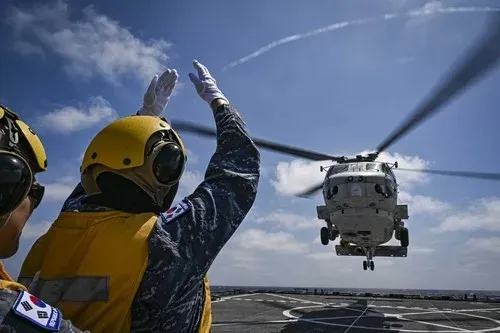
The South Korean Navy conducted its first East Sea defence drills of 2026 near Dokdo, describing them as routine and similar in scale to previous exercises.
The drills followed Japan's renewal of its Takeshima territorial claim in its latest defence white paper , which itself drew a protest from Seoul on Tuesday .
South Korea's foreign ministry spokesperson Park Doo-soon called Japan's claim 'unjust' and said Seoul is prepared to 'respond resolutely' to any further provocations.
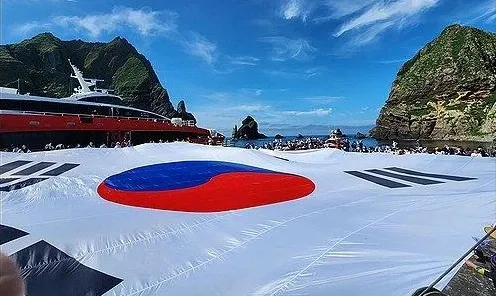
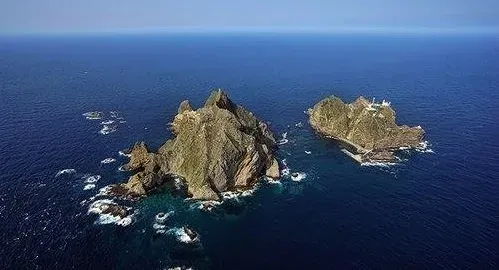
Japan on Thursday, 6 August 2026 lodged a formal protest with South Korea after the South Korean Navy conducted defence drills near the disputed islets of Dokdo — known as Takeshima in Japan — in the Sea of Japan. The protest marks a sharp escalation in a long-running territorial dispute between the two neighbours, coming just days after Tokyo renewed its claim to the islets in its latest defence white paper.
Japan's Formal Objection
Masaaki Kanai, director general of the Japanese Foreign Ministry's Asian and Oceanian Affairs Bureau, summoned officials at the South Korean Embassy in Tokyo to register Japan's strong objection and reiterate its territorial claim over the islets. The protest follows a pattern of diplomatic back-and-forth that has intensified each time either side takes a formal position on the islets.
South Korea's Naval Exercise
The South Korean Navy carried out what it described as routine East Sea defence drills near Dokdo on Thursday — the first such exercise of 2026. In a statement, the navy said, 'Our military has conducted East Sea defence drills on a regular basis each year,' adding that the exercise was aimed at countering threats against the country's territory, people and property. Officials noted the latest drill was similar in scale and method to previous exercises.
The Trigger: Japan's Defence White Paper
The drills were launched days after Japan renewed its claim to Dokdo in its latest defence white paper — a move that drew an immediate and sharp response from Seoul. On Tuesday, South Korea's foreign ministry summoned Kazuo Tsuchiya, deputy chief of mission at the Japanese Embassy in Seoul, to lodge a formal protest over the white paper's language.
Seoul's Position
At a regular briefing, South Korea's foreign ministry spokesperson Park Doo-soon said, 'The government strongly protests Japan's repeated, unjust territorial claim to Dokdo and calls for its immediate withdrawal,' stressing that the islets are South Korea's territory under 'history, geography and international law.' He further emphasised that Japan's claim has no bearing on South Korea's sovereignty and signalled readiness to 'respond resolutely to any provocations by Tokyo regarding Dokdo.'
A Dispute With Deep Roots
The Dokdo-Takeshima dispute is one of the most persistent irritants in Japan-South Korea relations, periodically flaring up around Japan's annual defence white paper and South Korea's periodic military exercises near the islets. Despite broader security cooperation between the two US-allied nations — particularly in the context of North Korean threats — the territorial question has consistently defied resolution. This latest exchange underscores how fragile bilateral ties remain on historical and territorial fault lines.
Diplomatic observers will be watching whether either government escalates further or allows the current exchange of protests to de-escalate, as has been the pattern in past cycles.
Point of View
Seoul protests, then conducts or accelerates its own military exercises near Dokdo, and Tokyo protests in turn. What makes the 2026 iteration notable is the speed of the cycle: Seoul's naval drills followed the white paper within days, signalling a deliberate decision to respond kinetically rather than diplomatically alone. Both governments are playing to domestic audiences on a question where neither side has any electoral incentive to back down. The broader irony is that Japan and South Korea are simultaneously deepening trilateral security cooperation with the United States over North Korea — making this territorial friction an increasingly costly distraction for Washington's Indo-Pacific calculus.
NationPress
21 Sept 2026
Frequently Asked Questions
What is the Dokdo-Takeshima dispute between Japan and South Korea?
Dokdo is a group of small islets in the Sea of Japan administered by South Korea, which calls them Dokdo and considers them sovereign territory under history, geography and international law. Japan claims the same islets under the name Takeshima and regularly asserts that claim in its annual defence white paper, triggering diplomatic protests from Seoul.
Why did Japan protest South Korea's military drills in August 2026?
Japan lodged a protest after the South Korean Navy conducted East Sea defence drills near Dokdo on 6 August 2026 — the first such exercise of the year. Tokyo objected to military activity near islets it claims as its own territory under the name Takeshima.
What triggered South Korea's naval drills near Dokdo?
The drills came days after Japan renewed its territorial claim to Dokdo in its latest defence white paper. South Korea's foreign ministry had already summoned a senior Japanese diplomat on Tuesday to protest the white paper before the navy conducted its exercises.
What did South Korea's foreign ministry say about Japan's territorial claim?
Spokesperson Park Doo-soon said the government 'strongly protests Japan's repeated, unjust territorial claim to Dokdo and calls for its immediate withdrawal,' adding that Japan's claim has no impact on South Korea's sovereignty and that Seoul is prepared to respond resolutely to any further provocations.
How does this dispute affect broader Japan-South Korea relations?
The Dokdo-Takeshima issue is a persistent irritant in bilateral ties despite the two countries cooperating on broader security matters, particularly regarding North Korea. Diplomatic tensions over the islets tend to spike around Japan's annual defence white paper and South Korea's periodic military exercises near Dokdo, as seen in this latest exchange.