Jay Clayton Sworn In as U.S. Director of National Intelligence
Synopsis
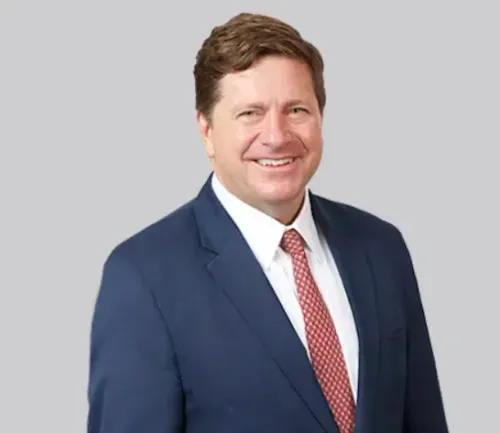
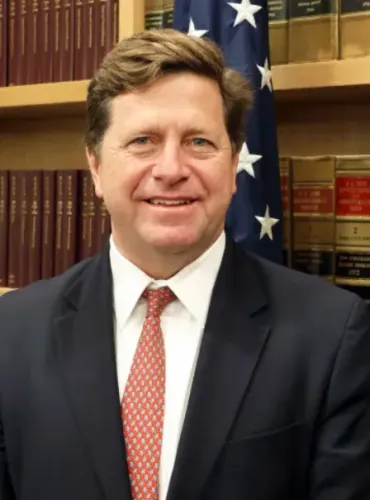
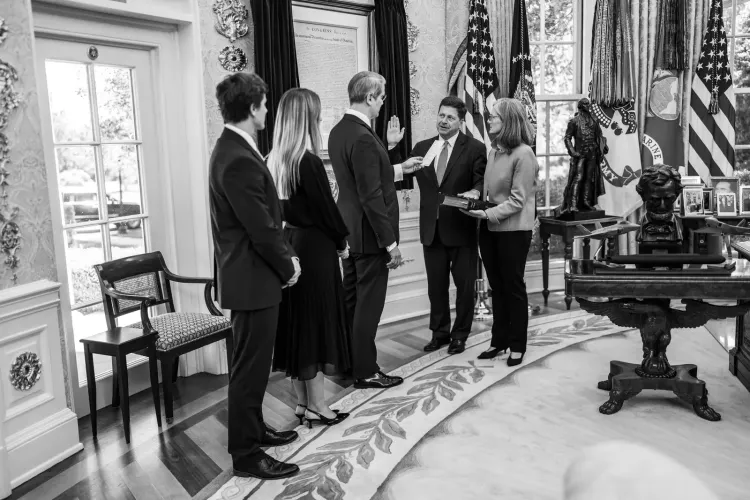
Jay Clayton, former SEC Chairman, was sworn in as U.S. Director of National Intelligence in the Oval Office on August 4, 2026. Treasury Secretary Scott Bessent administered the oath, completing a key national security appointment with significant implications for U.S. intelligence coordination and Indo-Pacific policy.
Key Takeaways
Jay Clayton was officially sworn in as U.S.
Director of National Intelligence on August 4, 2026 .
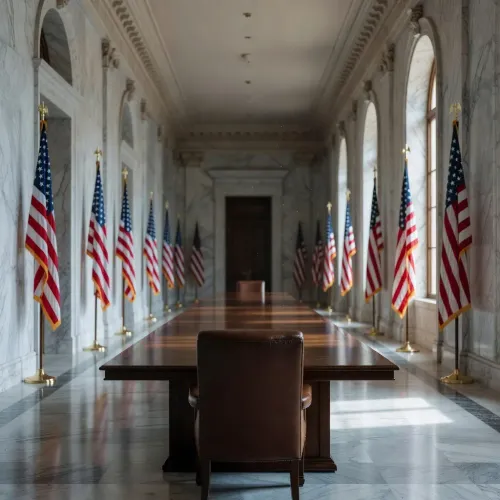
The ceremony took place inside the Oval Office — an unusually prominent setting for a swearing-in.
The oath was administered by Treasury Secretary Scott Bessent , not a judicial officer.
Clayton previously served as SEC Chairman (2017–2020) , bringing a financial regulatory background to a national security role.
The ODNI coordinates 18 U.S. intelligence agencies and delivers the President's Daily Brief.
Clayton's appointment completes a critical vacancy at the apex of the U.S. intelligence community.
In the heart of American power, a new hand now holds one of its most consequential keys. Jay Clayton was officially sworn in as U.S. Director of National Intelligence on Tuesday, August 4, 2026, in a ceremony held inside the Oval Office — administered by Treasury Secretary Scott Bessent.
From Wall Street to America's Intelligence Throne
Jay Clayton is best known for his tenure as Chairman of the U.S. Securities and Exchange Commission (SEC) from 2017 to 2020, where he oversaw financial market regulation during a period of intense volatility and regulatory reform. His background is rooted in corporate law and financial oversight — a profile that marks a notable departure from the career intelligence officers and military figures who have traditionally led the Office of the Director of National Intelligence (ODNI).
The ODNI, established after the September 11, 2001 intelligence failures, serves as the apex coordinating body for 18 U.S. intelligence agencies, including the CIA, NSA, and DIA. The Director of National Intelligence briefs the President daily and shapes the unified intelligence picture that drives American foreign policy and national security decisions.
Bessent's Role and the Oval Office Setting
That the oath was administered by Treasury Secretary Scott Bessent — rather than the Vice President or a judicial officer — signals the administration's deliberate framing of this appointment. The Oval Office setting itself is a statement: few swearing-in ceremonies command that room, and its use here underscores the weight the White House places on intelligence leadership at this moment.
Bessent, a former hedge fund manager and one of Wall Street's most prominent voices, shares a financial-world background with Clayton — a pairing that reflects the current administration's preference for market-savvy operators in roles that once belonged almost exclusively to career national security professionals.
What Clayton Inherits
The incoming DNI steps into a role carrying enormous institutional gravity. The ODNI coordinates threat assessments on everything from Chinese military modernisation to cyber intrusions, nuclear proliferation, and transnational terrorism. For India, the DNI's posture on South Asian security dynamics, Pakistan-linked terror networks, and Indo-Pacific strategy carries direct diplomatic weight.
Clayton's confirmation and swearing-in mark the completion of a key cabinet-level vacancy — and the intelligence community now has its statutory leader in place.
The Oval Office ceremony is over. The intelligence briefings begin now.
Point of View
Market-oriented figures in the national security architecture. The Oval Office ceremony and Bessent's role as oath-administrator are deliberate optics, projecting unity between economic and intelligence power. For allies like India, the DNI's worldview on the Indo-Pacific and South Asian threat landscape will matter enormously as strategic coordination deepens. Clayton's learning curve on the intelligence tradecraft will be watched closely by both allies and adversaries.
NationPress
5 Aug 2026
Frequently Asked Questions
Who is Jay Clayton and why was he appointed DNI?
Jay Clayton is a corporate lawyer and former SEC Chairman (2017–2020) appointed as U.S. Director of National Intelligence in 2026. His appointment reflects the administration's preference for financial-world figures in senior government roles.
What does the Director of National Intelligence do?
The Director of National Intelligence (DNI) leads the U.S. Intelligence Community , coordinating 18 agencies including the CIA and NSA, and delivers the President's Daily Brief on national security threats.
Who swore in Jay Clayton as DNI?
Treasury Secretary Scott Bessent administered the oath of office to Jay Clayton in the Oval Office on August 4, 2026 .
Why does the U.S. DNI appointment matter for India?
The DNI shapes U.S. intelligence priorities on the Indo-Pacific , Pakistan-linked terror networks , and South Asian security — all areas of direct concern to India's foreign and defence policy.
When was the Office of the Director of National Intelligence created?
The ODNI was established following the September 11, 2001 intelligence failures, as a statutory body to unify and coordinate the U.S. intelligence community under a single director.