Indian American lawmakers urge Trump to act on DHS 'Mr Singh' post targeting Sikhs
Synopsis
Five Indian American Democratic lawmakers have written to President Trump demanding action over a deleted DHS post that used the name 'Mr. Singh' to depict an unwanted immigrant — a move they say signals that Sikh identity equals foreignness. With Stop AAPI Hate data showing a 109% surge in anti-South Asian slurs and 48% of South Asian adults reporting a hate act in 2025, the letter frames the post not as a one-off blunder but as part of an escalating federal pattern.
Key Takeaways
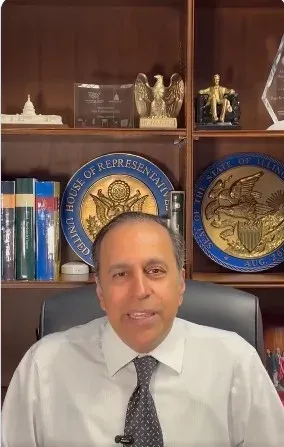
Five Indian American Democratic lawmakers — Raja Krishnamoorthi , Shri Thanedar , Suhas Subramanyam , Pramila Jayapal , and Ami Bera — wrote to President Trump on 15 September 2025 .
The letter protests a deleted DHS post depicting a man called 'Mr.
Singh' and urging him to 'self-deport or find out' .
Anti-South Asian slurs in monitored online spaces rose 109% between January 2023 and December 2025 , per Stop AAPI Hate .
South Asians were targets of 71% of anti-Asian online threats of violence identified between August 2024 and December 2025 .
48% of South Asian adults reported a hate act based on race, ethnicity or nationality in 2025 , a nationally representative survey found.
Neither DHS nor the White House had publicly responded to the letter at the time of writing.
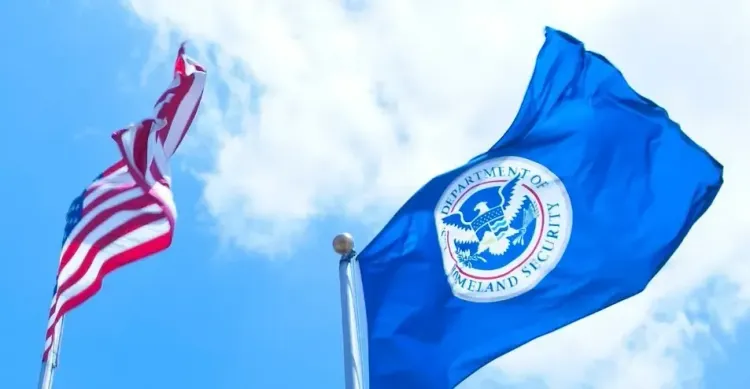
Five Indian American lawmakers have formally urged President Donald Trump to intervene over a now-deleted Department of Homeland Security (DHS) social media post depicting a man called 'Mr. Singh', warning that the content could actively encourage racial profiling and hostility towards Sikh and South Asian Americans. The bipartisan appeal, sent in a letter dated 15 September 2025, calls on the administration to issue enforceable standards against agency communications that invoke racial, ethnic or religious stereotypes.
What the deleted DHS post showed
According to the lawmakers' letter, the post featured a brown, bearded man identified as 'Mr. Singh' — a name strongly associated with Sikh identity — and carried the messages: 'get off our roads' and a warning to 'self-deport or find out'. The post was connected to a campaign promoting a new Immigration and Customs Enforcement (ICE) tipline, which DHS formally described as a mechanism for reporting suspected commercial driving licence fraud. However, the agency's social media messaging urged the public to report 'illegal aliens on American roads', according to the letter.
The lawmakers argue that pairing the 'Mr. Singh' depiction with that language effectively signals to the public that perceived ethnicity, religion, or apparent foreignness constitutes grounds for suspicion — creating a direct risk of racial profiling for Sikh, South Asian, and other non-white drivers, including US citizens.
Who signed the letter
The letter was signed by Democratic Representatives Raja Krishnamoorthi, Shri Thanedar, Suhas Subramanyam, Pramila Jayapal, and Ami Bera. All five are of South Asian origin and represent constituencies across multiple states. In the letter, they wrote: 'We write to express grave concern about the increasingly open racial and xenophobic hostility directed at South Asian Americans, particularly Sikh Americans, and about the ways federal rhetoric surrounding immigration and visa policy can reinforce the idea that these communities are suspect, disposable, or less American.'
Data behind the concern
The lawmakers cited findings from Stop AAPI Hate to substantiate their concerns. Anti-South Asian slurs in online spaces monitored by the organisation increased 109 per cent between January 2023 and December 2025, according to the letter. South Asians were the targets of 71 per cent of all anti-Asian online threats of violence identified between August 2024 and December 2025. A separate nationally representative survey found that 48 per cent of South Asian adults reported experiencing a hate act based on race, ethnicity or nationality in 2025.
The letter also placed the controversy within a broader pattern of hostility documented in Frisco, Texas, where city council meetings reportedly featured references to an 'Indian takeover', 'invaders' and 'anchor babies', a mayoral candidate described South Asian immigrants as 'rats', and a demonstrator tore an Indian flag outside City Hall in June. Notably, Sikh articles of faith — including turbans and unshorn hair — make religious identity immediately visible, the letter observed, and Sikh Americans have repeatedly faced harassment, discrimination and violence from those who perceive them as foreign.
What the lawmakers are demanding
The five representatives have asked President Trump to direct federal agencies, particularly DHS, to publicly acknowledge the harm caused by the post. They are also seeking enforceable standards that prohibit agency communications from invoking racial, ethnic, religious or national-origin stereotypes. Critically, they want the President to make clear that immigration enforcement must never be weaponised to stigmatise South Asian communities.
The letter concluded: 'South Asian Americans are not abstractions in an immigration debate, nor are they convenient symbols of foreignness. They belong in the communities they have helped build. For millions, this is their country and their home. There should be no room for such hate in our country.' As of the time of writing, neither DHS nor the White House had issued a public response to the letter.
Point of View
A higher bar than a mere apology. What mainstream coverage may underweight is the cumulative data point: a 109% rise in anti-South Asian slurs online over two years suggests the DHS post landed in an already-charged environment, not a neutral one. The administration's silence, if it holds, will itself become a data point on whether these concerns receive any institutional traction.
NationPress
15 Sept 2026
Frequently Asked Questions
What was the DHS 'Mr. Singh' post about?
The deleted DHS post depicted a brown, bearded man identified as 'Mr. Singh' and carried messages telling him to 'get off our roads' and warning him to 'self-deport or find out'. Five Indian American lawmakers say the post used Sikh identity to portray a dangerous and unwanted foreigner while promoting an ICE tipline.
Which lawmakers signed the letter to President Trump?
Democratic Representatives Raja Krishnamoorthi, Shri Thanedar, Suhas Subramanyam, Pramila Jayapal, and Ami Bera all signed the letter dated 15 September 2025. All five are of Indian or South Asian origin.
Why are Sikh Americans specifically at risk from this kind of post?
Sikh articles of faith — including turbans and unshorn hair — make religious identity immediately visible, the lawmakers noted. As a result, Sikh Americans have repeatedly faced harassment and violence from those who perceive their appearance as foreign or threatening, making them particularly vulnerable to any government messaging that links Sikh markers to illegal immigration.
What data did the lawmakers cite on anti-South Asian hate?
The letter cited Stop AAPI Hate findings showing anti-South Asian slurs in monitored online spaces rose 109% between January 2023 and December 2025. South Asians were targets of 71% of anti-Asian online threats of violence between August 2024 and December 2025, and 48% of South Asian adults reported a hate act in 2025 in a nationally representative survey.
What are the lawmakers asking President Trump to do?
They have asked Trump to direct federal agencies — especially DHS — to publicly acknowledge the harm caused by the post, adopt enforceable standards barring agency communications that use racial or religious stereotypes, and make clear that immigration enforcement must not be used to stigmatise South Asian communities.