Liechtenstein backs India's UNSC 2028-29 bid, jointly condemns Pahalgam attack
Synopsis
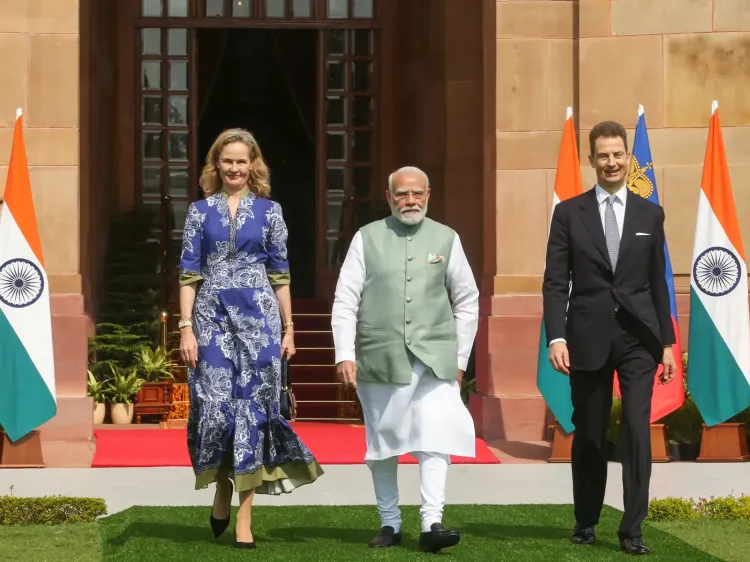
During Hereditary Prince Alois's State Visit to New Delhi, Liechtenstein became the latest nation to back India's UN Security Council bid for 2028-29 — while the two sides issued an unusually pointed joint condemnation of the Pahalgam terror attack by name, adding a European imprimatur to India's post-Pahalgam diplomatic offensive on cross-border terrorism.
Key Takeaways
Liechtenstein expressed readiness to support India's candidature for a non-permanent seat on the UN Security Council for the term 2028-29 .
Both nations jointly condemned the Pahalgam terror attack of 22 April 2025 and stressed that those responsible must be brought to justice.
The Joint Statement specifically condemned cross-border terrorism and called for greater international cooperation on terrorist financing .
Both sides agreed that AI governance must be grounded in international law, including human rights law.
India acknowledged a draft Double Taxation Avoidance Agreement (DTAA) from Liechtenstein, with both sides open to finalising the pact.
Prince Alois invited PM Modi to visit Liechtenstein at a mutually convenient date.
India and Liechtenstein on 27 October 2026 jointly condemned terrorism in all its forms — including cross-border terrorism — and specifically called out the Pahalgam terror attack of 22 April 2025, as the two nations issued a Joint Statement during the State Visit of Hereditary Prince Alois, Liechtenstein's Acting Head of State, to New Delhi. Liechtenstein also formally expressed readiness to back India's candidature for a non-permanent seat on the UN Security Council for the term 2028-29.
Joint Condemnation of Terrorism
The Joint Statement was unambiguous on the question of terrorism. 'The two sides unequivocally condemned terrorism and violent extremism in all their forms and manifestations, including cross-border terrorism. They condemned the terrorist attack in Pahalgam, Jammu and Kashmir, on 22 April 2025, expressed solidarity with the victims and their families, and stressed the importance of bringing those responsible to justice,' the statement read.
Both sides further underlined the importance of international cooperation in combating terrorist financing — a dimension that has gained renewed urgency in multilateral forums following a series of cross-border attacks in South Asia.
Liechtenstein's Support for India's UNSC Bid
Prime Minister Narendra Modi thanked H.S.H. Hereditary Prince Alois for Liechtenstein's readiness to support India's candidature for a non-permanent membership of the UN Security Council for the term 2028-29, according to the Joint Statement. The endorsement adds a European voice to India's ongoing diplomatic campaign for Council membership, which New Delhi has been pursuing across multiple bilateral engagements.
Both leaders also reaffirmed support for reform of the UN Security Council to make it 'more representative, inclusive, transparent, efficient, effective, democratic and accountable,' and agreed to work together to strengthen multilateral institutions, including through initiatives such as UN80.
AI Governance, DTAA and Bilateral Ties
The two sides agreed that the governance of Artificial Intelligence (AI) should be grounded in international law — including human rights law — and should contribute to improving lives, empowering citizens, and advancing sustainable development. This places both nations within a growing international consensus that AI regulation must have a human-rights anchor.
On the economic front, India acknowledged receipt of a draft Double Taxation Avoidance Agreement (DTAA) from Liechtenstein. Both sides expressed readiness to consider formalising such a pact, which would provide greater legal certainty and predictability for investors and businesses operating across the two jurisdictions.
Separately, Prince Alois extended an invitation to PM Modi to undertake a bilateral visit to Liechtenstein at a mutually convenient date — a gesture that signals intent to deepen what has historically been a limited bilateral relationship.
Context and Significance
Liechtenstein, while a small European principality, holds a seat at the United Nations and has a reputation for principled multilateralism. Its endorsement of India's UNSC bid is notable given ongoing diplomatic competition for non-permanent seats. This visit comes amid India's active post-Pahalgam diplomacy, with New Delhi systematically seeking international solidarity and accountability on cross-border terrorism from partners across regions.
Point of View
Arguably, is the explicit naming of the Pahalgam attack in a joint statement with a European nation — India has been methodically building a cross-regional consensus that links the attack to state-sponsored cross-border terrorism, and a European endorsement carries credibility in multilateral forums where such attributions are contested. The DTAA discussion and AI governance alignment suggest New Delhi is also using the visit to position Liechtenstein as a future financial and regulatory partner, not just a symbolic backer.
NationPress
28 Oct 2026
Frequently Asked Questions
What did Liechtenstein agree to regarding India's UN Security Council bid?
Liechtenstein expressed readiness to support India's candidature for a non-permanent membership of the UN Security Council for the term 2028-29. The commitment was formalised in a Joint Statement issued during Hereditary Prince Alois's State Visit to New Delhi on 27 October 2026.
What did India and Liechtenstein say about the Pahalgam terror attack?
The two nations jointly condemned the terrorist attack in Pahalgam, Jammu and Kashmir, on 22 April 2025, expressed solidarity with victims and their families, and called for those responsible to be brought to justice. They also specifically condemned cross-border terrorism in the Joint Statement.
What is the proposed Double Taxation Avoidance Agreement between India and Liechtenstein?
India acknowledged receipt of a draft DTAA from Liechtenstein, and both sides expressed readiness to consider formalising the agreement. Such a pact would provide greater legal certainty and predictability for investors and businesses operating between the two countries.
What did the two sides agree on AI governance?
India and Liechtenstein agreed that the governance of Artificial Intelligence should be grounded in international law, including human rights law, and should contribute to improving lives, empowering citizens, and advancing sustainable development.
What is UN80 and why was it mentioned in the Joint Statement?
UN80 refers to the initiative marking the United Nations' 80th anniversary, focused on reforming and strengthening the multilateral system. Both India and Liechtenstein agreed to work together through such initiatives to make the UN Security Council more representative, inclusive, transparent, and accountable.