Nepal FM at COP31 demands mountain climate measures after ₹39,700 crore flood disaster
Synopsis
Nepal's Foreign Minister Khanal told COP31 delegates in Turkey that the 26 August 'Himalayan Tsunami' — which killed over 1,400 people and triggered a US $4.77 billion reconstruction bill equal to a tenth of Nepal's economy — is the defining case for mountain-specific climate commitments. His three-point demand for a Himalaya-focused 1.5°C limit, a dedicated mountain work programme, and mountain indicators in climate finance could reshape how the UNFCCC treats high-altitude nations.
Key Takeaways
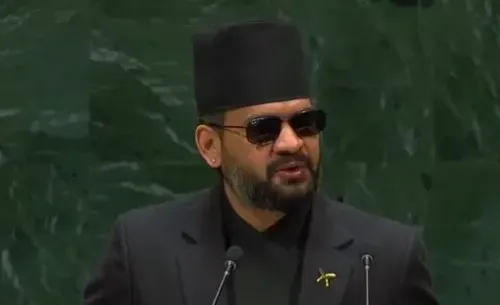
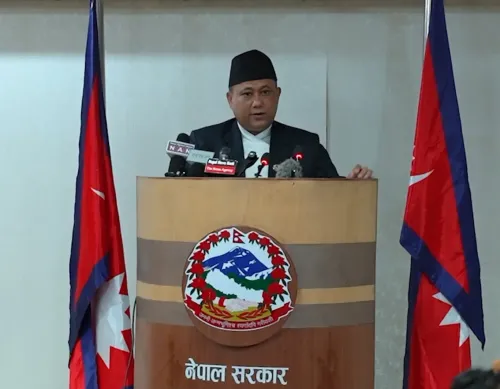
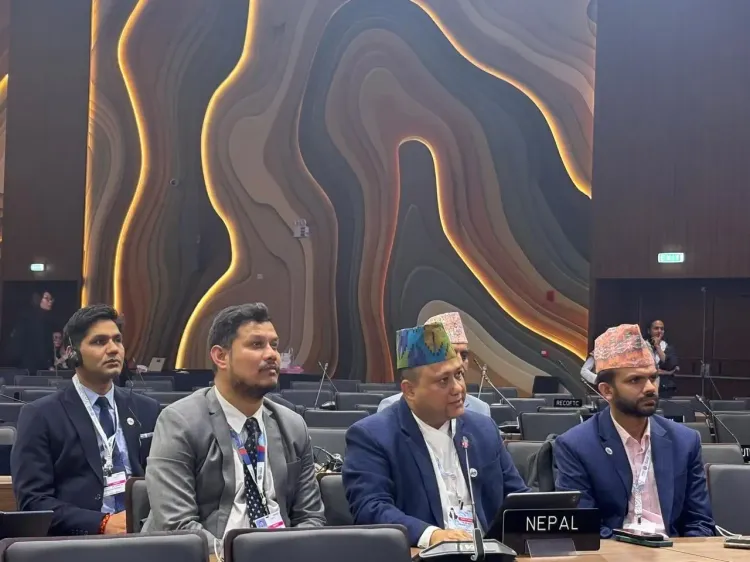
Nepal's Foreign Minister Shishir Khanal addressed the opening session of COP31 in Turkey on 10 November 2026 , demanding mountain-specific climate measures.
The 26 August floods along the Bhotekoshi and Trishuli rivers killed more than 1,400 people , with over 5,000 still unaccounted for.
Property damage is estimated at US $1.66 billion (World Bank); total recovery needs exceed US $4.77 billion — roughly one-tenth of Nepal's economy.
Khanal's three demands: a Himalaya-focused 1.5°C warming limit, a dedicated mountain work programme under UNFCCC, and mountain indicators in global climate finance frameworks.
Nepal says it contributes negligibly to global emissions yet sustains livelihoods for approximately one-third of humanity through the Himalayan ecosystem.
More than 70% of Nepal's newly purchased consumer vehicles are electric, and nearly half of its land is under community-conserved forests.
Nepal's Foreign Minister Shishir Khanal on 10 November 2026 urged the international community at the 31st Conference of the Parties (COP31) to the United Nations Framework Convention on Climate Change (UNFCCC) in Turkey to adopt mountain-specific measures to combat accelerating climate risks, citing the catastrophic floods that struck Nepal on 26 August as proof of the Himalayan region's acute vulnerability.
Three Demands on the Global Stage
Addressing the opening session of COP31, Khanal laid out three concrete asks for the international community: ensuring the 1.5 degrees Celsius warming limit is applied specifically to the Himalayas; establishing a dedicated work programme on mountains and climate change within the UNFCCC framework; and incorporating mountain-specific indicators into global climate finance and adaptation mechanisms.
'Now is the time to turn sympathy into systems and commitments into implementation,' Khanal said, pressing delegates to move beyond expressions of solidarity and toward binding action. His address signals a sharpening of Nepal's diplomatic posture — from seeking aid to demanding structural reform in how global climate frameworks account for mountain nations.
The 26 August Disaster: Scale and Cause
The floods that devastated Nepal on 26 August were triggered by a glacial avalanche that blocked a tributary of the Bhote Koshi River near the Nepal-China border, forming a natural dam. When the dam burst, it unleashed floodwaters downstream along the Bhotekoshi and Trishuli rivers. Khanal described the event as a 'Himalayan Tsunami,' and scientific evidence, he said, confirmed the role of climate change in the disaster.
More than 1,400 people were killed, and over 5,000 remain unaccounted for. Damage to public and private property — including human settlements, a dozen hydropower projects, a solar power project, roads, and buildings — was estimated at US $1.66 billion, according to the World Bank. Recovery and reconstruction needs have been placed at more than US $4.77 billion by a Rapid Disaster Needs Assessment prepared by Nepali government agencies — roughly one-tenth of Nepal's entire economy, Khanal noted.
A Pattern of Escalating Losses
Nepal experienced three major climate-linked disasters between August and October alone. The pattern is not new: in recent years, the multimillion-dollar Melamchi Drinking Water Project, designed to supply the Kathmandu Valley, has suffered repeated flood and landslide damage, as have several large hydropower installations. This comes amid broader concern that the growing frequency and severity of such events is systematically eroding the country's development gains.
Notably, Nepal's reconstruction bill from the August floods alone is comparable to the country's annual national budget, illustrating the fiscal weight climate disasters now impose on lower-income mountain nations.
The Climate Justice Argument
'We come here seeking climate justice,' Khanal told delegates, arguing that the Himalayan region contributes negligibly to global greenhouse gas emissions yet is 'melting at an alarming rate.' He underscored the stakes: the Himalayas sustain the lives and livelihoods of approximately one-third of humanity, while mountain regions cover around 27 per cent of the world's land area and are home to 15 per cent of its population.
Khanal also pointed to Nepal's own climate credentials — nearly half of the country's land area is covered by community-conserved forests, its energy generation relies predominantly on hydropower, and more than 70 per cent of newly purchased consumer vehicles are electric — to reinforce the argument that the burden of climate impact falls disproportionately on those least responsible for it.
What Comes Next
Khanal called on all countries participating in COP31 to show 'strong solidarity' with Nepal and mountain communities worldwide, and said Nepal remained committed to working with international partners on climate adaptation and finance reform. Whether the COP31 negotiations will produce a formal mountain-specific work programme — a demand Nepal has raised before without success — will be closely watched as talks proceed in Turkey.
Point of View
But the August 2026 disaster has given it unprecedented moral and economic force — a US $4.77 billion reconstruction bill in a country with a relatively modest national budget is a number that is difficult for COP delegates to deflect. The deeper problem is structural: global climate finance architecture was designed around national emissions inventories, not altitude-specific vulnerability, which systematically disadvantages mountain states. Whether COP31 delivers a formal mountain work programme or once again produces only sympathy without systems will be a litmus test for whether small, high-impact, low-emitting nations can reshape the UNFCCC's agenda — or whether they remain supplicants in a process calibrated for major emitters.
NationPress
10 Nov 2026
Frequently Asked Questions
What did Nepal's Foreign Minister demand at COP31?
Foreign Minister Shishir Khanal called on COP31 delegates in Turkey to adopt three specific measures: applying the 1.5°C warming limit specifically to the Himalayas, establishing a dedicated mountain-and-climate-change work programme under the UNFCCC, and embedding mountain-specific indicators in global climate finance and adaptation frameworks. He framed the demands as a matter of climate justice for nations that contribute little to emissions but bear severe consequences.
What caused the devastating Nepal floods of 26 August 2026?
A glacial avalanche near the Nepal-China border blocked a tributary of the Bhote Koshi River, forming a natural dam that subsequently burst and sent floodwaters surging downstream along the Bhotekoshi and Trishuli rivers. The disaster, which Khanal described as a 'Himalayan Tsunami,' killed more than 1,400 people, left over 5,000 unaccounted for, and destroyed hydropower projects, roads, and settlements. Scientific evidence cited by Nepal confirmed climate change as a contributing factor.
How much damage did the August 2026 Nepal floods cause?
The World Bank estimated property damage at US $1.66 billion, covering human settlements, a dozen hydropower projects, a solar power plant, and road and building infrastructure. A Rapid Disaster Needs Assessment by Nepali government agencies put total recovery and reconstruction needs at more than US $4.77 billion — roughly one-tenth of Nepal's entire economy.
Why does Nepal argue it deserves climate justice?
Nepal contends that it contributes negligibly to global greenhouse gas emissions yet suffers disproportionately from climate change, with the Himalayan ecosystem sustaining the lives of approximately one-third of humanity. The country also points to its own green credentials: nearly half its land is under community-conserved forests, it generates power predominantly through hydropower, and over 70% of newly purchased consumer vehicles are electric.
What is COP31 and where is it being held?
COP31 is the 31st Conference of the Parties to the United Nations Framework Convention on Climate Change (UNFCCC), the principal international forum for negotiating global climate action. The 2026 edition is being held in Turkey.