Nepal private hydropower developers back deeper power trade with India
Synopsis
Nepal's private hydropower developers are pushing for faster, deeper power trade with India — and the numbers back their ambition. With a 2024 agreement targeting 10,000 MW of imports by 2034, upgraded transmission corridors allowing 1,650 MW in exports, and Nepal now routing power to Bangladesh through Indian infrastructure, this bilateral energy partnership is quietly becoming one of South Asia's most consequential.
Key Takeaways
IPPAN executives met Indian Ambassador Naveen Srivastava on 21 July , backing deeper Nepal-India hydropower cooperation.
The Nepal-India Long-Term Power Trade Agreement (2024) envisages India importing up to 10,000 MW from Nepal by 2034 .
The 13th Nepal-India Joint Steering Committee agreed Nepal can export up to 1,650 MW and import up to 1,400 MW through two 400 kV transmission lines.
The Dhalkebar-Sitamarhi transmission line is nearing completion; Dhalkebar-Muzaffarpur has been operational since 2016 .
Nepal has not yet licensed private firms for power trading due to legal uncertainty, despite more than half a dozen companies already incorporated for that purpose.
Nepal has begun exporting electricity to Bangladesh through Indian transmission infrastructure, advancing South Asian regional energy connectivity.
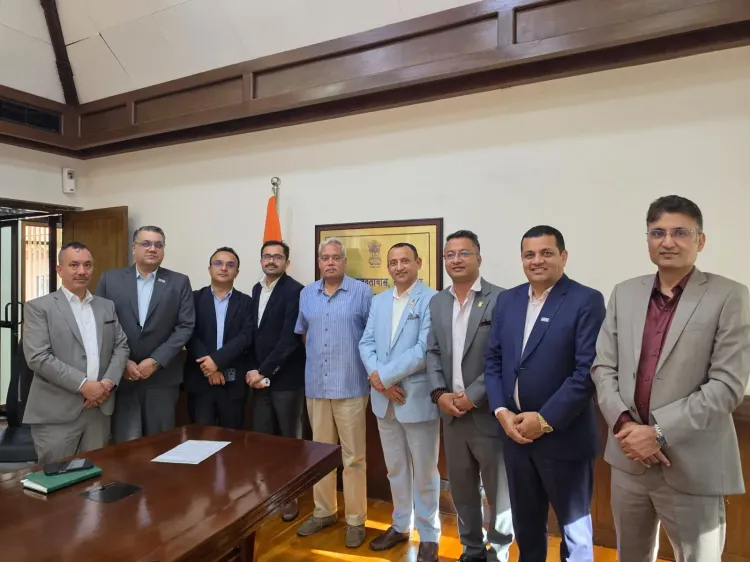
Nepal's private sector hydropower developers on Tuesday, 21 July expressed strong support for expanding Nepal-India cross-border electricity trade, noting that a majority of the power currently exported to India originates from private sector projects. The remarks came during a meeting between the newly elected executive committee of the Independent Power Producers' Association of Nepal (IPPAN) and Indian Ambassador to Nepal Naveen Srivastava, as reported by the Indian Embassy in Nepal.
Key Developments from the IPPAN-Ambassador Meeting
Ambassador Srivastava highlighted the significant potential for deeper bilateral cooperation in the hydropower sector. He specifically referenced the Nepal-India Agreement on Long-Term Power Trade signed in 2024, under which India has envisaged importing up to 10,000 MW of electricity from Nepal by 2034. The Indian Embassy shared details of the meeting through a post on social media on Tuesday.
The meeting reflects growing momentum in Nepal's push to position its hydropower surplus as a regional energy asset, with private developers increasingly central to that ambition.
Transmission Infrastructure and Trade Volumes
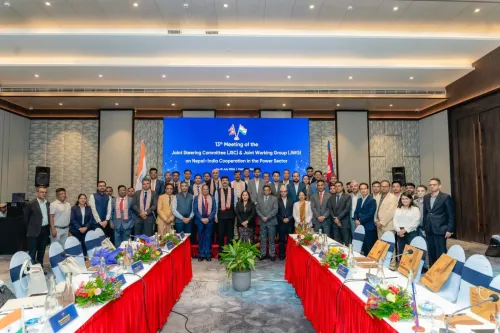
The two countries are actively developing cross-border transmission infrastructure to support large-scale electricity trade. During the 13th meeting of the Nepal-India Joint Steering Committee (JSC) — an energy secretary-level bilateral mechanism held in Nepal last week — both sides agreed to increase electricity trade volumes through two key transmission corridor projects.
Under the revised agreement, Nepal can export up to 1,650 MW of electricity to India and import up to 1,400 MW through two 400 kV cross-border transmission lines: the Dhalkebar-Muzaffarpur and Dhalkebar-Sitamarhi lines. The Dhalkebar-Muzaffarpur line has been operational since 2016, while the Dhalkebar-Sitamarhi line is nearing completion, according to Nepal's Ministry of Energy, Water Resources and Irrigation.
Previously, the two countries had agreed to allow Nepal to export up to 1,100 MW and import up to 1,000 MW through the Dhalkebar-Muzaffarpur corridor alone — making the new targets a meaningful step up in bilateral energy ambition.
Private Sector Licensing Hurdles
Despite the sector's growth, Nepal has yet to grant licences to any private companies to engage in power trading, citing legal uncertainty. Notably, more than half a dozen companies have already been incorporated with the explicit objective of trading electricity domestically and across borders, underscoring the private sector's readiness to move faster than the regulatory framework currently allows.
Regional Energy Connectivity: Bangladesh Link
Beyond bilateral trade with India, Nepal has also begun exporting electricity to Bangladesh through Indian transmission infrastructure — a development that marks a significant step toward broader regional energy integration in South Asia. Both countries have also agreed to expedite work on several new high-capacity cross-border transmission projects to further scale up trade volumes in the years ahead.
With the 10,000 MW import target set for 2034 and new transmission corridors coming online, the Nepal-India power partnership is entering a structurally more ambitious phase.
Point of View
000 MW target by 2034 is an ambitious headline, but the gap between ambition and execution is where Nepal's energy story has historically stalled. Private developers are ready — more than half a dozen power trading companies are already incorporated — yet Nepal's regulatory framework has not kept pace, leaving licences in limbo over legal uncertainty. The real bottleneck is not generation capacity or political will on either side; it is Nepal's own domestic licensing regime. Until that is resolved, private capital will remain sidelined from the very trade it is best positioned to accelerate. The Bangladesh export through Indian infrastructure is the more underreported development: it signals that this is no longer a bilateral story but the early architecture of a South Asian regional grid.
NationPress
20 Oct 2026
Frequently Asked Questions
What is the Nepal-India Long-Term Power Trade Agreement?
It is a bilateral agreement signed in 2024 under which India has committed to importing up to 10,000 MW of electricity from Nepal by 2034. The agreement provides a framework for scaling up cross-border electricity trade between the two countries.
How much electricity can Nepal currently export to India?
Following the 13th Nepal-India Joint Steering Committee meeting, Nepal can export up to 1,650 MW to India and import up to 1,400 MW through two 400 kV cross-border transmission lines — the Dhalkebar-Muzaffarpur and Dhalkebar-Sitamarhi corridors. This is up from a previous ceiling of 1,100 MW in exports.
Why can't private companies in Nepal trade electricity yet?
Nepal has not yet granted licences to private companies for power trading due to legal uncertainty in the existing regulatory framework. Despite this, more than half a dozen companies have already been established with the objective of trading electricity domestically and across borders.
What is the status of the Dhalkebar-Sitamarhi transmission line?
The Dhalkebar-Sitamarhi 400 kV transmission line is nearing completion, according to Nepal's Ministry of Energy, Water Resources and Irrigation. Once operational, it will complement the Dhalkebar-Muzaffarpur line, which has been in service since 2016.
Is Nepal exporting electricity to any country other than India?
Yes. Nepal has begun exporting electricity to Bangladesh through Indian transmission infrastructure, marking a significant step toward regional energy connectivity in South Asia.