Can Diplomacy and International Law Resolve Nepal's Border Dispute with India?
Synopsis
In a bold move, the Nepali Communist Party, led by Prachanda, has pledged to resolve the ongoing border dispute with India through diplomatic channels and international law. As tensions rise, this commitment could reshape Nepal's foreign relations and internal policies.
Key Takeaways
Commitment to Diplomacy: The NCP prioritizes diplomatic dialogue to resolve the border dispute.
International Law: Emphasis on adherence to international legal frameworks.
Modernization of Borders: Plans to enhance border infrastructure with neighboring countries.
Non-Aligned Policy: A focus on maintaining a balanced foreign policy.
Corruption Control: Strong measures proposed to combat domestic corruption.
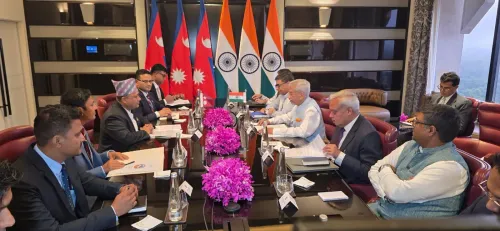
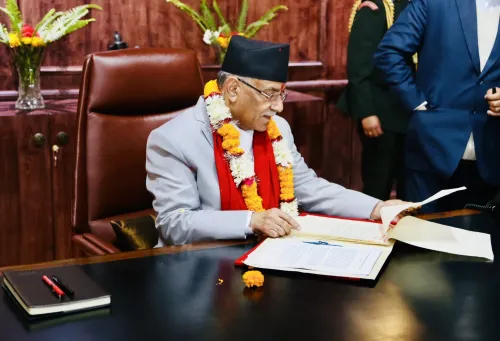
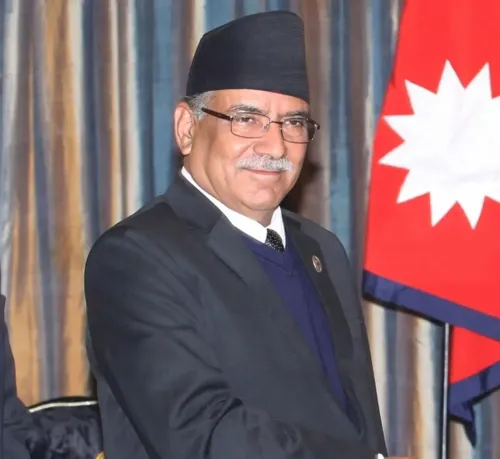
Kathmandu, Feb 10 (NationPress) The Nepali Communist Party (NCP), guided by former Prime Minister Pushpa Kamal Dahal Prachanda, has committed to addressing the border dispute with India through diplomatic discussions and adherence to international law.
During the release of the party's commitment document prior to the March 5 elections on Tuesday, coordinator Dahal emphasized that the conflicts concerning Lipulekh, Limpiyadhura, and Kalapani would be resolved through diplomatic negotiations and in line with international legal frameworks.
Both Nepal and India assert claims over the territory along Nepal's northwestern border, which has been under India's effective governance. Each nation has included these areas within their official political maps.
The relationship between the two countries soured significantly when the administration of former Prime Minister K P Sharma Oli unveiled a new political map for Nepal in 2020, incorporating these contested regions, leading to constitutional amendments by Nepal's parliament. The border issue has consistently been a major source of tension in bilateral relations.
The Nepali Communist Party, formed through the merger of the previous Communist Party of Nepal (Maoist Centre) and CPN (Unified Socialist), alongside several smaller leftist factions, also committed to modernizing border crossings with neighboring nations. Nepal shares frontiers with India to the east, south, and west, and with China to the north.
The commitment document further declares that Nepal will uphold a proactive presence in multilateral platforms, including the United Nations, the South Asian Association for Regional Cooperation (SAARC), and the Bay of Bengal Initiative for Multi-Sectoral Technical and Economic Cooperation (BIMSTEC).
The NCP has pledged to fortify Nepal's non-aligned foreign policy, prioritizing national interests, sovereignty, and territorial integrity.
The party has introduced a framework for fostering balanced relations grounded in mutual respect, trust, and shared benefits, while emphasizing the importance of reviewing perceived unequal treaties and agreements and establishing new ones based on mutual advantage. Nepal's leftist factions have long criticized the 1950 Treaty of Peace and Friendship with India as inequitable, advocating for its revision or cancellation.
The commitment document also highlights the importance of economic diplomacy to advance foreign investment, boost exports, facilitate technology transfer, enhance tourism, and create job opportunities.
Additionally, it stresses amplifying Nepal's voice in global forums regarding climate change, Himalayan conservation, mountain-related issues, and the collective interests of landlocked nations. It commits to developing policies and institutional mechanisms to leverage the skills, capital, experience, and expertise of non-resident Nepalis for national advancement.
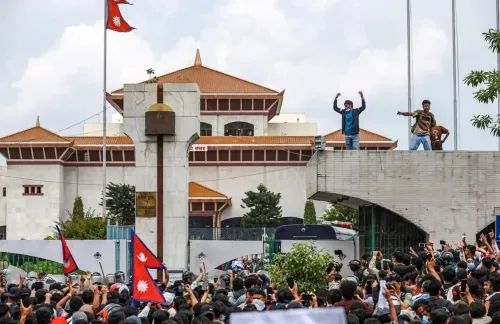
On the domestic front, the party has vowed to combat corruption, acknowledging that public discontent, particularly among the Gen-Z, regarding corruption played a role in the collapse of the previous government led by Prime Minister Oli in September of last year.
“A robust and independent commission will be established with a one-year mandate to scrutinize the assets of all individuals who have held public office and to investigate corruption scandals,” the party stated. “A high-level, empowered Lokpal (ombudsman) will also be created by merging entities such as the Commission for the Investigation of Abuse of Authority, the National Vigilance Center, and the Department of Money Laundering Investigation to tackle corruption across all state institutions and hold offenders accountable.”
Point of View
It's essential to recognize that the ongoing border dispute between Nepal and India is not just a matter of territorial integrity but a complex interplay of national identity, sovereignty, and diplomatic relations. The commitment by the Nepali Communist Party to pursue resolution through dialogue and international law is a positive step towards stabilizing ties and fostering cooperation in the region. However, it requires careful navigation of historical grievances and geopolitical realities to achieve a lasting solution.
NationPress
6 Oct 2026
Frequently Asked Questions
What is the border dispute between Nepal and India about?
The border dispute primarily involves claims over territories such as Lipulekh, Limpiyadhura, and Kalapani, which both Nepal and India assert as part of their respective territories.
How does the Nepali Communist Party plan to resolve the dispute?
The Nepali Communist Party has pledged to work towards resolving the dispute through diplomatic dialogue and adherence to international law.
What impact has the border dispute had on Nepal-India relations?
The border dispute has been a significant source of tension between Nepal and India, impacting their bilateral relations and cooperation on various fronts.
What other commitments has the NCP made regarding foreign policy?
Apart from resolving the border issue, the NCP has committed to modernizing border points, strengthening Nepal's non-aligned foreign policy, and enhancing economic diplomacy.
How does the NCP plan to address corruption domestically?
The NCP has announced plans to form an independent commission to investigate corruption and establish a high-level Lokpal to curb corruption across all state institutions.