Nigeria flags 21 states at high or moderate Ebola importation risk
Synopsis
Nigeria has pre-emptively mapped its Ebola vulnerability — 21 of 36 states flagged, including Lagos, Abuja, and Kano — before a single confirmed case. With the WHO declaring the Congo outbreak a global emergency and the NCDC warning that Ebola can masquerade as malaria or Lassa fever, the window for early containment is narrow and the stakes for Africa's most populous nation are high.
Key Takeaways
The NCDC has classified 21 of Nigeria's 36 states as high or moderate risk for Ebola importation as of 29 May .
High-risk states include Abuja , Lagos , Kano , Borno , Rivers , and Adamawa , due to airport and border connectivity.
NCDC Director General Jide Idris warned that Ebola symptoms mimic malaria and Lassa fever , increasing delayed-detection risk.
The WHO has declared the Congo Ebola outbreak a public health emergency of international concern .
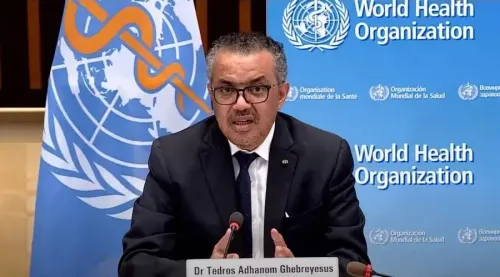
WHO chief Tedros Adhanom Ghebreyesus visited Kinshasa , citing conflict and community mistrust as key obstacles to containment.
Nigeria, with a population of over 242 million , has no confirmed Ebola case at this time.
Nigeria has identified 21 of its 36 states as being at high or moderate risk of Ebola importation, the Nigeria Centre for Disease Control and Prevention (NCDC) announced on 29 May, citing growing concerns over cross-border transmission linked to ongoing outbreaks in East and Central Africa. No confirmed Ebola case has yet been recorded in the country.
High-Risk States Identified
The NCDC classified Abuja, and the southern states of Lagos, Rivers, Enugu, Akwa Ibom, and Cross River, alongside the northern states of Kano, Borno, Taraba, and Adamawa, as high-risk areas. The designation reflects active travel and trade routes connected to international airports and porous land borders.
Moderate-Risk Zones and Surveillance Measures
An additional 11 states were classified as moderate-risk, requiring enhanced surveillance and preparedness. These include Ogun, Ebonyi, Abia, and Bayelsa in the south, and Nasarawa, Kaduna, Plateau, Niger, Jigawa, Katsina, and Bauchi in the north.
What the NCDC Director General Said
Jide Idris, Director General of the NCDC, underscored the urgency by pointing to the World Health Organisation (WHO)'s declaration of the Ebola outbreak as a 'public health emergency of international concern'. He warned that Ebola's symptoms closely resemble those of malaria and Lassa fever — two diseases already endemic in Nigeria — raising the risk of delayed detection and further onward transmission.
Why Nigeria Is Particularly Vulnerable
With a population exceeding 242 million, Nigeria is Africa's most populous country and the world's sixth most populous nation. Its dense urban centres, high-volume airports, and extensive land borders with multiple countries make it especially susceptible to disease importation. This is not Nigeria's first brush with Ebola — the country successfully contained an outbreak in 2014, a response widely credited as a model for rapid containment.
WHO Chief Visits Congo as Outbreak Deepens
WHO Director-General Tedros Adhanom Ghebreyesus described the Ebola outbreak in Congo as 'very complex', citing conflict, insecurity, displacement, food shortages, and community mistrust as compounding factors. Speaking to reporters upon arriving in the Congolese capital Kinshasa, Ghebreyesus said he had come to show affected communities that 'they are not alone' and that the WHO was fully committed to supporting the response.
As the situation in Central Africa evolves, Nigeria's public health infrastructure will face a critical stress test — and the NCDC's early risk-mapping signals that authorities are not waiting for a confirmed case before acting.
Point of View
But the NCDC's own warning about diagnostic confusion with malaria and Lassa fever is the real alarm bell. In a country where both diseases are endemic and health facility capacity is uneven, a delayed Ebola diagnosis is not a hypothetical — it is a pattern from 2014. The 21-state classification covers Nigeria's economic and demographic core, meaning a single missed case in Lagos or Kano could rapidly stress contact-tracing systems. The question is not whether Nigeria can contain an importation, but whether the surveillance infrastructure in moderate-risk states — often underresourced — is genuinely ready, not just listed on a preparedness chart.
NationPress
15 Sept 2026
Frequently Asked Questions
Which Nigerian states are classified as high risk for Ebola importation?
The NCDC has designated Abuja, Lagos, Rivers, Enugu, Akwa Ibom, Cross River, Kano, Borno, Taraba, and Adamawa as high-risk states, based on their active international travel links and porous land borders.
Has Ebola been confirmed in Nigeria?
No confirmed Ebola case has been recorded in Nigeria as of 29 May. The NCDC's risk classification is a precautionary measure in response to ongoing outbreaks in East and Central Africa.
Why does the NCDC consider Nigeria vulnerable to Ebola importation?
Nigeria's vulnerability stems from its high-volume international airports, extensive land borders, and a population exceeding 242 million. The NCDC also warned that Ebola symptoms resemble malaria and Lassa fever, which could delay detection and enable further spread.
What is the WHO's current position on the Ebola outbreak?
The WHO has declared the Ebola outbreak — centred in Congo — a public health emergency of international concern. WHO Director-General Tedros Adhanom Ghebreyesus visited Kinshasa and described the outbreak as 'very complex', citing conflict, displacement, and community mistrust as major barriers to containment.
What measures are being taken in Nigeria's moderate-risk states?
The 11 moderate-risk states, including Kaduna, Plateau, Niger, and Ogun, have been directed to implement enhanced surveillance and preparedness measures. These include heightened monitoring at entry points and health facility readiness protocols.