Pakistan, Bangladesh most at risk as US-Iran conflict drives oil surge
Synopsis
The US-Iran conflict is not just a Gulf crisis — it is a slow-burning economic shock for South Asia. Pakistan and Bangladesh, both locked into IMF austerity programmes that bar subsidy relief, have almost no buffer against a sustained oil price surge. With Brent already climbing and the Suez Canal route under fresh threat, the pressure on their currencies, fiscal balances, and household costs is set to intensify.
Key Takeaways
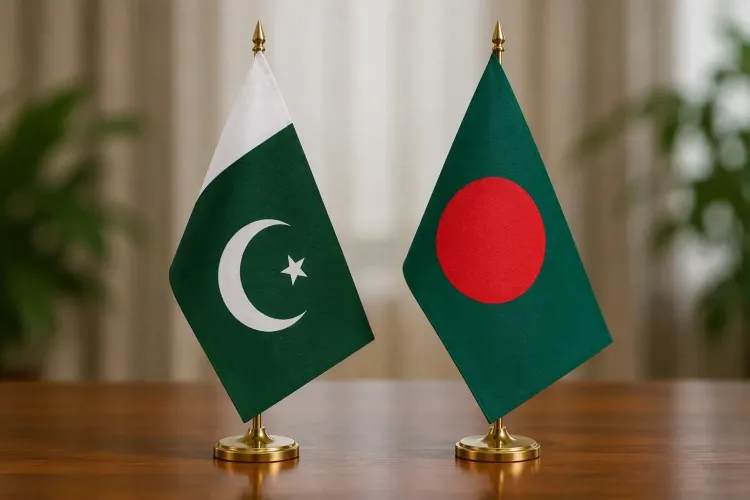
Pakistan and Bangladesh are identified as among Asia's most exposed economies to the US-Iran conflict 's oil price fallout.
Both nations are heavily reliant on imported fuel, with limited inventory buffers accelerating domestic price transmission, according to ESSEC Business School economist Jamus Lim .
Brent crude and WTI have risen sharply over the past month; diesel and refined products have posted double-digit increases.
A drone strike on gas vessels at Egypt's Damietta port has raised fresh concerns over Suez Canal shipping routes.
Both countries' IMF -backed reform programmes restrict subsidy spending, limiting their ability to cushion consumers from higher fuel costs.
Oxford Economics warns Pakistan , Ghana , Tunisia , Kenya , and Mozambique face the sharpest deterioration due to thin foreign exchange reserves.
Pakistan and Bangladesh are among the Asian economies most exposed to fallout from the prolonged US-Iran conflict, as surging global oil prices threaten to stoke inflation, strain public finances, and deepen stress on already fragile economic foundations, according to economists and research firms.
Why These Two Economies Are Most Vulnerable
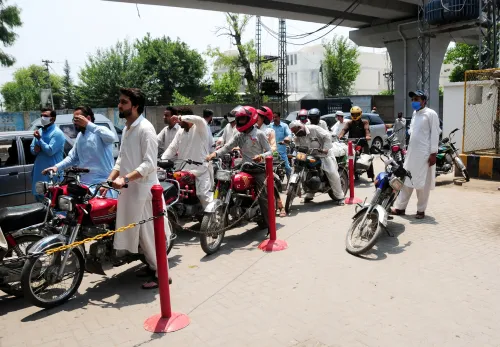
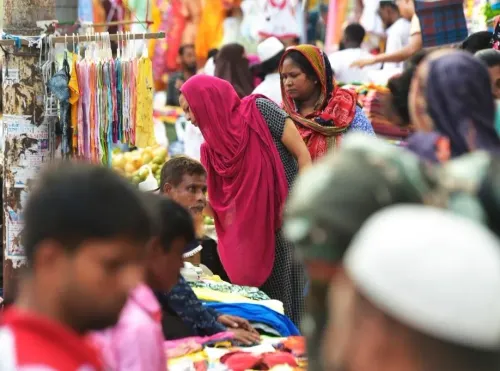
Both countries are heavily dependent on imported fuel, leaving them acutely sensitive to sustained increases in crude oil and diesel prices. Analysts warn that limited fuel inventories and weak economic buffers could allow rising global energy costs to transmit rapidly into domestic prices — pushing up the cost of transport, electricity, and food for millions of households.
Jamus Lim, Associate Professor of Economics at ESSEC Business School Asia-Pacific, said Pakistan and Bangladesh are likely to face 'significant inflationary pressures in the near term.' He noted that limited inventory buffers mean higher oil prices would feed through their economies relatively quickly.
Oil Markets Already Reflect Conflict Anxiety
Brent crude has climbed sharply over the past month, with US West Texas Intermediate (WTI) posting similar gains. Diesel and other refined fuel products have recorded double-digit price increases, intensifying concerns over energy costs worldwide.
The risks have spread beyond the Gulf after a drone strike targeted gas vessels at Egypt's Mediterranean port of Damietta, raising alarm over shipping routes linked to the Suez Canal — a critical corridor for Saudi oil exports. The conflict is now in its fifth month, with uncertainty deepening after US President Donald Trump weighed further military action following Iranian attacks on American military assets in Jordan, Kuwait, and Bahrain.
IMF Constraints Limit Subsidy Options
For Pakistan and Bangladesh, another energy-price shock could place renewed pressure on currencies, fiscal balances, and government subsidy programmes. Critically, both countries are currently implementing International Monetary Fund (IMF)-supported economic reform programmes that prioritise fiscal discipline — effectively limiting their ability to shield consumers from higher fuel costs through subsidies.
This constraint is particularly acute: governments that might otherwise absorb part of the price shock through fuel subsidies are instead bound by IMF conditionalities that restrict such spending. The result is that households bear the full brunt of any oil price escalation.
Broader Emerging Market Risks
Oxford Economics has flagged several emerging markets — including Pakistan, Egypt, Mozambique, Nigeria, and Kenya — as facing a compounding mix of geopolitical risks, political uncertainty, and rising debt-servicing costs. According to the research firm, countries with relatively thin foreign exchange reserve buffers, including Pakistan, Mozambique, Kenya, Ghana, and Tunisia, could see the sharpest economic deterioration if the conflict intensifies further.
As the conflict shows no sign of swift resolution, the outlook for oil-import-dependent frontier economies remains precarious — with Pakistan and Bangladesh most immediately in the line of fire.
Point of View
Leaving governments with no room to absorb the blow. That combination — austerity plus energy vulnerability — is more dangerous than either factor alone. Oxford Economics' warning about thin forex buffers adds a third dimension: if currencies slide as import bills rise, the inflation spiral could become self-reinforcing. Mainstream coverage tends to frame this as an oil-market story; it is more accurately a sovereign fragility story with a geopolitical trigger.
NationPress
17 Sept 2026
Frequently Asked Questions
Why are Pakistan and Bangladesh most vulnerable to the US-Iran conflict's oil price impact?
Both countries depend heavily on imported fuel and have limited domestic energy buffers, meaning global oil price increases pass through to domestic costs quickly. Economist Jamus Lim of ESSEC Business School Asia-Pacific has noted that this lack of inventory cushion accelerates inflationary transmission across transport, electricity, and food sectors.
How has the US-Iran conflict affected global oil prices?
Brent crude and US benchmark WTI have both climbed sharply over the past month, while diesel and refined fuel products have posted double-digit price increases. A drone strike on gas vessels at Egypt's Mediterranean port of Damietta has further heightened concerns over Suez Canal shipping routes used for Saudi oil exports.
Why can't Pakistan and Bangladesh use subsidies to protect consumers?
Both countries are currently implementing IMF-supported economic reform programmes that emphasise fiscal discipline, which restricts their ability to expand fuel subsidy spending. This leaves households directly exposed to the full impact of rising global energy costs.
Which other emerging markets are at risk according to Oxford Economics?
Oxford Economics has flagged Pakistan, Egypt, Mozambique, Nigeria, and Kenya as facing compounding risks from geopolitical uncertainty and rising debt-servicing costs. Countries with the thinnest foreign exchange reserve buffers — including Pakistan, Mozambique, Kenya, Ghana, and Tunisia — are assessed as most at risk if the conflict escalates.
How long has the US-Iran conflict been ongoing?
The conflict is now in its fifth month, according to reports. Uncertainty has deepened after US President Donald Trump weighed further military action following Iranian attacks on American military assets in Jordan, Kuwait, and Bahrain.