Pakistan govt employees protest in Islamabad ahead of 2026-27 budget
Synopsis
Days before Pakistan's 2026-27 budget presentation, thousands of government employees marched from Secretariat Chowk to Parliament House in Islamabad, demanding a 50% pay hike, pension reform rollback, and a PKR 50,000 minimum wage — threatening a sit-in until their demands are met. It is a direct challenge to Islamabad's IMF-constrained fiscal room.
Key Takeaways
AGEGA -led government employees staged a protest march in Islamabad on 12 June 2026 , days before the 2026-27 Federal Budget presentation.
Protesters marched from Secretariat Chowk to Parliament House , announcing a sit-in until demands are met.
Key demands include a 50% salary hike for employees earning under PKR 50,000/month , a 200% increase in allowances, and withdrawal of pension reforms.
Employees also seek a 30% disparity reduction allowance , removal of the 25% tax slab on teachers, and regularisation of contract workers.
The 30% disparity allowance announced in the Federal Budget 2025-26 has reportedly not yet been disbursed to provincial employees in Punjab and other provinces.
Prime Minister Shehbaz Sharif has been urged to include employee relief measures in the upcoming budget.
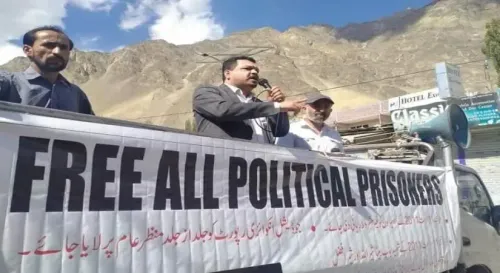
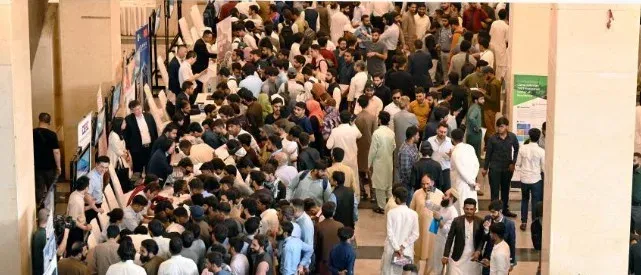
Thousands of Pakistan government employees took to the streets of Islamabad on Friday, 12 June, staging a major demonstration at Secretariat Chowk and marching toward Parliament House, demanding salary reforms and the inclusion of their service-structure demands in the 2026-27 Federal Budget. The protest, organised under the banner of the All Government Employees Grand Alliance (AGEGA), came days before the government was set to present its annual financial plan.
How the Protest Unfolded
Employees began assembling at Secretariat Chowk before marching toward Parliament House, with workers converging from multiple provinces. Upon reaching Parliament House, protesters announced a sit-in, declaring they would remain until the government formally addressed their demands.
The demonstration followed two consecutive days of protests outside Pakistan's Ministry of Finance. Rehman Bajwa, chief organiser of AGEGA, stated that the protest would continue until all demands were met. Participants included teachers, clerical staff, Class-IV employees, technical personnel, pensioners' organisations, and labour unions — both male and female workers representing several public-sector departments.
Key Demands on the Table
The employees' demands are wide-ranging and financially significant. They include a 50 per cent salary increase for those earning less than PKR 50,000 per month, a 200 per cent hike in conveyance, medical, and house rent allowances, and the withdrawal of pension reforms. Employees have also called for the merger of all ad hoc relief allowances into basic pay and the introduction of a revised pay scale for 2026.
Additional demands include a 30 per cent disparity reduction allowance, removal of the 25 per cent tax slab applicable to teachers and researchers, regularisation of daily-wage and contract employees, restoration of employment quotas for families of deceased employees, and a minimum monthly wage of PKR 50,000 for all government staff.
Background: Inflation and Unmet Promises
The protest did not emerge in a vacuum. On 2 June, AGEGA Punjab leadership warned that soaring inflation had sharply eroded the purchasing power of government employees, making it increasingly difficult to manage household expenses on existing salaries.
In a joint statement, the alliance noted that provincial government employees — particularly in Punjab and other provinces — had not yet received the 30 per cent disparity allowance that was announced in the Federal Budget 2025-26. Employees also alleged that the Punjab government's recent amendments to leave encashment rules had deprived retiring staff of substantial benefits they had previously been entitled to.
Pension and Gratuity Concerns
The alliance alleged that both retired and serving employees in Punjab were facing reductions in pension, gratuity, and leave encashment entitlements. The grouping urged Prime Minister Shehbaz Sharif to announce concrete relief measures for government employees in the Federal Budget 2026-27.
This is at least the third consecutive year that organised government employee groups have mounted pre-budget pressure campaigns, reflecting a deepening standoff between Pakistan's fiscal consolidation agenda — driven partly by IMF programme conditions — and the welfare expectations of its large public-sector workforce.
What Comes Next
With the budget presentation imminent, the government faces pressure to balance fiscal discipline with employee demands that carry significant fiscal cost. Whether Prime Minister Shehbaz Sharif's administration will incorporate any of the demands into the budget, or offer a post-budget relief package, remains to be seen. The sit-in at Parliament House signals that employee groups are prepared for a prolonged standoff.
Point of View
And Islamabad knows it. But the demands, including a 50% pay hike and full pension restoration, carry a fiscal cost that sits uneasily with the IMF programme's consolidation targets. The deeper problem is structural: successive budgets have announced allowances — the 30% disparity relief being the latest example — that provincial governments have not actually disbursed, eroding trust. Until the gap between federal announcements and provincial implementation is closed, these annual protest cycles will continue regardless of what the budget speech says.
NationPress
25 Sept 2026
Frequently Asked Questions
Why are Pakistan government employees protesting in Islamabad?
Government employees are protesting ahead of the 2026-27 Federal Budget to demand salary reforms, including a 50% pay hike for those earning under PKR 50,000 per month, pension reform withdrawal, and a PKR 50,000 minimum monthly wage. They are also demanding disbursement of the 30% disparity allowance announced in the previous budget but not yet paid.
Who is organising the protest?
The protest is organised by the All Government Employees Grand Alliance (AGEGA), led by chief organiser Rehman Bajwa. Participants include teachers, clerical staff, Class-IV employees, technical personnel, pensioners' organisations, and labour unions from multiple provinces.
What are the main demands of the protesting employees?
Key demands include a 50% salary increase for employees earning under PKR 50,000/month, a 200% hike in conveyance, medical, and house rent allowances, merger of ad hoc relief into basic pay, withdrawal of pension reforms, a 30% disparity reduction allowance, removal of the 25% tax slab on teachers, and regularisation of contract workers.
Has the government responded to the protest?
As of the protest on 12 June, no formal government response had been reported. Employees announced a sit-in at Parliament House, indicating they intended to maintain pressure until the government agreed to their demands ahead of the budget presentation.
What is the background to these demands?
Soaring inflation in Pakistan has significantly reduced the purchasing power of government employees. The 30% disparity allowance promised in the Federal Budget 2025-26 has reportedly not been disbursed to provincial employees, and Punjab government amendments to leave encashment rules have further reduced retirement benefits, prompting the organised pre-budget campaign.