Pakistan food insecurity deepens as climate change hits farms, water supply
Synopsis
Pakistan is caught in a climate-population squeeze: floods wiped out 1.3 million hectares of farmland in 2025, food imports hit $8 billion, 22,800 farm animals died, and Quetta residents went six months without tap water. With the population set to hit 300 million by 2050, the window for agricultural reform is closing fast.
Key Takeaways
More than 1.3 million hectares of Pakistan's farmland were flooded during the 2025 monsoon season , causing $1.23 billion in agricultural losses.
Pakistan's food import bill reached $8 billion in fiscal year 2025 , straining foreign exchange reserves.
Pakistan's population of 240 million , growing at 2.4% annually , is projected to hit 300 million by 2050 , worsening food security pressures.
Around 22,800 farm animals died during the 2025 floods, disrupting rural livelihoods.
Residents of Quetta , Balochistan, went without tap water for up to six months as groundwater levels fell to dangerously low levels.
Experts call for construction of new dams and full modernisation of Pakistan's agriculture sector to counter the growing threat.
Pakistan's agriculture sector faces an escalating crisis, with extreme heat, hydrological volatility, and a rapidly growing population converging to intensify food insecurity across the country, according to a report in The Friday Times. The analysis underscores an urgent need for the modernisation of Pakistan's farming systems to avert a deepening humanitarian challenge.
Climate Shocks Battering Farmland
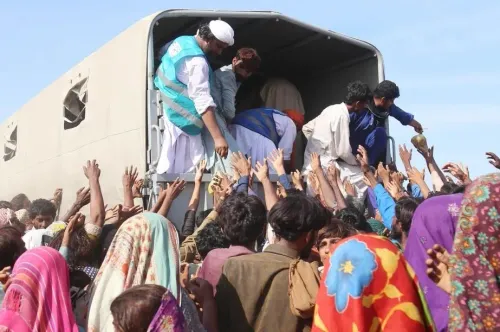
Pakistan contributes roughly one per cent of global greenhouse gas emissions, yet remains disproportionately exposed to the consequences of climate change. During the 2025 monsoon season, more than 1.3 million hectares of farmland were submerged, causing widespread damage to rice, cotton, and sugarcane crops. Agricultural losses from those floods were estimated at $1.23 billion, according to The Friday Times.
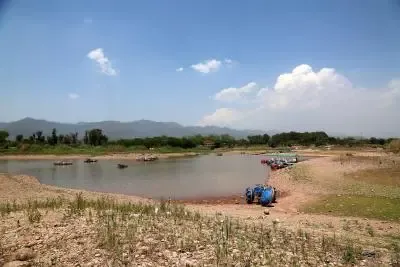
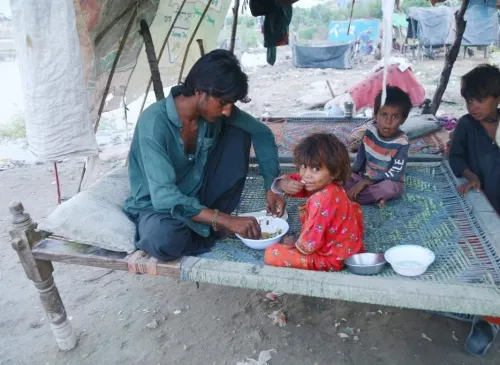
Extreme heat attributed to climate change has compounded the problem by driving increased hydrological volatility — depleting water tables while simultaneously triggering destructive flood events. Around 22,800 farm animals perished during the 2025 floods alone, dealing a severe blow to rural livelihoods and pushing many households deeper into economic distress.
Population Pressure Worsening Food Security
Amna Ejaz Rafi, writing in The Friday Times, noted that Pakistan's current population of 240 million, growing at a rate of 2.4 per cent annually, is compounding the food security challenge. 'Extreme heat in some parts of the country, attributed to climate change, has also contributed to increased hydrological volatility. As a result, crops are being affected while water levels continue to decline. All these factors are contributing to food insecurity. Pakistan's population of 240 million, growing at a rate of 2.4 per cent, further aggravates the challenge of food insecurity,' she wrote.
By 2050, Pakistan's population is projected to reach 300 million. During fiscal year 2025, the country's food import bill stood at $8 billion, placing significant additional strain on already-stressed foreign exchange reserves.
Water Crisis Reaches Critical Levels in Balochistan
The water scarcity problem has taken a particularly acute form in Quetta, the capital of Balochistan province. In July, groundwater levels in the city dropped to dangerously low levels, while official supplies from the Water and Sanitation Agency (WASA) were either completely halted or severely curtailed across many residential areas, according to Pakistani daily The Express Tribune.
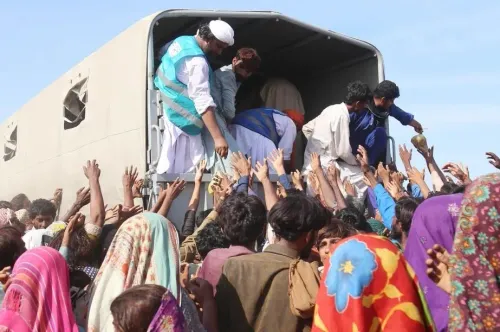
Neighbourhoods including Sariab, Sirki Road, Samungli Road, Jinnah Town, Qambarani Road, Satellite Town, Sabzal Road, and Khayaban-e-Agha were among the worst affected. Elderly residents, women, and children were reportedly compelled to walk long distances on foot to fetch water. Many households had received no tap water for six months, and residents told The Express Tribune that complaints to authorities yielded only verbal assurances without resolution.
Structural Reforms Needed: Dams, Agriculture Modernisation
Experts cited in the report stress that Pakistan must construct new dams to capture and store rainwater for use during the dry winter months. This comes amid a broader call to modernise the agricultural sector — upgrading irrigation systems, adopting climate-resilient crop varieties, and improving rural infrastructure — to reduce dependence on costly food imports and buffer the country against future climate shocks.
With the twin pressures of climate vulnerability and rapid demographic growth showing no sign of easing, Pakistan's window to implement structural agricultural reform is narrowing by the year.
Point of View
Not a one-off weather event. The country contributes just one per cent of global emissions yet absorbs a wildly disproportionate share of climate damage — a fact that should sharpen the international conversation on climate finance and loss-and-damage commitments. Domestically, the absence of meaningful dam construction and irrigation modernisation over decades has left Pakistan's 240 million people hostage to monsoon variability. With the population set to hit 300 million by 2050, the gap between agricultural output and food demand will only widen unless reform moves from report recommendations to on-the-ground implementation.
NationPress
4 Oct 2026
Frequently Asked Questions
Why is Pakistan facing food insecurity?
Pakistan's food insecurity is driven by a combination of climate-related crop losses, rapid population growth, and declining water availability. Floods during the 2025 monsoon season destroyed crops across more than 1.3 million hectares, while extreme heat has reduced water levels — pushing the country's annual food import bill to $8 billion.
How much farmland did Pakistan lose in the 2025 floods?
More than 1.3 million hectares of farmland were flooded during the 2025 monsoon season, damaging rice, cotton, and sugarcane crops. The total agricultural losses were estimated at $1.23 billion, according to The Friday Times.
What is the water crisis situation in Quetta?
Quetta, the capital of Balochistan, experienced a severe water crisis in July, with groundwater levels falling dangerously low and WASA supplies stopped or severely restricted in many residential areas. Residents of several neighbourhoods reported receiving no tap water for up to six months despite paying their bills and lodging complaints.
What reforms are being recommended for Pakistan's agriculture sector?
Experts recommend constructing new dams to store rainwater for use in dry months, modernising irrigation systems, introducing climate-resilient crop varieties, and reducing dependence on food imports. These measures are seen as essential given Pakistan's projected population of 300 million by 2050.
How vulnerable is Pakistan to climate change despite its low emissions?
Pakistan accounts for roughly one per cent of global greenhouse gas emissions but is considered highly vulnerable to climate change impacts. The country faces intensified monsoon flooding, rising heat extremes, and groundwater depletion — effects that are disproportionate relative to its contribution to the problem.